DbcultAccessing Vault...
7.2/10
Senior Film Conservator
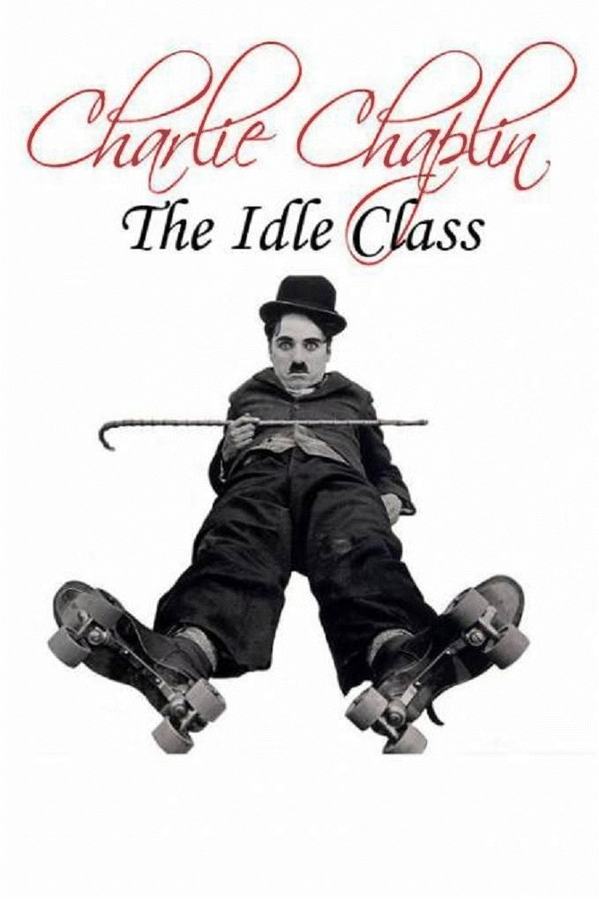
A definitive 7.2/10 rating for a film that redefined the boundaries of cult cinema. The Idle Class remains a cornerstone of transgressive art.
Picture a gilded cage so opulent it could make Versailles blush, then drop into it a penniless jester armed only with a bamboo cane and a derby two sizes too small—voilà, the alchemical setup of The Idle Class. Chaplin’s thirty-minute fugue on class vertigo feels like watching a champagne bottle shake itself into a soap-bubble storm: effervescent, fragile, and liable to spray the moment you pop the cork.
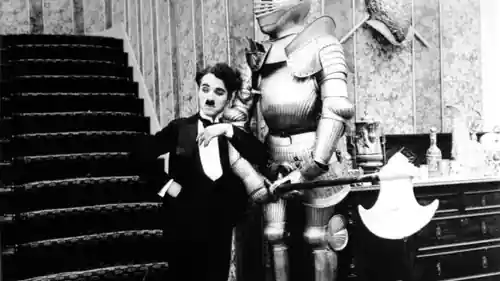
From the first iris-in on those iron gates, the film positions wealth as both fortress and funhouse mirror. The resort’s colonnades loom like marble sentinels, but the camera glides past them to find our Tramp asleep inside a suit of armor—an image so succinct it could teach a semester on commodity fetishism without uttering a word. When he unlatches the visor and blinks into the sunlight, we sense the entire social order wobble on its axis.
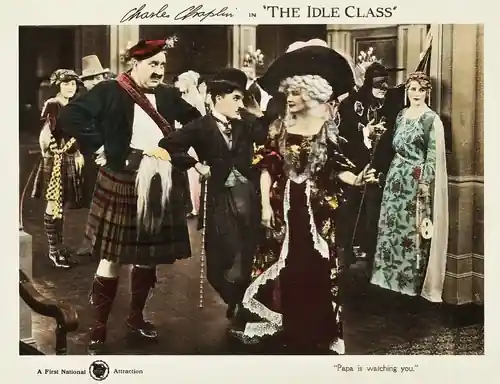
Cut to the ballroom: Edna Purviance floats in a gown that spills silver sequins like liquid mercury. Her husband—played by the splendidly soused jet-setter of the era—staggers through the frame as though gravity were optional. Their quarrel ricochets from hushed venom to public detonation; the ring-toss into the champagne fountain is still one of silent cinema’s most exquisite acts of spousal arson. It’s here that mistaken identity ignites. One doffed top-hat later, the Tramp becomes the heir to a fortune he never asked for and a marriage he never consummated.
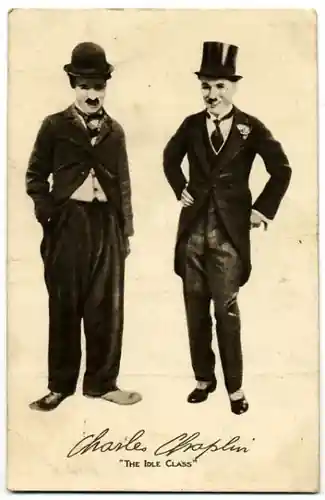
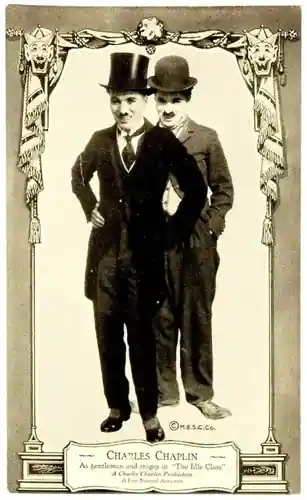
Chaplin, ever the anarchist architect, stages the deception like a Swiss watch full of sand. Every gear—doormen, maids, gossiping dowagers—meshes to ratify the error. The gag isn’t simply that a vagrant passes for a tycoon; it’s that the upper crust, so addicted to surfaces, can’t distinguish between a man and the silhouette of his evening wear. When the real husband re-enters, pie-eyed and indignant, the film flips into farcical algebra: two identical tuxedos, one genuine drunk, one accidental impostor, zero stable referents.
The golf-course sequence deserves its own wing in the Louvre of slapstick. Chaplin swings, misses, and the club helicopters into a hornet’s nest of caddies. Each swing accelerates the chaos like a Rube Goldberg device powered by entitlement. Note how the camera never cuts for reaction shots; instead it glides, absorbing the mayhem in real time, turning the fairway into a stage where social ritual becomes absurdist ballet. The Tramp’s cane becomes a divining rod for disaster, hooking trousers, snagging monocles, and finally harpooning a beach umbrella that blooms open like a capitalist lotus.
Sound, though absent, is everywhere. The crunch of gravel under patent-leather shoes, the hush of silk sliding across parquet, the imagined clink of ice in bottomless tumblers—Chaplin makes you hallucinate audio through sheer visual precision. Intertitles appear sparingly, haiku-brief: “The idle rich—idle even when they move.” Each card lands like a rim-shot in a smoky jazz club.
What elevates the short above mere class-skewering is its emotional undertow. Mid-film, Edna’s mask of hauteur slips; she confides in the Tramp, believing him her spouse, about the loneliness that lurks beneath chandeliers. For a heartbeat, the clown listens—really listens—his eyes softening into pools of empathy. Chaplin lets the moment hang, suspended like a teardrop in zero-gravity, before a drunken lurch snaps the spell. In that sliver of vulnerability, the film argues that wealth can purchase echo but never voice, facades but never skin.
Compare this with Der Zug des Herzens, where mistaken identity fuels melodrama rather than farce, or with Don’t Chase Your Wife, whose upstairs-downstairs romps feel lumbering beside Chaplin’s featherweight touch. Even L’apache, reveling in Parisian underclass chic, lacks the lethal elegance with which Chaplin folds social critique into a pratfall.
The final tableau—dawn breaking over a train platform—delivers no tidy moral invoice. The Tramp, divested of tuxedo and title, shuffles toward the horizon while Edna, veil restored, watches from a luxury compartment. Their eyes lock across the widening gulf of class and steel. Neither waves; both understand the masquerade has ended, yet the structures that enabled it rumble onward. Chaplin resists the sentimental redemption he would later embrace in City Lights; instead he offers a shrug wrapped in sunrise, a gesture so light it bruises.
Technically, the film is a masterclass in constraint. Shot largely on a single estate, it redecorates corridors and gardens through shifting angles so deftly you’d swear the set sprawls for acres. The lighting toggles between high-society sheen and noir chiaroscuro, often within the same take. Notice the ballroom scene where chandeliers scatter starbursts across polished floors, turning the dance into a cosmos where every step risks planetary collision.
Performances orbit around Chaplin’s gravitational center. Purviance, often underrated, essays a woman fraying at the seams of privilege; her micro-expressions—a twitch of lip, a half-batted lash—betray the panic beneath poise. The supporting ensemble of dandies, flappers, and liveried footmen function like a Greek chorus in white gloves, each reaction shot calibrated to millisecond perfection.
Yet the true star is rhythm. Chaplin edits like a jazz drummer riding the ride cymbal: brisk, syncopated, always a half-beat ahead of expectation. When the Tramp scuttles across the dining table to evade recognition, the cuts accelerate into staccato bursts, mirroring the heartbeat of a man whose borrowed identity is seconds from imploding.
Modern viewers may ask: does this antique lampoon still bite? Scroll through any influencer’s yacht-party feed and witness the same peacocks, plumage now swapped for crypto riches rather than railroad bonds. The idle class, Chaplin winks, merely swapped tailcoats for tech-hoodies, but the idle remains. His comedy survives because it targets not period décor but the perennial human habit of mistaking net-worth for self-worth.
For cinephiles, the short functions as a Rosetta Stone of visual grammar. Watch how Chaplin primes a gag: he foregrounds a mundane object—say, a garden hose—then circles back three scenes later to unleash its comic payload. The payoff feels inevitable yet surprising, a magic trick whose secret is simply patience.
Collectors should seek the 4K restoration on Criterion Blu-ray; the grain structure gleams like celluloid stardust, and the sepia ballroom shots glow with hearth-warm nostalgia. Pair your viewing with a silent-era cocktail—perhaps a Sidecar, its sugared rim echoing the film’s sweet-and-sour social palate.
In the pantheon of Chaplin’s canon, The Idle Class may lack the epic sprawl of The Kid or the philosophical heft of Modern Times, but its compact brilliance makes it the cinematic equivalent of a vintage Rolex: small, precise, and forever in style. To watch it is to eavesdrop on the 20th century being born, laughing so hard it forgets to scream.
So the next time you feel the urge to escape into some algorithm-curated comfort binge, pause instead and let Chaplin’s tramp gate-crash the gilded prison we still insist on calling high society. Within half an hour he’ll rob you of certainty, return it dented and dazzling, and leave you wondering who among us is truly idle—and who merely wears the costume.
IMDb —
1919
Community
Log in to comment.