DbcultAccessing Vault...
Cult Review
Senior Film Conservator
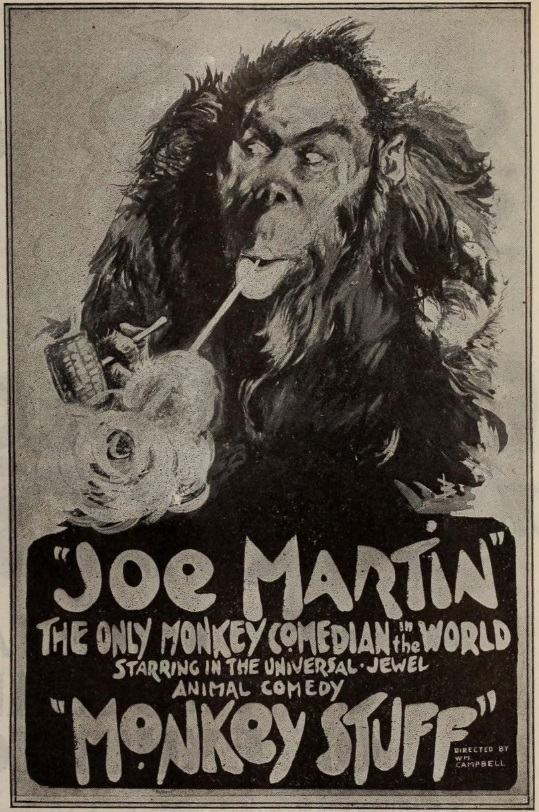
Stepping into the flickering, sepia-toned world of early cinema, one occasionally unearths a forgotten gem, a celluloid curio that, despite its age, still possesses a vibrant, almost tactile energy. Such is the case with "Monkey Stuff," a film that, even without the benefit of a detailed historical record, clearly encapsulates the effervescent spirit and inventive visual storytelling characteristic of its era. This isn't merely a quaint relic; it's a testament to the enduring power of simple narratives, brought to life by a dedicated ensemble and, rather uniquely, an elephant.
At the heart of "Monkey Stuff" lies a story of tenacity against the odds, a common yet perennially resonant theme in early filmmaking. We are introduced to Harry Burns, a character whose earnest demeanor and visible struggles paint a poignant portrait of the working-class showman. His world revolves around Charlie the Elephant, a magnificent creature whose gentle presence and undeniable star quality are the sole anchors preventing Burns's modest traveling act from succumbing to financial oblivion. The bond between man and beast is depicted with an understated tenderness that transcends the often-bombastic nature of silent-era performance, imbuing their plight with genuine emotional weight. This relationship serves as the beating pulse of the narrative, a silent promise of loyalty and shared destiny that elevates the film beyond mere slapstick.
The narrative catalyst arrives in the form of Lucille Smith, a character whose vivacious ingenuity proves to be both the troupe's greatest asset and its most unpredictable variable. Smith, with an infectious blend of youthful optimism and audacious pragmatism, concocts a plan as audacious as it is improbable: to revive their flagging fortunes by transforming the hapless Harry Lorraine, a bumbling assistant from a rival act, into a performing "monkey." Lorraine's subsequent antics, trapped within a poorly-fitting simian costume, provide much of the film's overt comedic energy, a classic example of physical comedy that relies on exaggerated movements and bewildered expressions to elicit laughter. This central conceit, while inherently farcical, cleverly explores themes of identity, performance, and the lengths to which individuals will go to survive and protect what they love. One might draw parallels to the spirited resilience seen in films like Dolly Does Her Bit, where a protagonist's sheer will and inventive spirit drive the plot forward amidst challenging circumstances.
The ensemble is further enriched by the introduction of Beatrice Lovejoy, a socialite whose initial disdain for the humble circus act gradually gives way to an bewildered entanglement. Her character arc, from haughty skepticism to genuine involvement, is a subtle critique of class divides, a popular undercurrent in many films of the period. Lovejoy's transformation begins when a jewel heist casts an unexpected shadow over the proceedings, leading her to suspect the newly introduced "monkey." This adds a layer of mystery and suspense, transforming a simple comedy into a more intricate narrative tapestry. The film's ability to weave together disparate genres — slapstick, drama, and a dash of detective work — speaks to William Campbell's inventive storytelling. Similarly, the unfolding of social complexities and unexpected alliances can be observed in films like The Making of Maddalena, where societal expectations clash with individual aspirations.
Lucille Smith radiates an undeniable charisma, her performance as the quick-witted instigator a masterclass in silent-era acting. She conveys a spectrum of emotions—from mischievous glee to determined resolve—with a precision that belies the technical limitations of the medium. Her eyes, often twinkling with an inner fire, communicate more than any intertitle could. Smith’s portrayal is a driving force, an embodiment of youthful energy that propels the narrative forward with an engaging momentum. She navigates the film’s comedic and dramatic beats with an effortless grace, proving herself a formidable presence.
Harry Burns, in contrast, offers a more subdued but equally compelling performance. His portrayal of the beleaguered circus owner is steeped in a quiet dignity, his anxieties palpable even in moments of stillness. Burns evokes genuine sympathy, making the audience invest deeply in the fate of his act and, crucially, in Charlie. The silent bond he shares with the elephant is one of the film’s most touching elements, communicated through gentle gestures and shared glances that speak volumes. This authentic connection grounds the fantastical elements of the plot in a relatable human experience, much like the profound relationships depicted in Fanchon, the Cricket, where unconventional bonds are central to the story's emotional core.
The comedic heavy lifting falls squarely on Harry Lorraine, whose turn as the reluctant "monkey" is a triumph of physical comedy. His exaggerated movements, confused expressions, and the sheer absurdity of his predicament are consistently hilarious. Lorraine understands the nuances of silent slapstick, using his entire body as an instrument of humor. His struggle within the monkey suit becomes a metaphor for the film’s broader themes of adaptation and performance, drawing parallels to other comedic roles where characters are forced into awkward situations, albeit with a unique animalistic twist. The sheer commitment to the bit, even in the face of escalating chaos, is commendable and ensures that Lorraine's performance remains etched in the viewer's memory.
Phyllis Allen, embodying the stern but ultimately sympathetic landlady, delivers a performance that provides a crucial grounding element. Her initial rigidity slowly melts away as she witnesses the troupe's genuine struggles and the inherent charm of Charlie. Allen’s character acts as a moral barometer, her eventual softening symbolizing the broader acceptance and understanding the struggling artists eventually garner. This arc, from skepticism to support, is a classic trope, yet Allen imbues it with a heartfelt authenticity. Similarly, the transformation of a hardened character through exposure to genuine human spirit can be seen in A Society Exile, where societal pressures give way to personal revelations.
Joe Martin rounds out the cast, likely as an antagonist or a figure of authority whose presence complicates the troupe's already precarious existence. Whether he is a rival showman attempting to poach Charlie, a bewildered detective investigating the jewel theft, or a stern official threatening eviction, Martin’s role provides the necessary external conflict that drives the plot towards its climactic resolution. His portrayal, even if brief, would have been crucial in providing the tension against which the protagonists' resilience could shine. The dynamic of an external threat forcing characters to unite is a well-worn path, explored with varying degrees of melodrama and intensity in films like The Rajah or The Tong Man, where antagonists create considerable stakes for the protagonists.
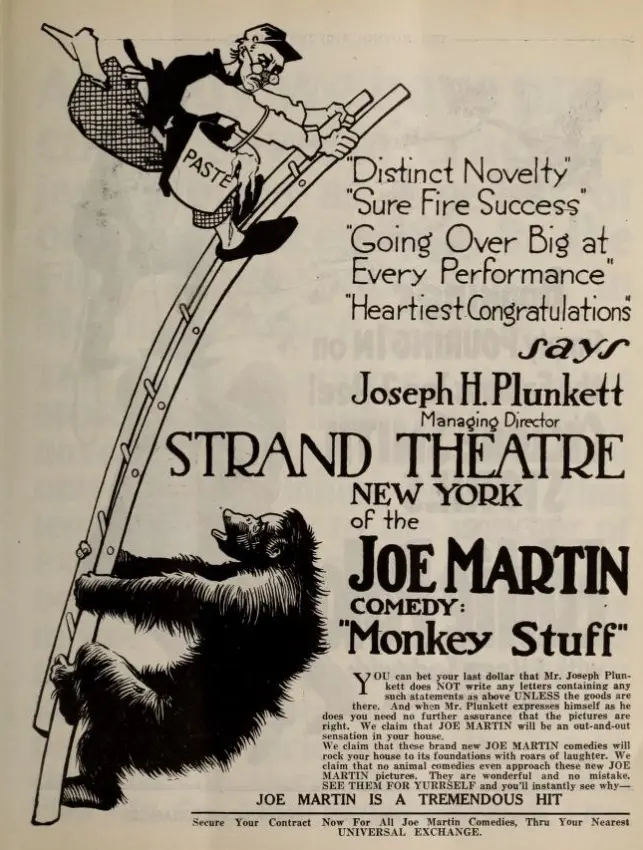
While specific directorial choices of William Campbell are often lost to the mists of time for films of this vintage, the coherent storytelling and effective pacing of "Monkey Stuff" speak volumes about his craft. The film skillfully balances its comedic elements with moments of genuine pathos, never allowing the humor to overshadow the very real struggles of its characters. Campbell's ability to orchestrate complex physical comedy sequences, particularly those involving Lorraine in the monkey suit and the majestic Charlie, is commendable. The film's visual language, a cornerstone of silent cinema, is employed to maximum effect, conveying emotions, intentions, and slapstick gags with clarity and precision. The visual gags are not merely gratuitous; they serve the narrative, escalating the chaos and deepening the characters' predicaments.
The narrative structure, moving from the introduction of the problem (financial ruin) to the development of an outlandish solution, the ensuing complications (jewel theft, socialite involvement), and finally to a climactic resolution, is a classic template executed with a refreshing dynamism. Campbell leverages the unique capabilities of silent film to tell a story that prioritizes visual gags and physical expression over intricate dialogue. This approach ensures that the film remains accessible and engaging, even for modern audiences accustomed to sound. The use of intertitles is likely sparse, allowing the actors' expressions and the action itself to convey the bulk of the story, a hallmark of well-executed silent cinema.
"Monkey Stuff" exists within a vibrant period of cinematic experimentation, where filmmakers were still discovering the medium's full potential. The inclusion of an animal performer like Charlie the Elephant is indicative of the era's fascination with novelty and spectacle, a tradition that saw everything from trained bears to lions grace the silver screen. However, unlike mere animal acts, Charlie is integrated into the plot as a character with agency and emotional depth, rather than just a prop. This elevates the film beyond a simple novelty, infusing it with a unique charm. The film's lightheartedness and focus on entertainment as a means of survival echo the broader societal need for escapism during tumultuous times, a sentiment often reflected in films like The Firefly, which also centered on the world of performance.
The themes of mistaken identity and the blurring of lines between human and animal, performance and reality, are particularly potent. Harry Lorraine's transformation into a "monkey" is not just a source of humor; it’s a commentary on the roles we play and the masks we wear, both literally and figuratively. This motif resonates with the more dramatic identity crises explored in films such as Der Lumpenbaron, where social status and perceived identity are central to the narrative. The jewel heist subplot, while seemingly secondary to the main comedic thrust, adds a layer of social commentary, highlighting the stark contrast between the struggling artists and the affluent socialites, a theme that pervades many narratives of the early 20th century.
The film’s climax, a delightful mélange of frantic chases and opportune interventions by Charlie, underscores the idea that salvation can come from the most unexpected sources. It’s a classic narrative device, yet executed with a freshness that prevents it from feeling cliché. The triumph of the underdog, the vindication of the innocent, and the eventual unity of disparate social classes in celebration of honest endeavor are all powerful, universally appealing themes that "Monkey Stuff" champions with an endearing sincerity. This celebratory spirit of collective effort overcoming adversity is a heartwarming constant in cinema, much like the community spirit found in Livets Stormagter or the journey of self-discovery in The Gilded Youth, where characters find their place amidst societal pressures.
"Monkey Stuff" may not occupy the same hallowed ground as some of its more celebrated contemporaries, but its quiet charm and inventive spirit make it a film well worth rediscovering. It’s a testament to the fact that compelling storytelling, engaging characters, and a healthy dose of humor can transcend the passage of time and the absence of spoken dialogue. The film offers a delightful window into a bygone era of entertainment, reminding us of the simple joys of a well-told story and the enduring appeal of a good laugh.
The performances, particularly from Lucille Smith and Harry Burns, are remarkably nuanced, bringing a depth to their characters that elevates the material beyond mere pantomime. Charlie the Elephant, arguably the film’s most unique star, adds an element of genuine wonder and heart, cementing the film's place as a memorable entry in the annals of animal performers in cinema. The film serves as a reminder of the foundational elements of cinematic narrative – the power of visual gags, the expressiveness of the human (and animal) face, and the universal appeal of a story about overcoming adversity with ingenuity and a dash of the absurd.
In a world saturated with complex narratives and high-definition spectacles, there's something profoundly refreshing about the unpretentious joy offered by "Monkey Stuff." It's a film that doesn't demand intellectual dissection but invites heartfelt appreciation. It stands as a charming example of how early cinema, through its innovative use of visual storytelling and its embrace of both the silly and the sincere, laid the groundwork for the rich tapestry of film we enjoy today. Its echoes can be felt in the enduring appeal of physical comedy and the timeless struggle of the underdog, principles that continue to resonate across cinematic eras, much like the enduring mystery in The Master Key or the thrilling escapades in Kiss or Kill. Even historical epics like Mazeppa, der Volksheld der Ukraine, while different in tone, share a common thread of compelling narrative drive, a fundamental ingredient "Monkey Stuff" possesses in spades. The earnestness and charm of films like A Vida do Barão do Rio Branco, despite their documentary nature, also rely on a compelling subject and clear storytelling, much like the fictionalized world of "Monkey Stuff." The very essence of early cinema, captured in films like Mules and Mortgages, often lies in its ability to find humor and humanity in everyday, or in this case, extraordinary, situations.
"Monkey Stuff" is a delightful reminder of cinema's nascent power to enchant, to amuse, and to tug at the heartstrings, proving that sometimes, all you need is a man in a monkey suit, a magnificent elephant, and a whole lot of heart.
IMDb —
1934
Community
Log in to comment.