DbcultAccessing Vault...
Cult Review
Senior Film Conservator
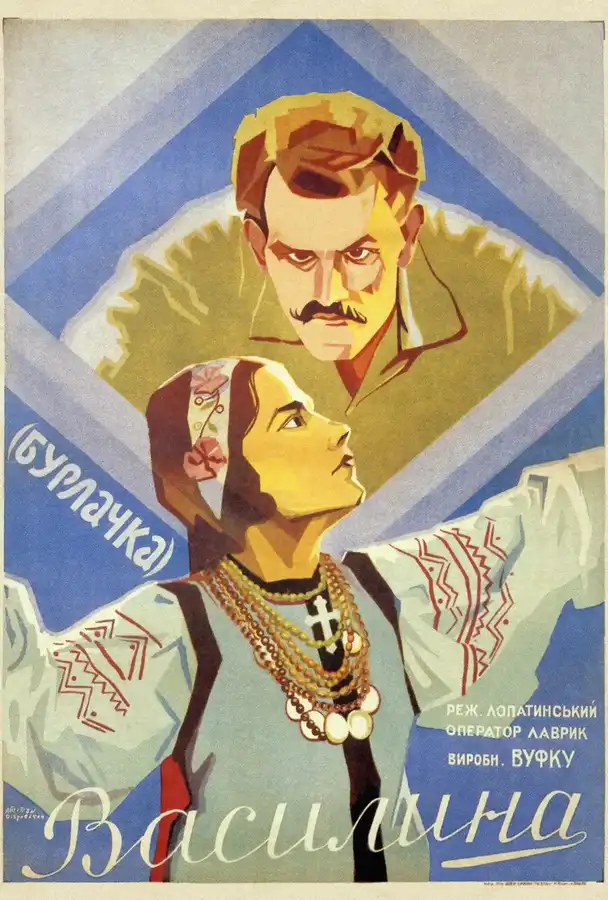
Is Vasylyna worth watching today? Short answer: yes, but with significant caveats that demand a specific kind of viewer. This silent Ukrainian drama, a powerful artifact from a bygone era, offers a stark, often brutal, look at social injustice and individual resilience that resonates even a century later.
It's a film for those who appreciate the historical context of early cinema, the raw emotional power of silent acting, and narratives that champion the downtrodden. However, it is decidedly NOT for viewers seeking fast-paced plots, sophisticated modern cinematography, or a light, entertaining escape.
Let's cut to the chase:
"Vasylyna" plunges us into a world defined by stark class divides and the grinding labor of rural life. Adapted from I. Nechui-Levystkyi's novel "The Bargewoman," the film follows its titular character, portrayed with heartbreaking sincerity by M. Sheveleva, through a gauntlet of hardship. Her life is initially a cycle of back-breaking work in the fields and servitude within the cold, opulent walls of a nobleman's home. This duality immediately establishes the film's central tension: the stark contrast between the lives of the landed gentry and those who toil beneath them.
The film doesn't shy away from depicting the harsh realities of Vasylyna's existence. We see her enduring physical labor, her face etched with fatigue and silent resignation. This visual language, common in social realist cinema of the period, serves to underscore the systemic nature of her oppression. It's not just a bad boss; it's a broken system.
The pivotal betrayal, which drives Vasylyna from her home, is handled with a sense of inevitability rather than sensationalism. It's a consequence of her vulnerable position, a stark reminder that for those without power, justice is a luxury. Her subsequent flight is a journey into further isolation and despair, culminating in the tragic birth of a child who does not survive. This sequence is arguably the film's emotional core, a raw, unflinching depiction of human suffering that transcends the limitations of silent storytelling.
It is here, at her absolute nadir, that the film introduces its thematic pivot: the emergence of industrial solidarity. Vasylyna is rescued by factory workers, a collective offering a stark contrast to the individualistic, exploitative world she fled. Her transformation into a weaver symbolizes not just personal renewal but a broader societal shift, from agrarian subjugation to the promise (however idealized) of collective strength and purpose within the burgeoning industrial landscape.
This narrative arc, while perhaps predictable for those familiar with socialist realist tropes, remains potent. It's a testament to the film's ability to imbue its political message with genuine human emotion. The journey from utter despair to a glimmer of hope, however fragile, is universally compelling.
In silent cinema, the burden of conveying emotion and character falls almost entirely on the actors' physicality and facial expressions. The ensemble in "Vasylyna" rises to this challenge with varying degrees of success, but none more so than M. Sheveleva in the titular role.
Sheveleva's performance as Vasylyna is the film's anchoring force. From the early scenes of quiet endurance in the fields, her eyes convey a deep-seated weariness that speaks volumes. Later, during her flight and the devastating loss of her child, her portrayal of grief is visceral and raw. The scene where she cradles her dying infant, a silent scream etched across her face, is harrowing and stays with you long after the credits roll. It’s a performance that leverages the medium's strengths, using exaggerated gestures and intense close-ups to communicate a profound inner turmoil.
The supporting cast, while less central, effectively embodies their archetypal roles. Osip Merlatti, as the nobleman, exudes a detached arrogance that perfectly captures the oppressive class structure. His posture, his gaze, even the way he dismisses Vasylyna with a wave of his hand, are all meticulously crafted to convey his character's position and power. Anton Klimenko and Stepan Vasyutinskiy, among others, contribute to the tapestry of suffering and eventual solidarity, each delivering performances that, while sometimes broad, serve the film's clear thematic intentions.
One unconventional observation here: the film's power dynamics are often communicated less through dialogue (naturally) and more through the spatial relationship between characters on screen. The way Vasylyna often occupies the lower frame, or is dwarfed by the grand architecture of the nobleman's home, speaks volumes about her place in the world long before any plot point unfolds. The actors, through their blocking and interaction with their environment, effectively become living symbols of the social order.
Mykhaylo Yalovyy's direction, working from a script he co-wrote with Ivan Nechuy-Levitsky, demonstrates a clear understanding of silent film aesthetics, though it's not without its moments of visual crudeness. The cinematography, while not groundbreaking, is effective in establishing mood and narrative beats. Early scenes in the countryside are often wide shots, emphasizing the vastness of the land and the smallness of human endeavor within it. This contrasts sharply with the claustrophobic interiors of the nobleman's house, where shadows and tight framing amplify Vasylyna's entrapment.
A specific example of effective visual storytelling can be found in the factory sequences. The rhythmic, almost hypnotic motion of the looms and the synchronized movements of the workers are captured with a dynamic energy that feels distinct from the earlier, more static rural scenes. This shift in visual style mirrors Vasylyna's own journey and the film's embrace of industrial progress as a form of liberation. It’s not just a change of scenery; it’s a change of visual language, signifying a new chapter.
However, the film occasionally suffers from a certain visual utilitarianism. While the images serve the story, they rarely transcend into truly poetic or innovative realms, especially when compared to contemporaries like Sergei Eisenstein or Dziga Vertov, whose experimental approaches were pushing the boundaries of cinematic expression. This isn't necessarily a flaw, but rather a characteristic of its more straightforward, narrative-driven approach.
The use of intertitles is functional, though sometimes they feel a little too explanatory, perhaps underscoring a lack of absolute confidence in the visual narrative to carry every nuance. Despite this, the film manages to evoke a powerful sense of place and atmosphere, from the dusty fields to the bustling factory floor, painting a vivid picture of early 20th-century Ukraine.
Like many silent films, "Vasylyna" demands patience from its audience. The pacing is deliberate, often slow by modern standards, allowing scenes to unfold with an unhurried rhythm that can feel challenging. Moments of emotional intensity are often drawn out, relying on sustained close-ups and dramatic gestures to convey their weight. This is a common trait of the era, where the lack of synchronized sound necessitated a different approach to rhythm and emotional build-up.
The tone shifts dramatically throughout the film. It begins with a somber, almost elegiac mood depicting rural hardship, transitions into a period of acute tragedy and despair, and finally culminates in a more hopeful, if overtly didactic, portrayal of collective uplift. This shift, particularly into the factory sequence, can feel somewhat abrupt, almost like a separate chapter beginning. Some might argue this tonal whiplash is a weakness, while others might see it as a bold reflection of the tumultuous social changes it depicts.
I'd argue that while its technical execution sometimes falters, its emotional resonance remains undeniable. The film’s final act, often criticized for its abrupt shift, is in fact its most daring and ultimately rewarding, signaling a radical break from the past.
The film’s melodramatic tendencies, particularly in scenes of heightened emotion, are also characteristic of early cinema. While a modern audience might find some of these moments a little over-the-top, they were standard fare for the time and effectively communicated the intended feeling without the aid of spoken dialogue. It's a film that requires an understanding of its historical context to fully appreciate its narrative choices.
Yes, Vasylyna is absolutely worth watching, but with a clear understanding of what you're getting into. It’s not a film for passive consumption.
It demands engagement, patience, and an appreciation for the art of silent storytelling. For those interested in the history of Ukrainian cinema, social realism, or early 20th-century political narratives, it's an invaluable historical document.
The film offers a unique window into a specific cultural and political moment. It provides insight into the struggles of ordinary people during a period of immense societal change. It works. But it’s flawed.
"Vasylyna" stands as more than just a historical curiosity; it's a testament to the enduring power of storytelling, even in its earliest forms. Its themes of betrayal, resilience, and the search for dignity resonate across generations and cultures. While its depiction of factory life as an unequivocal utopia might seem overly simplistic in hindsight, it encapsulates the fervent hopes and ideologies of its time.
Comparing it to other silent social dramas, such as Crainquebille, one can see a shared commitment to highlighting the plight of the common person, though "Vasylyna" leans more heavily into grander societal transformations. It’s less about individual legal injustice and more about systemic economic oppression.
For film scholars and enthusiasts, it offers valuable insights into the development of Ukrainian cinema and its relationship with broader Soviet film movements. It showcases the foundational elements of character-driven drama before the advent of sound changed everything. Its raw honesty, despite its stylistic limitations, ensures its place as a significant cultural document.
In an era where discussions around social justice, labor rights, and individual agency remain pertinent, "Vasylyna" serves as a stark reminder of the long historical struggle for these ideals. It’s a film that asks us to look beyond the surface, to understand the forces that shape lives, and to recognize the strength found in solidarity.
"Vasylyna" is a challenging but ultimately rewarding film experience. It's a powerful, if at times uneven, journey through hardship and hope, anchored by a compelling central performance and a deeply felt message. While its pacing and some stylistic choices firmly place it in its era, its core narrative of human endurance against overwhelming odds remains timeless and impactful. It’s not a film for everyone, but for those willing to engage with its particular rhythms and historical context, it offers a window into a powerful piece of cinematic history that still speaks volumes today.
It is a film that deserves to be seen, studied, and discussed, not just as a relic, but as a vibrant, if sometimes difficult, voice from the past. A definite recommendation for serious cinephiles.
IMDb —
1918
Community
Log in to comment.