DbcultAccessing Vault...
5.8/10
Senior Film Conservator
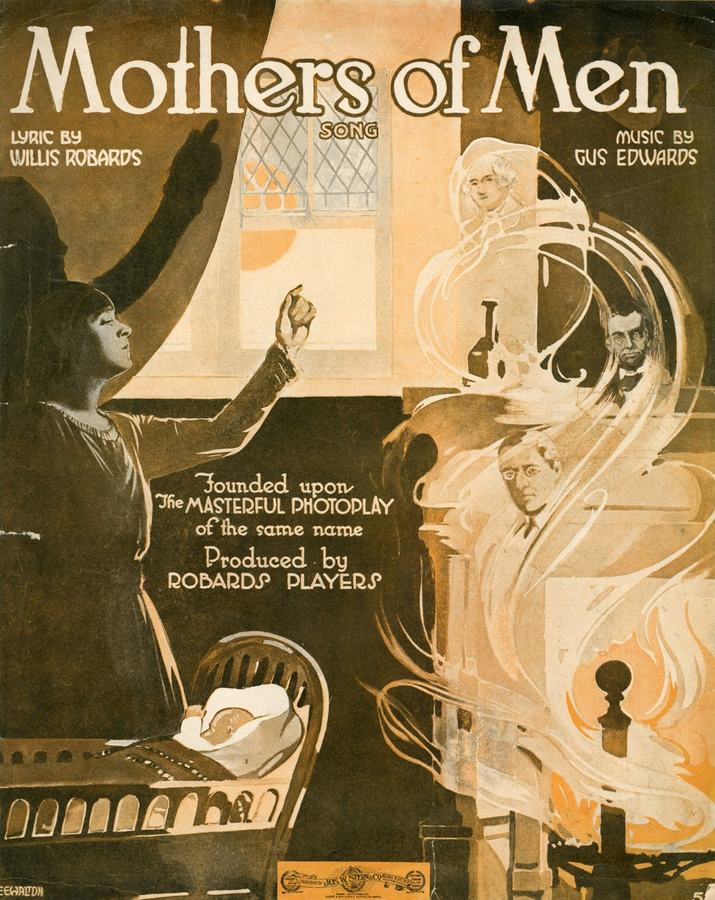
A definitive 5.8/10 rating for a film that redefined the boundaries of cult cinema. Mothers of Men remains a cornerstone of transgressive art.
The flickering shadows of early cinema often captured grand narratives of human emotion, but few delved into the moral complexities with the piercing intensity of 1917's 'Mothers of Men'. This cinematic artifact, a melodrama of the highest order, presents a scenario so potent and ahead of its time that it continues to resonate with surprising force. At its core lies the agonizing dilemma of a woman governor, thrust into an impossible position where personal devotion clashes head-on with public duty. It's a testament to the era's storytelling ambition, driven by the writing prowess of Jack Natteford and Hal Reid, the latter also starring, that such a nuanced exploration of power, sacrifice, and the relentless machinery of justice could be articulated without a single spoken word.
The film introduces us to Grace Blake, portrayed with a compelling gravitas by the formidable Dorothy Davenport, a woman who has shattered glass ceilings to attain the highest office in her state. Her ascent to power is not merely a plot device; it's the very foundation upon which the film's dramatic tension is meticulously constructed. In an era when female suffrage was still a contentious issue, the very notion of a woman holding such executive authority was nothing short of revolutionary, making Blake a character of immense symbolic weight. Her early scenes establish her as a figure of unwavering principle, dedicated to the letter of the law and the welfare of her constituents, setting the stage for the profound test of character that awaits her.
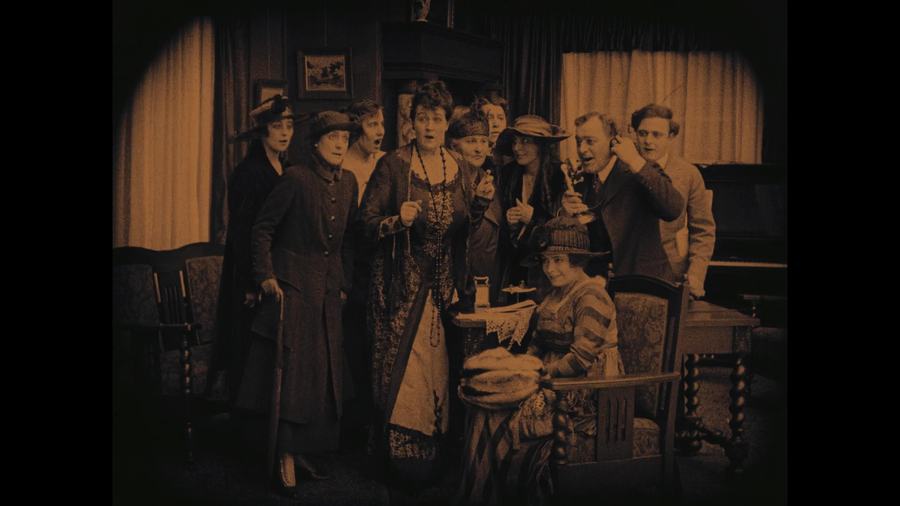
The narrative takes a stark turn when Grace's world is irrevocably shattered by the accusation and subsequent conviction of her husband, portrayed by Hal Reid himself, for involvement in a bombing. This is no minor transgression; it's an act of public violence, a direct assault on the very order Grace has sworn to uphold. The conviction itself, presented with an almost brutal efficiency characteristic of silent film's narrative economy, immediately places Grace in an unenviable predicament. The legal system, which she represents and is bound to protect, has rendered its verdict, demanding a response from its highest executive. Her personal life, once a source of strength and companionship, transforms into a profound liability, threatening to engulf her public persona in scandal and ethical compromise.
The true genius of 'Mothers of Men' lies in its unflinching portrayal of the pressures that besiege Grace from every conceivable angle. Her family, naturally distraught and desperate to save their kin, appeals to her emotional core, urging clemency, special consideration, perhaps even an abuse of power, all in the name of familial love. Friends, well-meaning but perhaps naive about the strictures of her office, add their pleas, their loyalty clouding their judgment regarding the sanctity of the law. And then there are the political pundits, a chorus of public opinion, some demanding swift and impartial justice to prove her mettle, others eager to exploit the scandal for their own gain, questioning her fitness to govern if she cannot even manage her own household. This cacophony of voices and expectations creates an almost suffocating environment for Grace, each demand pulling her further into an abyss of moral ambiguity.
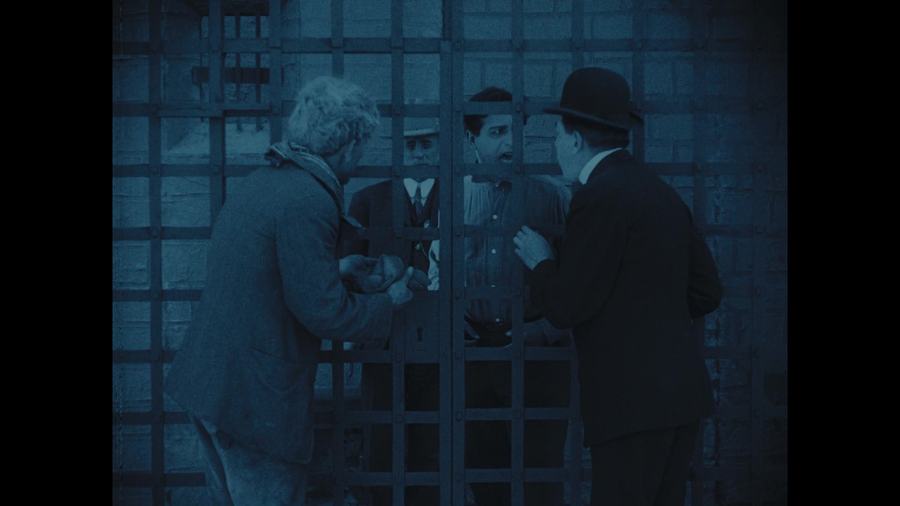
Davenport's performance here is nothing short of masterly. Without dialogue, she conveys the immense weight of her character's internal struggle through subtle facial expressions, the slump of her shoulders, the intensity of her gaze. One can almost feel the mental anguish, the sleepless nights, the silent screams of a woman torn between the two most fundamental aspects of her existence: her love for her husband and her sworn duty to the state. It's a performance that transcends the theatricality often associated with silent film, achieving a raw, palpable sense of human suffering that remains compelling even a century later. This emotional depth is what elevates 'Mothers of Men' beyond a mere melodrama, positioning it as a profound character study.
The film's exploration of a female leader grappling with such a monumental ethical dilemma was remarkably progressive for its time. It dared to ask questions about the nature of power, gender, and the inherent conflicts that arise when personal and public spheres violently intersect. In an era when women's roles were largely confined to the domestic, 'Mothers of Men' presented a vision of female leadership that was both aspirational and tragically burdened. It hinted at the immense sacrifices and impossible choices that would inevitably face those women brave enough to step into traditionally male domains. This thematic bravery distinguishes it from many of its contemporaries, offering a glimpse into evolving societal attitudes, even if only through the lens of dramatic fiction.
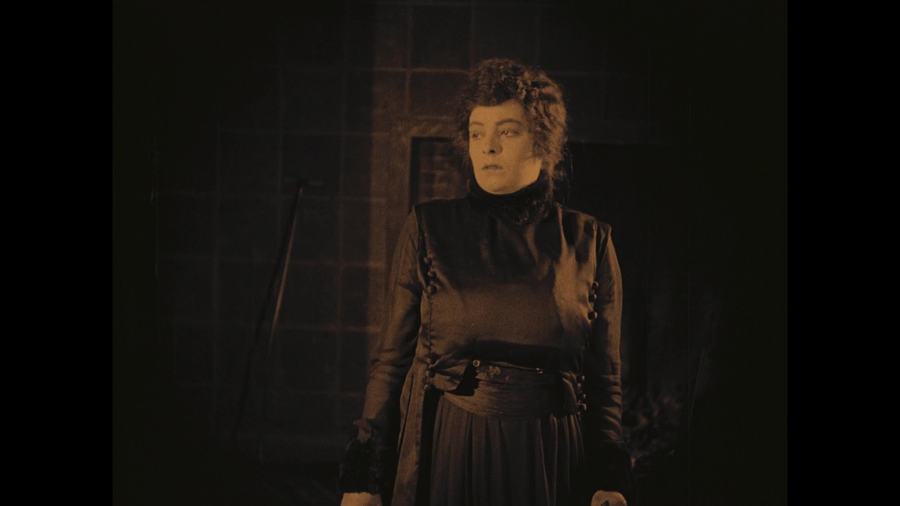
Comparing Grace Blake's plight to other notable silent film heroines facing personal crises under public scrutiny, one might recall the intense emotional stakes in films like The Strange Case of Mary Page or The Unwelcome Mrs. Hatch. Yet, Grace's situation is arguably more acutely painful due to her position of ultimate authority. She isn't merely a victim of circumstance or social judgment; she is the arbiter of justice, tasked with applying the very laws that condemn her husband. This unique twist amplifies the moral anguish, making her choices far more impactful and her burden heavier than many other melodramatic figures of the period.
Beyond Davenport's central performance, the supporting cast, including Marcella Russell, Wilson Du Bois, Billie Bennett, Katherine Griffith, George Utell, Maclyn King, Arthur Tavares, Harry Griffith, Mrs. Hal Reid, and Willis Robards, contributes to the film's rich tapestry of emotional responses. Each character, though often briefly seen, serves as a distinct voice in the chorus of pressure and expectation surrounding Grace. The collective despair of the family, the public's judgment, and the political machinations are all vividly brought to life through their nuanced portrayals, adding layers of realism to the melodramatic framework. The interplay of these performances, guided by the direction, paints a comprehensive picture of a society grappling with a scandal of immense proportions.
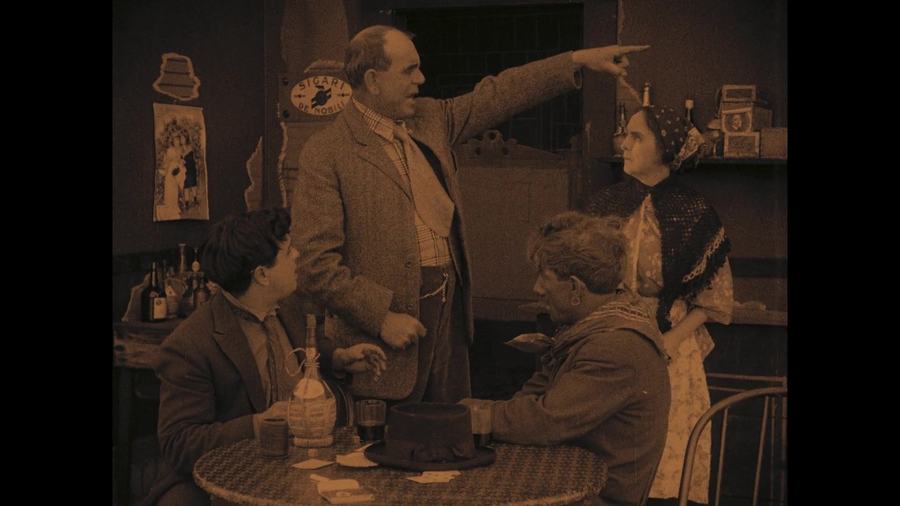
The directorial choices, while perhaps lacking the overt stylistic flourishes of a Griffith or a DeMille, are effective in their clarity and directness. The pacing, typical of early feature films, allows for the gradual build-up of tension and the full absorption of Grace's emotional turmoil. Intertitles are deployed judiciously, providing essential plot points and glimpses into characters' thoughts without over-explaining, trusting the visual storytelling and the actors' expressions to carry the bulk of the narrative. This economy of storytelling ensures that the focus remains squarely on the central ethical dilemma, preventing distractions and maintaining a compelling narrative drive. One might find parallels in the direct narrative approach of films like Life's Shadows or The Little School Ma'am, where strong emotional cores are conveyed through straightforward, impactful cinematography.
What truly distinguishes 'Mothers of Men' is its timeless exploration of the conflict between personal affection and public accountability. This isn't just a story about a woman governor; it's a profound meditation on the nature of leadership itself, irrespective of gender. How does one reconcile the deeply human impulse for loyalty and love with the impartial demands of justice? Can a leader truly be objective when their own world is collapsing? These are questions that continue to plague public figures, making Grace Blake's struggle remarkably relevant even today. The film forces us to confront the uncomfortable truth that sometimes, the greatest acts of public service require the most devastating personal sacrifices.
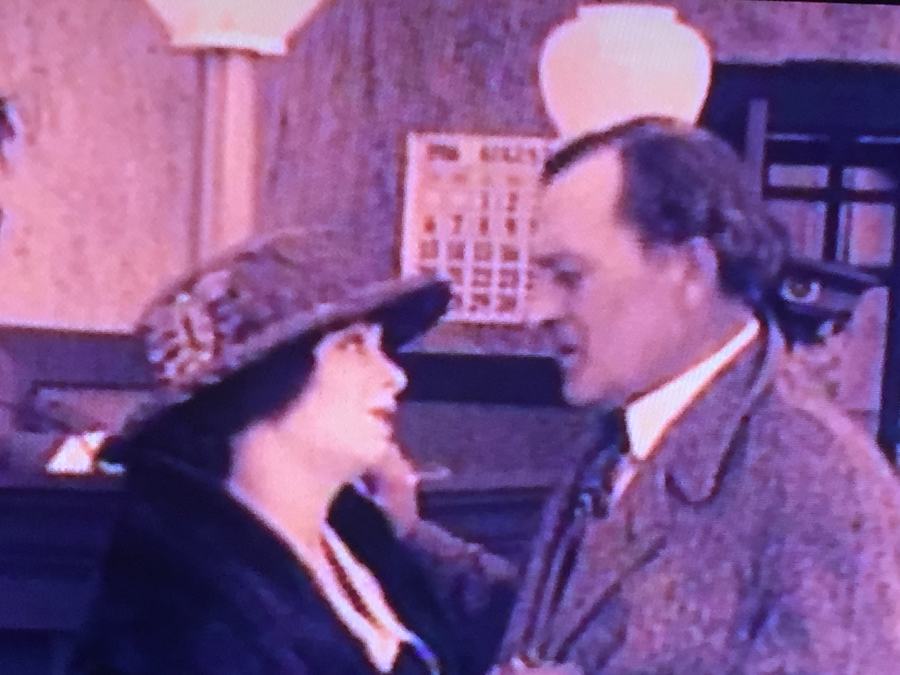
In an era of burgeoning cinema, where narratives often leaned towards clear-cut heroes and villains, 'Mothers of Men' dared to paint a protagonist caught in a morally gray area. There are no easy answers presented, only the raw, unvarnished depiction of a woman navigating an impossible choice. This refusal to simplify complex ethical questions is a hallmark of its artistic integrity. It challenges the audience to empathize with Grace's predicament, to consider what they might do in her shoes, and to reflect on the immense pressures inherent in positions of power. The film's power lies not just in its plot, but in its ability to provoke such deep introspection.
The film also subtly critiques the societal expectations placed upon women, particularly those who dared to step outside conventional roles. Grace's every move is scrutinized, her emotions weaponized, and her leadership questioned through the lens of her gender and her personal life. This subtext adds another layer of complexity, highlighting the additional burdens placed upon pioneering women in positions of authority. It’s a theme that, regrettably, remains pertinent, underscoring the film’s enduring social commentary. While films like Borgkælderens mysterium might have explored criminal underworlds, and The Yaqui or The Outlaw's Revenge focused on external conflicts, 'Mothers of Men' turns inward, examining the internal battleground of its protagonist with remarkable precision.
In conclusion, 'Mothers of Men' stands as a powerful testament to the narrative sophistication achievable in the silent era. It is a film that challenges, provokes, and ultimately leaves a lasting impression through its unflinching portrayal of a woman caught in the vortex of an impossible moral choice. Dorothy Davenport's performance is a masterclass in silent screen acting, conveying a universe of emotion with minimal gesture. The film's themes of justice, loyalty, public duty, and personal sacrifice are as potent today as they were over a century ago. For those interested in the evolution of melodrama, the portrayal of women in early cinema, or simply a compelling human drama, 'Mothers of Men' is an essential viewing experience. Its narrative courage and emotional depth cement its place as a significant, if often overlooked, work in the annals of film history, echoing the profound human struggles seen in other emotionally charged dramas like Shore Acres or Love and Hate. The film's enduring power lies in its ability to force us to confront the uncomfortable realities of leadership and the profound personal cost of upholding principles in the face of overwhelming emotional pressure.
IMDb —
1927
Community
Log in to comment.