DbcultAccessing Vault...
Cult Review
Senior Film Conservator
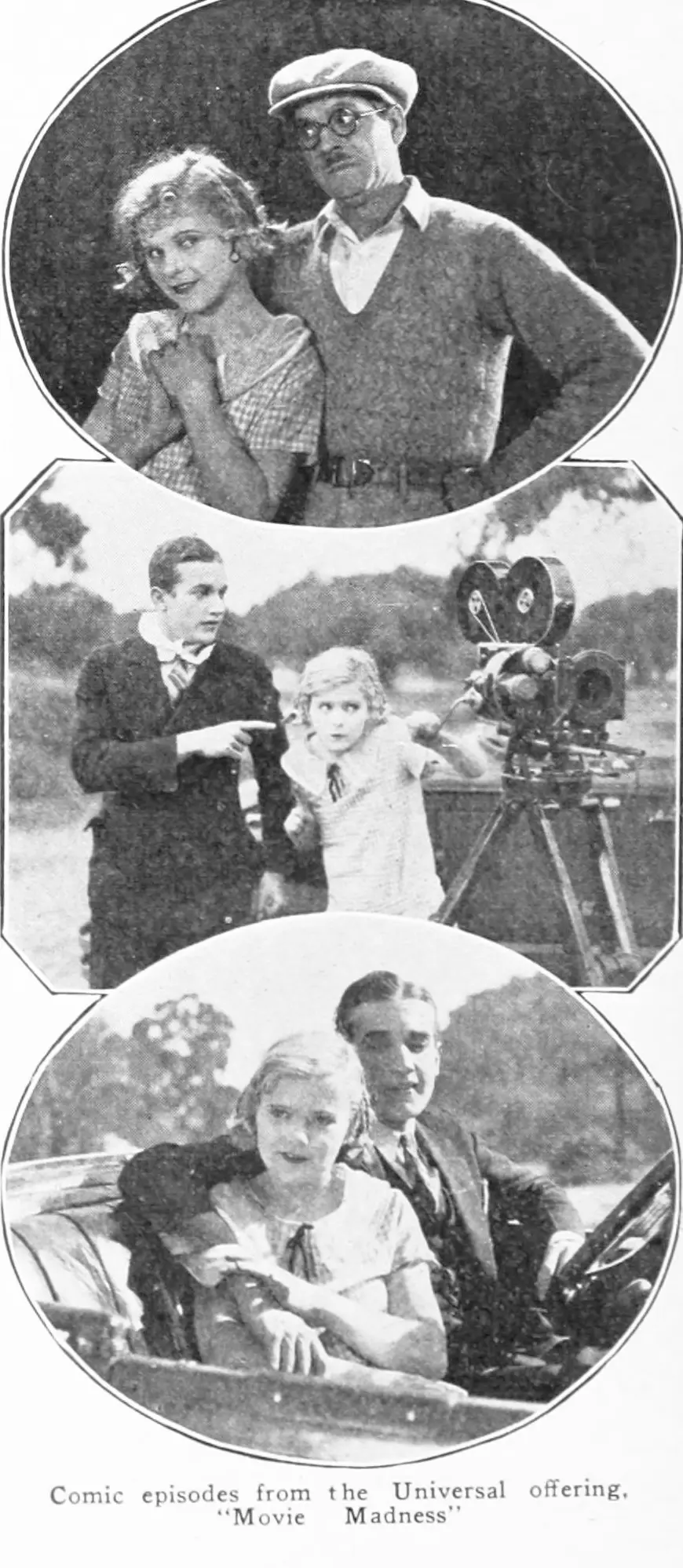
Is Movie Madness a silent film worth your precious time today? Short answer: yes, but with significant caveats that demand a particular viewing disposition. This early cinematic romp, starring the effervescent Edna Marion, offers a fascinating, if sometimes jarring, glimpse into the nascent chaos of Hollywood’s early days, masquerading as a lighthearted comedy.
It’s a film for those with a deep appreciation for the historical quirks of cinema, for students of slapstick, and for anyone curious about how the industry once depicted itself. Conversely, it is decidedly NOT for viewers seeking polished narratives, nuanced character development, or anything resembling modern comedic timing.
This film works because it inadvertently captures the raw, unbridled energy and almost reckless abandon of early filmmaking, a meta-commentary on its own industry that feels surprisingly prescient. It fails because its narrative coherence is often sacrificed at the altar of physical comedy, leading to moments that feel less like intentional humor and more like genuine disarray. You should watch it if you are prepared for a historical artifact that prioritizes spectacle and physical gags over story, offering a unique window into the industry's self-perception during the silent era.
Movie Madness, at its core, is less a meticulously crafted narrative and more a series of escalating gags designed to showcase the burgeoning power of the moving image and the charming physicality of its star, Edna Marion. The plot, as thin as a nitrate film strip, serves primarily as a vehicle for visual spectacle and an almost self-deprecating humor about the film industry itself.
The film opens with Edna living a quiet, pastoral life, a stark contrast to the impending storm of cinematic ambition. Her farm, a symbol of rustic simplicity, is invaded by a movie company, a whirlwind of cameras, lights, and egos. This initial clash of worlds sets the stage for the film's central conflict: the collision of authenticity with artificiality, and the often destructive nature of artistic pursuit.
What's truly fascinating is how the film, perhaps unintentionally, critiques its own medium. The director, a caricature of the obsessive artist, sees Edna's home not as a dwelling, but as a malleable set piece. The destruction of her house — the cutting of new windows, the dismantling of the roof — isn't just slapstick; it’s a brutal, almost shocking depiction of how art, or the pursuit of it, can disregard and demolish reality. This isn't just funny; it’s a surprisingly dark observation for a silent comedy.
Edna Marion, the film's singular named cast member in the provided context, is the undeniable heart and soul of Movie Madness. Her performance is a masterclass in silent-era physicality, a captivating blend of wide-eyed innocence and burgeoning comedic talent. She navigates the escalating chaos with a remarkable range of expressions, from bewildered confusion to romantic reverie.
Her transformation from farm girl to leading lady, however brief, is handled with a charming lack of self-consciousness that draws the audience in. She isn't a trained actress in the film's narrative, and Marion plays this with an earnestness that makes her character's sudden immersion into the world of film feel authentic, even amidst the surrounding absurdity.
Marion's ability to convey emotion without a single spoken word is a testament to the power of silent acting. Her wide, expressive eyes and fluid body movements communicate more than pages of dialogue ever could. There's a particular scene where she's first asked to replace the leading lady; her hesitant, yet intrigued, expression speaks volumes about her character's inner conflict and budding ambition.
The film's climax, with Edna waist-deep in a flooded room, kissing the leading man's picture, is entirely reliant on Marion's ability to sell the romantic delusion amidst the physical disaster. Her commitment to the bit, even as her father delivers a 'paternal drubbing,' is what elevates this moment from mere slapstick to something genuinely memorable. She is the anchor in a storm of cinematic chaos, and the film would undoubtedly flounder without her magnetic presence. Comparing her to contemporaries, one might see echoes of Mabel Normand's vivacity or Mary Pickford's innocent charm, yet Marion carves out her own niche with a unique blend of vulnerability and resilience.
Directed with an almost frantic energy, Movie Madness leans heavily into the visual gags and physical comedy that defined early silent film. The pacing is relentless, moving from one comedic set-piece to the next with little pause for introspection. This rapid-fire approach keeps the audience engaged, even if the narrative threads occasionally fray.
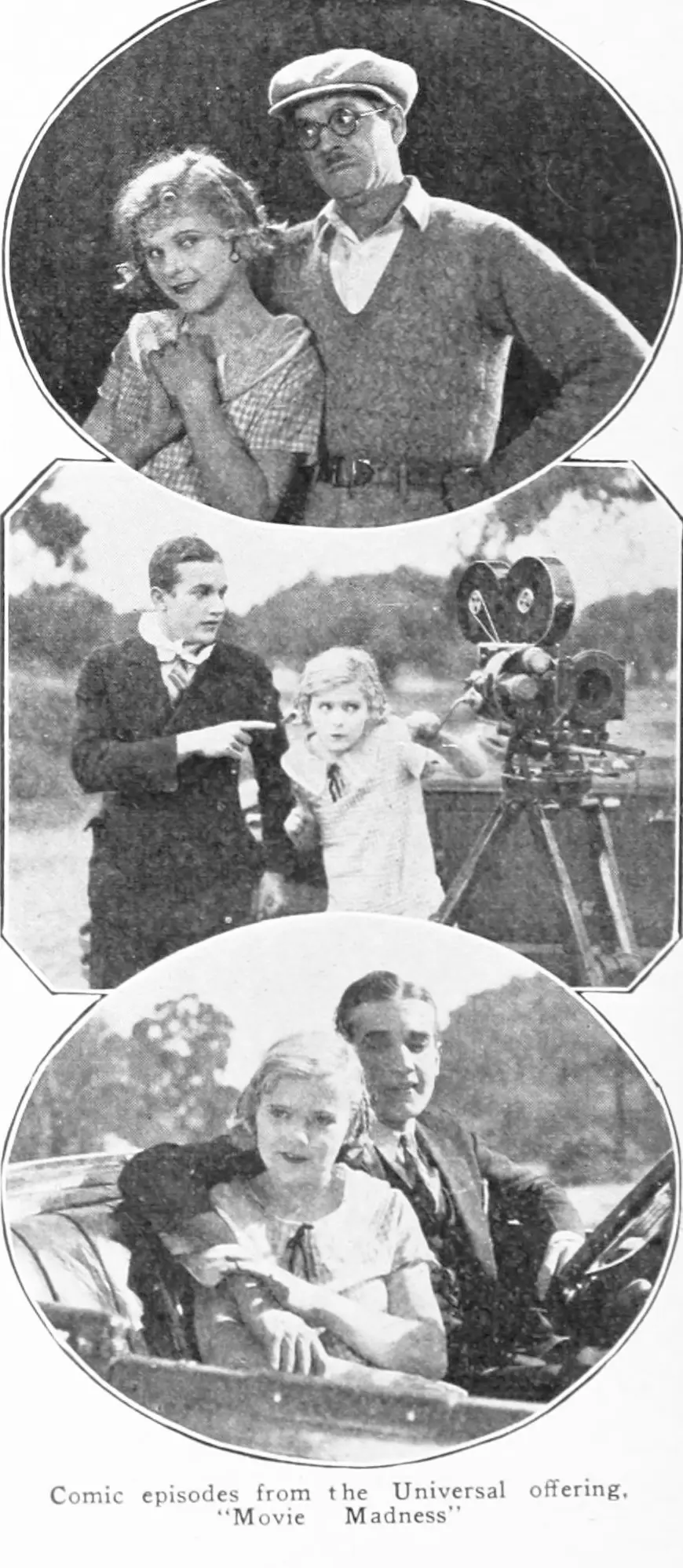
The cinematography, while rudimentary by today's standards, is effective in capturing the frenetic energy of the film crew's invasion. The use of wide shots to showcase the sheer destruction of Edna's house is particularly striking. One can almost feel the splinters flying as walls are torn down and the roof dismantled. This isn't subtle filmmaking; it's bold, direct, and unashamedly theatrical.
The film's tone is largely lighthearted and farcical, but there's an underlying current of almost brutal realism in its depiction of the film industry's impact. The director's complete disregard for property rights and personal space, all in the name of 'art,' is played for laughs, but it also highlights a certain ruthlessness that was, and perhaps still is, inherent in the creative process. This tonal balancing act—between pure comedy and a darker, more critical undertone—is one of the film's more surprising strengths.
Consider the scene where the crew cuts extra windows into Edna's house. The camera doesn't shy away from showing the actual, messy process. It’s not a quick cut; it's a deliberate, almost documentary-style observation of destruction. This bluntness adds a layer of unexpected authenticity to the otherwise exaggerated comedy. It grounds the madness in a tangible, if exaggerated, reality.
Beyond the slapstick, Movie Madness inadvertently delves into themes that remain pertinent even a century later. The most prominent is the clash between the artificiality of art and the authenticity of real life. Edna's farm, a symbol of grounded reality, is systematically dismantled by the demands of a fictional narrative. Her home is literally sacrificed for the sake of a movie scene, a powerful metaphor for the industry's often exploitative nature.
The film also touches on the allure of fame and romance, even if fleeting and illusory. Edna's infatuation with the leading man, culminating in her kissing his picture amidst the ruins of her home, speaks to the powerful escapism that cinema offers. She finds solace and dreams in the manufactured world of film, even as it destroys her physical surroundings. This dichotomy is surprisingly poignant for a film so overtly comedic.
Another subtle theme is the power dynamic between the 'creators' and the 'subjects.' The film crew, particularly the director, wields immense power, dictating reality and exploiting resources for their vision. Edna, initially a passive subject, eventually becomes an active participant, but always within the confines set by the industry. It’s a fascinating, if unintentional, commentary on the early days of a burgeoning media empire.
Yes, Movie Madness is absolutely worth watching today, but with specific expectations. It’s not a film that will resonate with a broad contemporary audience accustomed to modern storytelling conventions. However, for cinephiles, historians, and those with a taste for early silent comedies, it offers a rich and often surprising experience.
Its value lies not just in its entertainment, but in its historical significance. It provides a raw, unfiltered look at the early film industry's self-perception. The film is a time capsule, preserving the humor, the visual language, and even the self-critique of an era long past. It works. But it’s flawed.
The energy of Edna Marion alone makes it a worthwhile viewing. She carries the film with an undeniable charisma that transcends the limitations of its production. You watch it for the historical context, for the sheer audacity of its physical comedy, and for Marion's captivating performance.
Movie Madness is not a cinematic revelation, nor is it a forgotten masterpiece. It is, however, a vibrant and intriguing piece of film history, primarily buoyed by the effervescent talent of Edna Marion. Its chaotic charm and surprisingly meta-commentary on the burgeoning film industry make it a valuable watch for those invested in the evolution of cinema.
While its plot is secondary to its physical comedy, and some elements feel undeniably dated, the film offers a unique window into a bygone era of filmmaking. It’s messy, it’s loud, and it’s utterly committed to its own brand of absurdity. If you approach it with an open mind and an appreciation for historical context, you'll find an engaging, if unconventional, experience. It’s a delightful, if destructive, romp that reminds us of the raw, untamed spirit of early Hollywood. Go watch it, but don't expect your house to remain intact afterwards.
IMDb —
1923
Community
Log in to comment.