DbcultAccessing Vault...
Cult Review
Senior Film Conservator
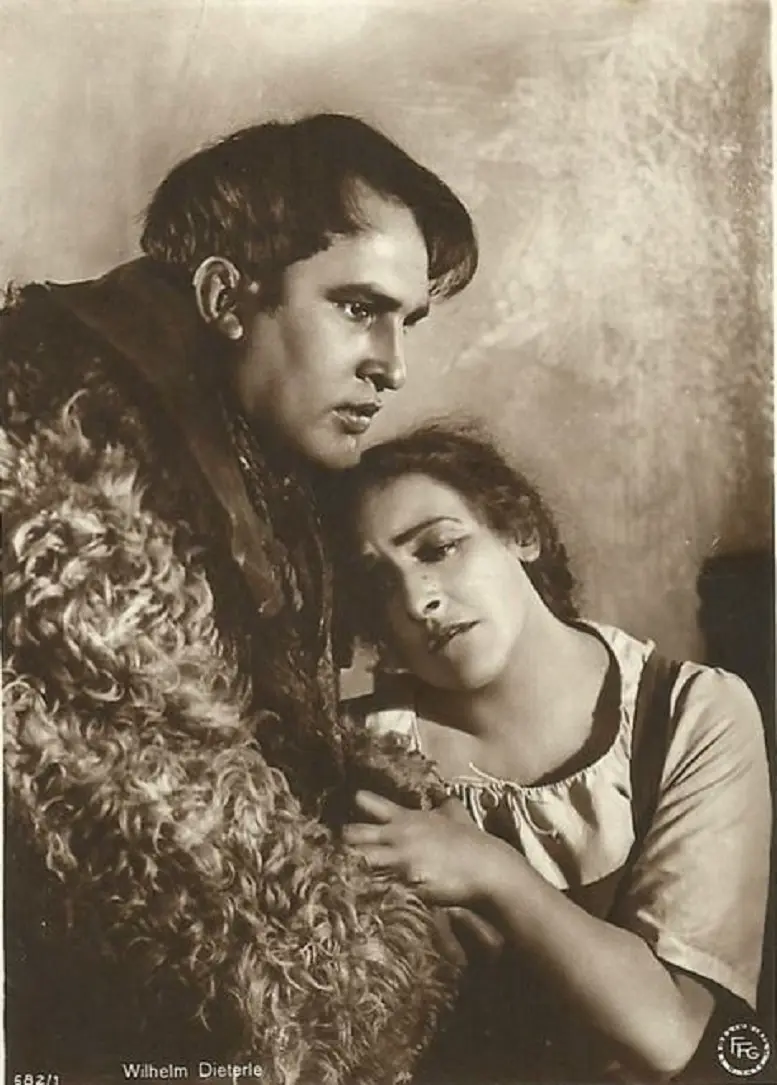
To gaze upon Mutter und Kind (1924) is to witness the architectural scaffolding of the German soul during the Weimar Republic. It is not merely a film; it is a sociological artifact draped in the velvet shadows of expressionistic lighting. While many contemporary viewers might dismiss the silent era's penchant for heavy-handed morality, Carl Froelich’s direction—buttressed by the literary ghost of Friedrich Hebbel—demands a more nuanced interrogation. This is a work that breathes through its silences, finding a visceral language for the agony of the maternal bond that transcends the spoken word.
The casting of Henny Porten was no accident of convenience. By 1924, Porten was the quintessential 'everywoman' of German cinema, a vessel for collective grief and domestic aspiration. Here, she navigates a labyrinth of class-based expectations with a performance that is both fragile and fiercely resilient. Opposite her, Erna Morena provides a stark, aristocratic counterpoint, her face a mask of refined suffering. The interplay between these two women forms the emotional spine of the film, a duality that mirrors the fractured state of Germany itself—torn between its imperial past and an uncertain, democratic future.
The screenplay, a collaborative effort by Walter Supper and Robert Liebmann, eschews the simplistic tropes of the era. Unlike the fragmented narrative of The Essanay-Chaplin Revue of 1916, which relied on episodic slapstick to convey the human condition, Mutter und Kind builds a slow-burning tension. It shares more DNA with the psychological weight of The Witching Hour, though it swaps the supernatural for the far more terrifying specter of institutionalized poverty and social ostracization.
Visually, the film is a masterclass in spatial storytelling. The interiors of the wealthy are cavernous and cold, framed with a geometric precision that suggests a cage. In contrast, the poorer quarters are shot with a cluttered, claustrophobic intimacy. This visual dichotomy reinforces the central conflict: the biological mother versus the social mother. When we see William Dieterle or a young Willy Fritsch enter these spaces, they carry the weight of patriarchal authority, often serving as the catalysts for the women's desperation. Fritsch, in particular, displays a nascent charisma that would soon make him a titan of the UFA studios, but here he is a cog in a much darker machine.
One cannot discuss this film without acknowledging the presence of Friedrich Kayßler and Wilhelm Diegelmann. Their veteran presence lends the film a gravitas that roots it in the theatrical traditions of the 19th century, yet Froelich’s camera is decidedly modern. It lingers on the minute tremors of a hand or the way light catches a tear—details that would be lost on a stage but are magnified into mountains of emotion on the silver screen. In many ways, this focus on the internal psyche of the fallen woman reminds one of A Soul Enslaved, yet Froelich avoids the overt sentimentality found in that work, opting instead for a gritty realism that was quite radical for its time.
The film’s pacing is deliberate, almost agonizingly so. It forces the viewer to sit with the consequences of every choice. There is a sequence involving Loni Nest, as the child, that serves as the film’s emotional pivot. The child is not a character so much as a mirror, reflecting the hopes and failures of the adults surrounding her. This use of the child-as-symbol is far more sophisticated than the contemporary American imports like Molly of the Follies or the rugged adventures of Ruth of the Rockies. While those films were exploring the boundaries of genre and gender in a burgeoning Hollywood, Mutter und Kind was deconstructing the very foundation of the nuclear family.
The Hegemony of the Maternal
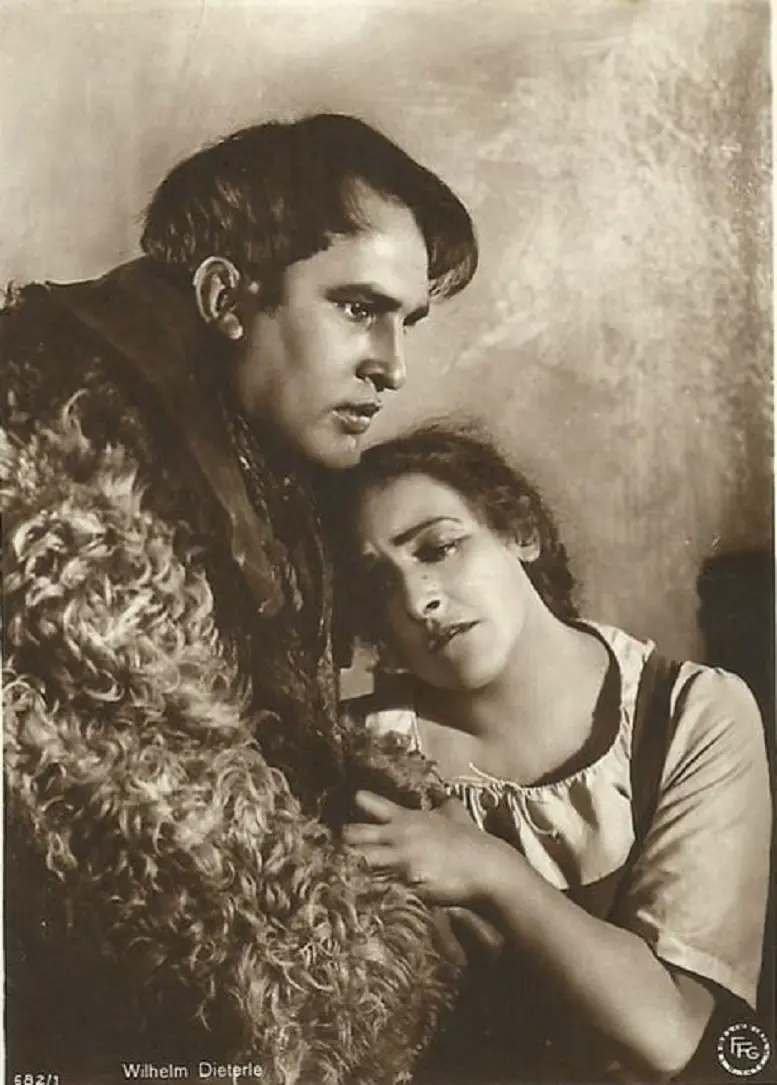
The thematic resonance of the film lies in its refusal to offer easy absolution. It examines the 'Law of the Father' with a critical eye, much like the thematic underpinnings of God's Law and Man's. However, where that film looks at the clash of cultures, Mutter und Kind looks at the clash of classes. The tragedy is not that the characters are evil, but that they are all trapped within a system that values lineage over love and propriety over passion. Even the comedic relief provided by Arnold Rieck feels tinged with a certain bitterness, a reminder that in this world, laughter is often a defense mechanism against despair.
Comparatively, if we look at the Danish influence of the period, such as Blandt Samfundets Fjender, we see a similar obsession with the 'enemies of society.' In Froelich’s vision, the enemy is not a single person but the collective indifference of the status quo. The cinematography captures this beautifully; notice the way the camera often remains static during moments of high drama, forcing the actors to inhabit the frame like figures in a painting. This stillness creates a sense of inevitability, a feeling that no matter how hard Porten’s character fights, the walls of her reality are slowly closing in.
The film also touches upon the concept of the 'stolen life,' a theme echoed in the Russian drama I pesn ostalas nedopetoy. Both films deal with the unfinished songs of the soul, the potential that is snuffed out by societal pressure. Yet, Mutter und Kind is uniquely German in its obsession with the 'Kammerspiel' (chamber play) aesthetic. It is intimate, yet it feels cosmic in its implications. The conflict is domestic, but the stakes are existential.
As we move into the second act, the film’s tone shifts from a social drama to something approaching a thriller. The tension between the two mothers reaches a fever pitch. There is a sequence that rivals the atmospheric dread of The Evil Eye, though the 'curse' here is not supernatural but the curse of one's own bloodline. The way Erna Morena uses her eyes to convey a mixture of longing and theft is nothing short of haunting. She is not a villain, but a woman hollowed out by her own inability to produce an heir, making her a tragic figure rather than a predatory one.
The technical proficiency of the film is staggering for 1924. The editing, while slower than the rapid-fire montage techniques being pioneered in the Soviet Union, is purposeful. Each cut serves to heighten the emotional isolation of the characters. We see this contrast when comparing it to the more kinetic energy of A Motorcycle Adventure or the lighthearted fluff of Distilled Love. Froelich isn't interested in the thrill of the chase or the levity of romance; he is interested in the weight of the human heart.
In the final third of the film, the resolution (or lack thereof) leaves the viewer with a profound sense of melancholy. It doesn't offer the easy moralizing of Smarty or the clear-cut heroics of Half Breed. Instead, it suggests that some wounds are too deep for the balm of time. The final shots of Henny Porten are etched in my memory; her face is a palimpsest of every emotion she has endured throughout the film. It is a face that launched a thousand Weimar films, yet here it feels uniquely vulnerable.
Ultimately, Mutter und Kind is a testament to the power of silent cinema to explore complex, adult themes with a maturity that is often lacking in the talkies that followed. It is a film that understands that the most important conversations are the ones we have with ourselves in the dark. It stands alongside classics like Colomba or The Heart of a Girl as a vital exploration of femininity and the crushing weight of expectation. If you wish to understand the DNA of modern drama, you must first look at the silent sacrifices of the mothers and children of 1924. This is a cinematic journey that is as intellectually demanding as it is emotionally draining, a true masterwork of the UFA era that deserves a prominent place in the pantheon of film history.
Reviewer's Note: The 1924 version of Mutter und Kind remains a superior example of the Hebbel adaptation, largely due to the luminous presence of Henny Porten and the shadow-play of Carl Froelich's direction.
IMDb —
1916
Community
Log in to comment.