DbcultAccessing Vault...
6/10
Senior Film Conservator
A definitive 6/10 rating for a film that redefined the boundaries of cult cinema. My Lady's Lips remains a cornerstone of transgressive art.
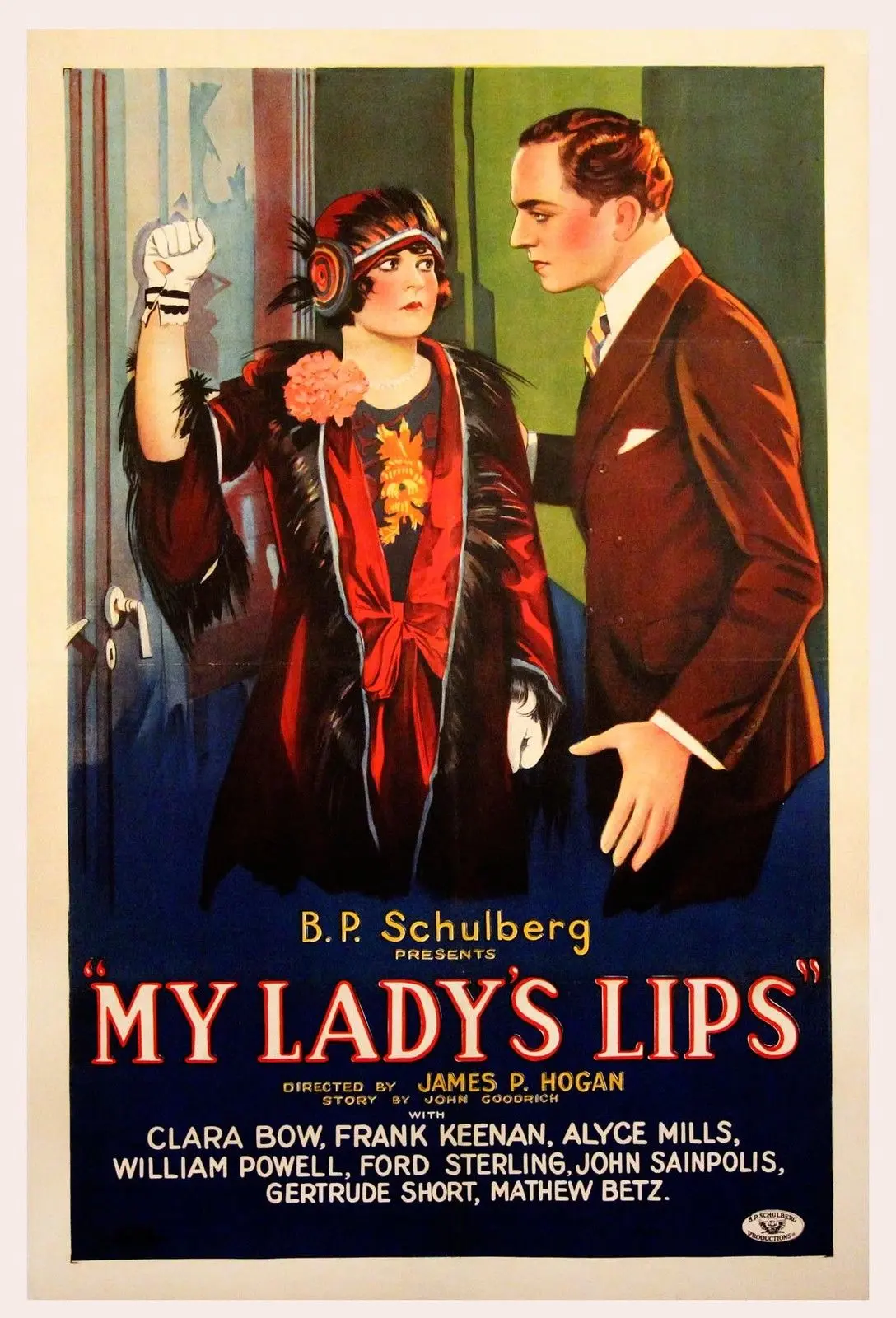
The flickering shadows and grand gestures of silent cinema often serve as a captivating conduit to a bygone era, and 'My Lady's Lips,' a 1925 dramatic offering, is no exception. It plunges us headfirst into the tumultuous currents of the Jazz Age, a period of profound societal shifts, moral ambiguities, and the burgeoning allure of urban underworlds. While perhaps not as widely celebrated as some of its contemporaries, this particular film, penned by John F. Goodrich, offers a fascinating glimpse into the nascent stages of themes that would later define the gritty realism of pre-Code Hollywood and even early film noir. It's a narrative that, despite its vintage, still manages to articulate a compelling story of transgression, desire, and the precarious balance between societal expectations and personal yearning.
At its core, 'My Lady's Lips' unfurls a tale deeply rooted in the generational chasm that widened dramatically in the 1920s. We are introduced to a stern newspaper publisher, a man likely representing the old guard's values, whose carefully constructed world begins to unravel with the shocking revelation of his daughter's dalliance. This isn't merely a youthful indiscretion; it's a full-blown immersion into a clandestine ring of gamblers, a world antithetical to everything her father stands for. The very notion of a 'wild daughter' falling in with such a crowd speaks volumes about the era's changing social landscape, where traditional Victorian mores were rapidly giving way to a more liberated, albeit sometimes dangerous, pursuit of excitement and autonomy. This narrative thread alone could fuel a fascinating sociological study, examining the anxieties of a generation grappling with unprecedented freedom.
But the film doesn't merely dwell on paternal distress. It introduces a crucial, complicating element: a reporter. This individual, driven by the professional imperative to expose the illicit gambling syndicate, ventures into its shadowy depths. Such a premise immediately evokes the sensationalist journalism of the era, where intrepid reporters often risked life and limb for a scoop. What complicates matters, and indeed elevates the drama, is the reporter's unexpected emotional entanglement. He falls for the gang's female leader, a character who, by her very existence, challenges conventional gender roles and expectations. This isn't a demure damsel in distress; she's a woman of agency, power, and perhaps, dangerous charm. This romantic entanglement instantly transforms a straightforward crime exposé into a morally complex narrative, forcing the audience to grapple with questions of loyalty, ethics, and the irresistible pull of forbidden love. It’s a trope that, while familiar now, felt particularly potent in an era where societal boundaries were being tested daily.
The climax, as often happens in such narratives, is a crucible of consequences. A police raid, an inevitable outcome of such illicit activities, ensnares both the reporter and his beloved gang leader. Their shared predicament, caught in the dragnet of justice, underscores the film's central irony: the very act of seeking truth and the pursuit of illicit pleasure converge in a moment of shared vulnerability and peril. They find themselves in 'equal amounts of trouble,' a phrase that succinctly captures the leveling effect of the law and the intertwined destinies forged by their choices. This moment, stark and unforgiving, forces a reckoning, not just for the characters, but for the audience contemplating the cost of living on the fringes.
The ensemble cast of 'My Lady's Lips' features several noteworthy talents, whose performances, even in the absence of spoken dialogue, would have been crucial in conveying the narrative's emotional weight. Alyce Mills, likely portraying the enigmatic female gang leader, would have had the challenging task of embodying both allure and authority, a delicate balance in an era where female power was often subtly, rather than overtly, depicted. Her performance would have been central to understanding the reporter's fatal attraction. Gertrude Short and John St. Polis would have anchored supporting roles, providing texture to the urban landscape and the internal conflicts. However, it’s the presence of names like Clara Bow and William Powell that truly catches the eye, offering a glimpse into their burgeoning careers.
Clara Bow, even in what might have been a smaller role, was already a force of nature, her 'It Girl' persona beginning to crystallize. Her vibrant energy and magnetic screen presence would have undoubtedly injected a specific vivacity into any scene she graced. For enthusiasts of silent cinema, seeing Bow in her earlier work offers a fascinating continuum to her later, more iconic performances in films like 'It' (1927). Similarly, William Powell, long before his suave detective roles as Nick Charles in 'The Thin Man' series, was honing his craft in silent features. His presence, often exuding an understated charisma, would have contributed a layer of sophistication or perhaps even menace, depending on his character's alignment. Matthew Betz, Ford Sterling, Sôjin Kamiyama, and Frank Keenan round out a cast that collectively brings to life the diverse denizens of this shadowy urban milieu, each contributing to the film's atmospheric density.
To fully appreciate 'My Lady's Lips,' it's beneficial to situate it within the broader landscape of 1920s cinema. The film's preoccupation with underworld figures and moral compromise finds echoes in other works of the period. One might draw parallels to the criminal underworld depicted in Tod Browning's 'The Unholy Three' (1925), released in the same year. While Browning's film delves into a more grotesque and twisted form of criminality, both films share a fascination with characters operating outside the strictures of conventional society, exploring the psychology of those who defy the law. The journalistic pursuit of a story, intertwined with personal danger, also calls to mind the intrepid spirit of reporters in films like 'Caught in the Act' (1918), although 'My Lady's Lips' adds a compelling romantic dimension that elevates its stakes.
The 'wild daughter' motif, a recurrent theme during this period of shifting social norms, can be seen in various forms across silent cinema. While not always involving gambling, the struggle of parents to rein in their independent offspring was a common narrative device, reflecting real-world anxieties. Films like 'The Wildcat' (1920) or even the subtle rebellions in 'Dorothy Vernon of Haddon Hall' (1924), though set in a different historical context, explore women challenging established societal roles. 'My Lady's Lips' grounds this rebellion in a distinctly modern, urban setting, making its commentary on the 'new woman' of the 1920s particularly salient. The film's exploration of a woman in a position of power within a criminal enterprise also prefigures later, more overt depictions of formidable female characters, suggesting a nascent recognition of complex female agency, even if framed within a cautionary tale.
The effectiveness of 'My Lady's Lips,' like all silent films, hinges on its visual storytelling. Without dialogue, every gesture, every facial expression, every camera angle becomes a vital piece of the narrative puzzle. The cinematography would have been crucial in establishing the contrasting worlds of the upright publisher and the smoky, illicit gambling dens. Lighting, in particular, would have played a significant role in conveying mood and atmosphere – perhaps stark contrasts for the moral dilemma, or softer, more seductive lighting for the scenes of forbidden romance. The use of intertitles, far from being mere plot exposition, would have needed to be sharp, evocative, and economical, adding poetic flair to the dramatic unfolding of events.
The performances, too, demanded a heightened sense of theatricality. Alyce Mills, as the gang leader, would have had to convey strength, vulnerability, and a dangerous allure through her posture, gaze, and movements alone. Clara Bow, with her natural vivacity, would have needed to channel that energy into physical expressions that communicated her character's 'wildness' without the benefit of a single spoken word. William Powell's early screen presence would have been defined by his ability to command attention through subtlety, a skill he would perfect in his later career. These actors were masters of non-verbal communication, translating complex emotions and motivations into a universally understood visual language.
Beyond its historical context and cinematic techniques, 'My Lady's Lips' touches upon themes that remain remarkably pertinent. The tension between personal freedom and societal responsibility, the intoxicating pull of the forbidden, and the blurred lines between right and wrong are timeless human dilemmas. The film asks us to consider the consequences of our choices, particularly when driven by passion or ambition. The reporter's ethical quandary – torn between his duty to expose and his love for the subject of his investigation – is a narrative device that continues to be explored in contemporary cinema and literature. It forces a contemplation of the sacrifices made in the pursuit of truth, and the potential for that pursuit to become deeply personal and compromising.
The film also subtly critiques the sensationalism of the press, even as it uses it as a driving force for the plot. The newspaper publisher's distress over his daughter's involvement with gamblers highlights a certain hypocrisy or at least a stark contrast between the public facade and private turmoil. His business thrives on exposing such scandals, yet he is devastated when his own family becomes entangled. This dichotomy adds a layer of depth to the narrative, inviting audiences to ponder the role of media in shaping public perception and private lives. It's a nuanced observation that transcends the silent era, resonating with our modern media-saturated world.
Ultimately, 'My Lady's Lips' serves as more than just a historical curiosity. It is a potent reminder of the enduring power of storytelling, even in its earliest forms. It captures the zeitgeist of a vibrant, volatile decade, showcasing the anxieties and excitements of a society in flux. Through its compelling characters and dramatic conflicts, it delves into universal human experiences: love, betrayal, ambition, and the relentless pursuit of identity in a world that often seeks to define us. For those willing to look beyond the absence of sound, this film offers a rich, layered narrative that continues to whisper its tales of forbidden desires and unavoidable consequences from the annals of cinematic history.
The legacy of films like 'My Lady's Lips' is often tied to their availability and the tireless efforts of film preservationists. Many silent films have been lost to time, fire, or neglect, making the survival of any such feature a small triumph. When we revisit these works, we're not just observing a historical artifact; we're engaging with the foundational language of cinema itself. We see the genesis of narrative techniques, character archetypes, and thematic explorations that continue to inform contemporary filmmaking. The film, in its depiction of a society grappling with changing moral codes, an emerging 'new woman,' and the seductive dangers of urban nightlife, offers a compelling snapshot of a specific moment in American culture, rendered with the artistry and expressive power unique to the silent screen.
Its ability to weave a complex tapestry of familial strife, professional duty, and passionate entanglement, all culminating in a dramatic police raid that traps protagonists on both sides of the law, speaks to a sophisticated understanding of dramatic irony and narrative tension. The 'equal amounts of trouble' faced by the reporter and the gang leader is a poetic touch, a forceful reminder that in the face of justice, or perhaps even fate, societal distinctions can dissolve, leaving only shared vulnerability. 'My Lady's Lips' may not be a household name, but its quiet resonance and its capacity to illuminate the human condition through the lens of a specific historical moment make it a film well worth rediscovering for any serious student or admirer of early cinematic art.
IMDb —
1922
Community
Log in to comment.