DbcultAccessing Vault...
2.1/10
Senior Film Conservator
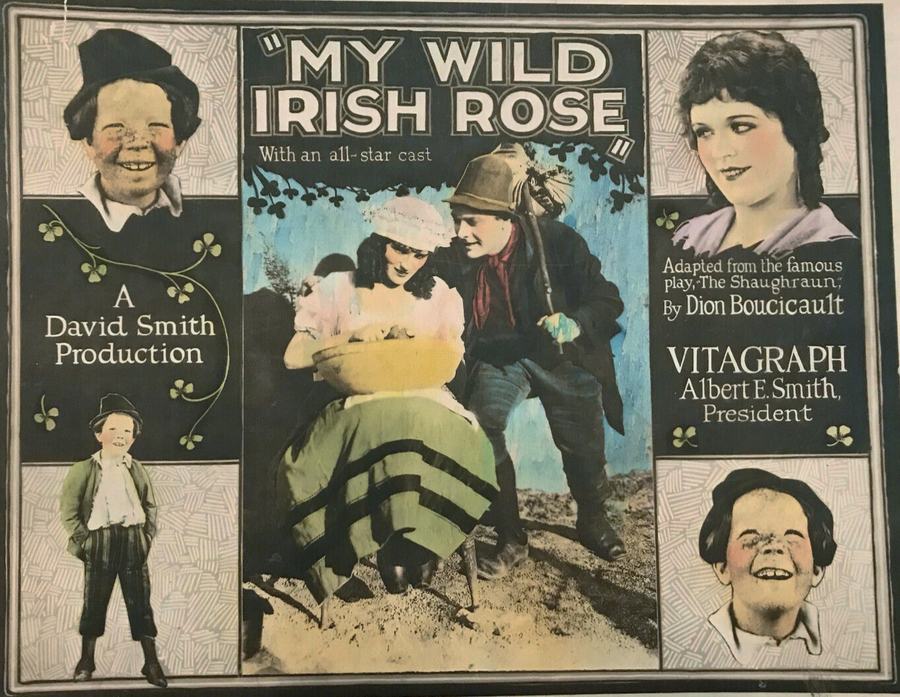
A definitive 2.1/10 rating for a film that redefined the boundaries of cult cinema. My Wild Irish Rose remains a cornerstone of transgressive art.
Imagine, if you will, a celluloid shamrock pressed between the pages of a prison ledger—its veins still green, its edges singed by the sun of exile. That is the visual aftertaste of My Wild Irish Rose, a 1922 pot-boiler that somehow feels both barnacle-encrusted and freshly picked. The camera, hungry for myth, glides over peat-smoke cottages and convict-deck gunwales with equal lust, as if history itself were a restless lover who refuses to choose between hearth and ocean.
Director Harry Dittmar—never a household name even in his own household—approaches Boucicault’s The Shaughraun the way a pick-pocket approaches a waistcoat: nimble, reverent, but ultimately more interested in the silver than the stitching. The plot, a corkscrew of betrayals and reunions, is less a narrative spine than a rosary of set-pieces: the midnight eviction lit by a single turf-fire, the prison-ship flogging silhouetted against a sickle moon, the cave behind the waterfall where lovers breathe each other’s names like contraband.
At the film’s molten core stands Conn, the Shaughraun—part guardian angel, part bar-room mirage. Played with mercury-limbed swagger by Richard Daniels, he vaults across social strata the way a fiddler hops octaves. One moment he’s a barefoot bard crooning rebel airs; the next, a red-coat sergeant barking orders in a brogue thick enough to slice with a shillelagh. The performance is silent, yet the intertitles tremble whenever he appears, as if the very letters fear being hustled out of existence.
Compare him to the moralistic heroes of A Taste of Life or the lantern-jawed sailors in Miss Jackie of the Navy and you’ll see what I mean: Conn is entropy in a jaunty cap, the id of a nation that refuses to bow to bookkeeping.
As Robert’s promised bride, Claire Ffolliat, Maude Emory has the thankless task of radiating purity while the menfolk swap bullets and ballads. Yet watch her eyes—two peat-pools where swans might drown—and you’ll notice a flicker of strategy. She does not merely wait; she gathers intelligence like dew, trading glances with dairymaids and stable-hands until the kitchen becomes a semaphore tower against tyranny. In one ravishing tableau, she stands at the threshold of a ruined abbey, veil snapping like a rebel flag, the Atlantic wind whipping her hair into calligraphy of resistance. The image could hang beside any Pre-Raphaelite siren, but Emory gives it bite.
What lingers longest is not the sword-play but the after-image of empire: the prison ship’s below-deck sequences shot in Bela-system chiaroscuro, bodies stacked like spoons, faces striped by moonlight filtering through grates. Dittmar intercuts these shots with title cards reading “Property of Her Majesty” in florid copperplate, the words themselves a brand. The effect prefigures the carceral horror of later maritime epics—think Lavin or The Ticket-of-Leave Man—but locates the cruelty in the throat of the empire rather than its far-flung limbs.
The escape itself—Conn spiriting Robert through a fog thick enough to butter bread—owes a sly debt to the train-top antics of The Wonderful Chance, yet swaps locomotive steam for ocean brume. A dissolve from Robert’s manacled wrist to Claire’s hand clutching a rosary is so fluid it feels molecular, as though desire itself were a locksmith. Meanwhile, the climactic duel on the cliffside borrows the vertiginous angles later fetishized by Anna Boleyn, but replaces royal pomp with turf-smoke and gull-cries.
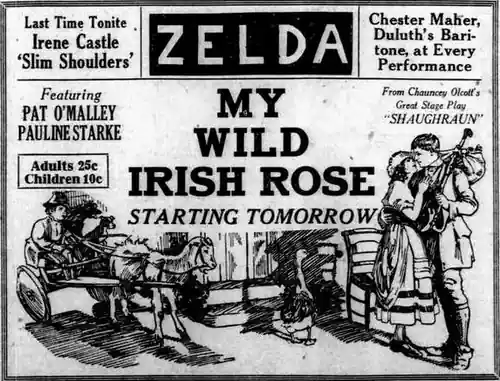
Archival prints screened today are mute, yet the film vibrates with implied sound: the skirl of uilleann pipes, the slap of waves on hull-planks, the hush of a village holding its breath under curfew. Modern accompanists often underscore it with jigs, but I prefer the raw whistle of projector gears—it reminds us that history, too, is a perforated strip rattling through sprockets of forgetting.
Pauline Starke, billed fourth, steals whole reels as Kate, the barmaid who knows every secret but pretends she can’t spell. Her wink at the camera—half a frame, no more—breaks the fourth wall the way a stone skips water. Henry Hebert’s Kinchella, meanwhile, chews scenery with such carnivorous glee that you expect to see upholstery threads between his teeth. Yet even he is eclipsed by the bit-players: real Aran fishermen hired as extras, their faces maps of salt and sorrow, staring down the lens as if to say, “Remember us when the lights come up.”
Recent 4K scans reveal tinting strategies that turn night scenes into bruised violets and dawn into apricot flame. The sea-green of Conn’s waistcoat, once lost to monochrome murk, now pulses like a traffic light for rebels. Scratches remain—thank God—because perfection would feel like forgery. One gouge across Claire’s cheek during the reunion kiss reads like a dueling scar on the face of Ireland itself.
For 1922, the film flirts with proto-feminism: Claire’s refusal to marry the magistrate who “saved” her land feels as radical as any picket sign. Yet the script still demands she faint into Robert’s arms once the guns fall silent. The contradiction is vintage Boucicault—progressive in pulse, Victorian in spine—but Emory undercuts the damsel cliché by letting her eyes stay open during the fade-out, scanning the horizon for the next fight.
Released the same winter as Bab’s Matinee Idol, Rose wilted in urban markets but bloomed in mining towns where Irish diaspora packed parish halls. Variety dismissed it as “stage-Irish malarkey,” yet the poet Lola Ridge praised its “blood-beat of exile.” Today it survives in two incomplete prints—one in Bologna, one in Boise—each missing the reel where Conn disguises himself as a priest. Scholars debate whether the loss is accidental or ecclesiastical censorship; either way, the gap feels appropriate: every trickster needs a pocket of mystery.
So is it a masterpiece? No, and that is why I cherish it. Masterpieces sit in museums behind velvet ropes; My Wild Irish Rose staggers into your living room drunk on moonshine, kisses your forehead, and steals the spoons. It is a shaggy, shamanic romp that believes—against all ledger-books—in the possibility of homecoming. When the curtain falls, you do not applaud; you listen for footsteps on the lane, half expecting Conn to whisk you, too, beyond the horizon where passports are burnable and love is the only currency that never devalues.
Stream it if you must, but better to track down a 16 mm print, project it against a whitewashed barn, and let the night bugs dance through the beam—tiny exiles searching for their own Shaughraun to spirit them home.
IMDb 4.9
1929
Community
Log in to comment.