DbcultAccessing Vault...
Cult Review
Senior Film Conservator
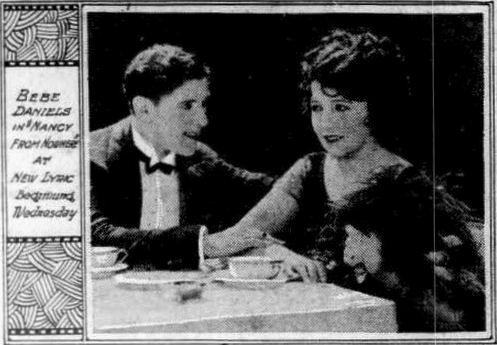
The year 1922 stood as a pivotal juncture for the cinematic medium, a period where the primitive flickers of the nickelodeon had fully matured into the sophisticated visual language of silent melodrama. Within this fertile ground, Nancy from Nowhere emerges not merely as a relic of its time, but as a poignant exploration of social mobility and the enduring resilience of the human spirit. Directed with a keen eye for atmospheric tension, the film serves as a magnificent showcase for Bebe Daniels, who transitions from her comedic roots into a role of profound pathos and vulnerability.
The opening act of the film is a masterclass in establishing a claustrophobic environment. The Kelly household is depicted not as a home, but as a site of Dickensian labor. Nancy’s existence is defined by the heavy, rhythmic labor of the 'drudge'—a term that carries the weight of her social invisibility. The cinematography captures the textures of the rural shack with a gritty realism that contrasts sharply with the idealized pastoral settings often found in contemporary films like Little Miss Happiness. Here, the woods are not a sanctuary but a fence, and the Kellys are the gaolers of a girl whose only crime was being born without a lineage.
The domestic violence portrayed is startlingly frank for the era. When Mrs. Kelly beats Nancy for the perceived transgression of accepting Jack Halliday’s attention, the camera doesn't shy away from the psychological toll. It is this moment of peak cruelty that catalyzes Nancy’s desperate escape. Her decision to stow away in Jack’s car is a primal act of survival, a leap of faith from the known hell of the Kellys into the unknown void of the city. This narrative beat echoes the thematic desperation found in The Flame of Hellgate, where the protagonist is similarly pushed to the brink by an unforgiving environment.
Upon arrival in the city, the film shifts its tonal palette. The dark, cramped interiors of the shack are replaced by the expansive, light-filled architecture of the Halliday estate. Jack Halliday, played with a charming if somewhat naive gallantry by A. Edward Sutherland, views Nancy as a project—a Pygmalion-esque endeavor to transform a 'nobody' into a socialite. The sequence where Jack orders a new wardrobe for Nancy is more than a fashion montage; it is a commentary on the superficiality of class. By changing her garments, Jack believes he can erase her history, a theme that resonates through other silent era dramas such as Her Maternal Right.
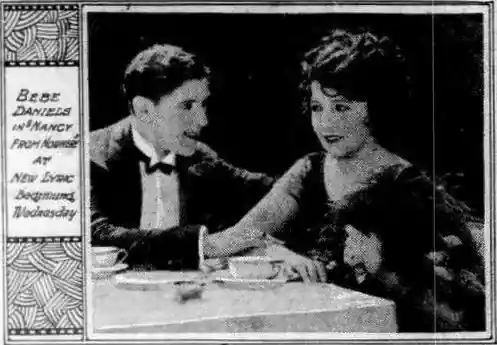
However, the film cleverly subverts the fairy-tale trajectory. Nancy’s presence in the Halliday home acts as a catalyst for the latent prejudices of the upper class. Elizabeth, Jack’s fiancée, represents the gatekeeper of social purity. Her anger is not merely jealousy over a romantic rival; it is a visceral reaction to the intrusion of the 'nowhere' girl into the 'somewhere' world. The return of Jack’s parents, summoned to quell this social uprising, introduces a more insidious form of cruelty. Unlike the physical blows of the Kellys, the Hallidays use psychological manipulation. They convince Nancy that her very existence in Jack’s life is a blight on his future—a sophisticated form of gaslighting that forces her back into the abyss.
Bebe Daniels delivers a performance that transcends the often-exaggerated gestures of the silent period. Her portrayal of Nancy is anchored in her eyes—large, expressive orbs that convey a lifetime of suppressed longing and sudden terror. Whether she is cowering in the back of a motorcar or staring in bewilderment at a silk gown, Daniels maintains a core of dignity that prevents the character from becoming a mere caricature of the 'waif.' Her chemistry with Sutherland provides the film’s emotional backbone, making the eventual reunion feel earned rather than merely convenient. One can see shades of the complex heroines in Hans hustrus förflutna reflected in her nuanced approach to a character caught between two incompatible worlds.
The final act of Nancy from Nowhere brings the narrative full circle, returning to the Kelly shack for a confrontation that is both visceral and symbolic. Nancy’s return in her 'old garments' signifies her loss of hope, a regression to the identity she tried so hard to shed. The attempted attack by Jim Kelly serves as the ultimate manifestation of the rural malevolence she fled. It is a scene of raw intensity, reminiscent of the darker undertones in Dikaya sila.
Jack’s arrival to rescue her is the quintessential 'cavalry' moment of early cinema, yet it feels grounded in the personal growth he has undergone. He is no longer just a benefactor; he is a man fighting for the woman he has come to recognize as his equal. The resolution, while adhering to the 'happily united' trope of the era, carries a weight of social defiance. By choosing Nancy, Jack rejects the rigid expectations of his class and the machinations of his parents, a bold statement for a 1922 audience.
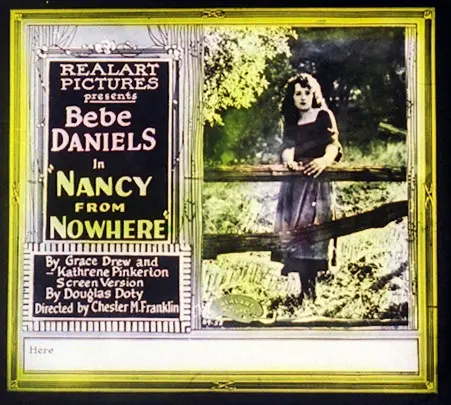
The technical aspects of the film deserve significant praise. The editing, particularly during the escape sequence, creates a sense of kinetic energy that was revolutionary for its time. The use of lighting to distinguish between the oppressive shadows of the Kelly home and the bright, airy spaces of the city serves as a visual metaphor for Nancy’s internal state. While films like The Dead Secret relied heavily on plot twists, Nancy from Nowhere relies on atmosphere and character development.
The writers, including Douglas Z. Doty and Grace Drew Brown, crafted a script that avoids the pitfalls of excessive title cards, allowing the visual storytelling to take center stage. The pacing is deliberate, building tension through silence and shadow rather than relying on the frantic action seen in contemporary shorts like Hair Trigger Stuff. There is a maturity to the narrative structure that suggests a deep understanding of the human condition, placing it alongside works like Occasionally Yours in its exploration of romantic entanglement and social barrier.
In the broader context of silent film history, Nancy from Nowhere stands as a testament to the power of the melodrama to address complex social issues. It tackles domestic abuse, class prejudice, and the concept of self-worth with a sincerity that remains affecting over a century later. While some might dismiss it as a simple 'Cinderella' story, such a reading ignores the film's darker edges and its critique of both rural brutality and urban elitism. It shares a certain DNA with the moral complexities of The Evangelist, yet it maintains a more intimate, personal focus.
For fans of Bebe Daniels, this is essential viewing. It showcases the range of an actress who would go on to become one of the most versatile stars of the early talkie era. For the casual viewer, it offers a window into a bygone world, where the stakes of a single choice could mean the difference between a life of drudgery and a life of love. The film avoids the cynicism found in later noir-adjacent silents like Dropped Into Scandal, opting instead for a hopeful, if hard-won, conclusion.
Ultimately, Nancy is not just a girl from 'nowhere.' She is a symbol of the millions of nameless individuals seeking a way out of their own 'shacks,' looking for a Jack Halliday to notice them, or more importantly, finding the strength to hide in the car and drive themselves toward a better future. The film’s enduring power lies in this universal aspiration, wrapped in the gorgeous, flickering light of the silent screen. It is a work that demands to be rediscovered, analyzed, and celebrated for its contribution to the art of cinematic storytelling.
Further explorations in silent melodrama can be found in related titles such as Amor fatal and The Golden God, which continue the era's tradition of high-stakes emotional narrative.
IMDb —
1928
Community
Log in to comment.