DbcultAccessing Vault...
5/10
Senior Film Conservator
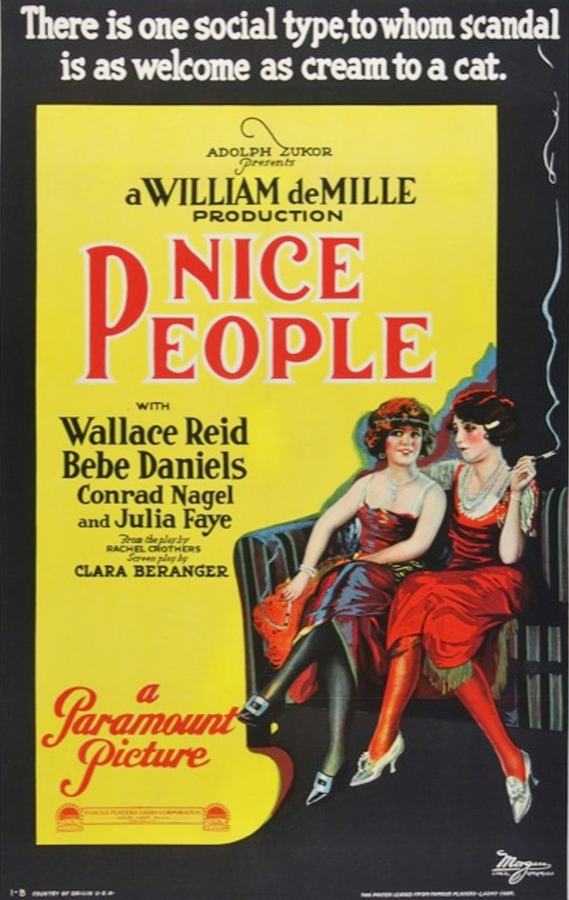
A definitive 5/10 rating for a film that redefined the boundaries of cult cinema. Nice People remains a cornerstone of transgressive art.
Ah, the Jazz Age. A period often romanticized for its flappers, its forbidden speakeasies, and its audacious defiance of Victorian prudishness. Yet, beneath the glittering veneer of newfound freedoms and bobbed hair, a rigid societal code still held sway, particularly for women. Enter Nice People, a cinematic artifact from 1922, a film that peels back the layers of this fascinating epoch to reveal the hypocrisy and the harsh judgments that lurked just beneath the surface of polite society. It's a testament to the enduring power of silent cinema that a story nearly a century old can still resonate with such clarity, offering a poignant mirror to our own contemporary struggles with reputation, perception, and personal liberty.
This isn't just a film; it's a social commentary wrapped in a dramatic narrative, a vivid snapshot of a society grappling with its own rapidly evolving moral compass. Adapted from Rachel Crothers' successful play, and with a screenplay penned by Clara Beranger, Nice People plunges us into the world of Teddy Gloucester, portrayed with captivating vivacity by the inimitable Bebe Daniels. Daniels, a star whose charisma transcended the silent screen, embodies Teddy with a blend of youthful exuberance and underlying vulnerability that makes her character's journey all the more compelling. She is, initially, the quintessential Jazz Age 'nice person' – a woman of privilege, accustomed to the whirl of social engagements, the casual flirtations, and the unspoken rules of her elite circle.
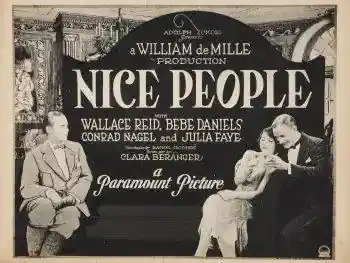
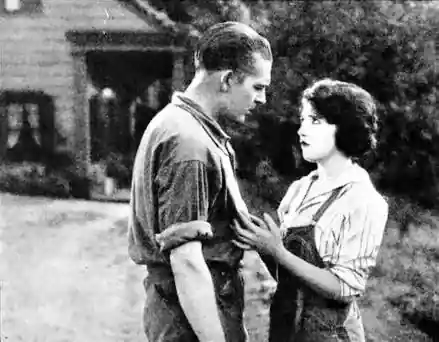
The narrative's inciting incident is a classic setup: a formidable storm, a secluded farmhouse, and a confluence of ill-fated circumstances. Teddy, alongside her rather intoxicated companion, Scotty (Wallace Reid, in a role that, sadly, mirrored some of his own real-life struggles), seeks refuge from the tempest. The arrival of a stranger, Billy Wade (Conrad Nagel, ever the picture of earnest rectitude), adds another layer of complexity to an already precarious situation. Billy's intervention, preventing Scotty from making unwelcome advances, is a moment of salvation, yet it cannot, alas, shield Teddy from the far more insidious storm brewing on the horizon: the scandal. The discovery of Teddy and Scotty, alone in the farmhouse by her father the following morning, ignites a social firestorm. In an era where a woman's reputation was her most valuable, yet most fragile, asset, this indiscretion, however innocent in its true nature, becomes a public indictment.
The film masterfully portrays the swift and brutal nature of societal judgment. Teddy, once the darling of her set, finds herself ostracized, her 'friends' turning their backs with a chilling alacrity that speaks volumes about the performative nature of their camaraderie. This sudden isolation, this profound sense of betrayal, forces Teddy into a radical re-evaluation of her life and values. It’s a thematic thread that echoes in other films exploring the precariousness of female reputation, such as Her Mistake, where a single misstep can unravel a life, or even Nobody's Wife (1921), which also delves into the societal pressures placed upon women in relationships. The sting of rejection, the realization that her 'nice people' were anything but, propels Teddy towards a dramatic, almost defiant, shift in perspective.
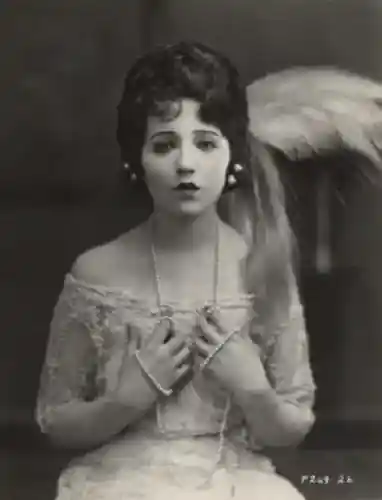
Bebe Daniels, a prodigious talent who began her career as a child actress, truly shines in Nice People. Her performance as Teddy is a nuanced portrayal of a young woman caught in the crosscurrents of societal change. Daniels navigates Teddy's transformation from a carefree flapper to a woman contemplating a more traditional life with remarkable grace. Her expressive face, a hallmark of silent film acting, conveys a spectrum of emotions – from playful insouciance to heartbreaking despair, and finally, to a quiet resolve. It's a performance that grounds the film, preventing it from devolving into mere melodrama and elevating it to a genuine character study. One can almost feel the weight of Teddy’s choices, the internal conflict between the allure of independence and the societal expectation of conformity.
Conrad Nagel, as Billy Wade, provides a steady, albeit somewhat less dynamic, counterpoint to Daniels' effervescence. His character represents a different kind of 'nice person' – one rooted in integrity and a more conservative worldview. The chemistry between Daniels and Nagel, though not overtly passionate, is palpable in its evolution, reflecting a relationship built on shared experience and mutual respect rather than fleeting infatuation. Wallace Reid, whose tragically short life and career were marked by addiction, imbues Scotty with a dissipated charm that hints at deeper troubles, making his role a poignant footnote in film history. The casting here is particularly resonant, adding layers of subtext for contemporary audiences familiar with the actors' off-screen lives, much like how one might view a film like Behind Closed Doors, where the private lives of characters are often more complex than their public facades.
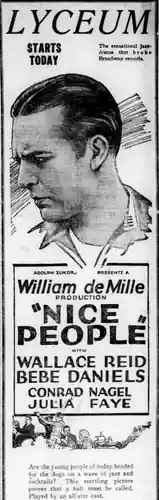
The film's denouement, where Teddy agrees to become an 'old-fashioned wife' to Billy, is perhaps its most intriguing and, for modern sensibilities, potentially controversial aspect. On one hand, it can be seen as a retreat, a capitulation to societal pressure, a woman giving up her autonomy for the sake of respectability. On the other, it can be interpreted as a pragmatic choice, a search for genuine connection and stability in a world that has proven itself superficial and unforgiving. It speaks to the complex negotiations women of that era had to make between personal desire and prescribed roles. Was it a surrender, or a conscious decision for a different kind of fulfillment? The film leaves room for interpretation, inviting viewers to ponder the nature of happiness and sacrifice.
This resolution is a powerful statement about the era's conflicting ideals. The Jazz Age heralded a new woman, independent and spirited, yet the underlying current of traditional values remained strong. Teddy's choice is a reflection of this tension, a fascinating commentary on the limits of 'modernity' in the early 20th century. It prompts us to consider the sacrifices individuals made for societal acceptance and the often-unseen strength required to forge a new path, even if that path appears, on the surface, to be a return to convention. Films like The Spendthrift or What's His Name also explore themes of societal expectations and the transformations individuals undergo when faced with financial or social adversity, showing that these dilemmas were a recurring motif in the cinema of the time.
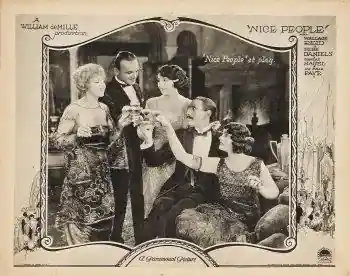
Beyond its compelling narrative and stellar performances, Nice People offers a glimpse into the cinematic techniques of the early 1920s. While not groundbreaking in its visual style compared to some of the more avant-garde European works of the period, the film employs effective storytelling through clear visual cues, expressive intertitles, and well-staged scenes. The direction, by William C. deMille, brother of the more famous Cecil B., is competent and ensures the emotional beats land with impact. The pacing is deliberate, allowing the audience to absorb the moral quandaries and character developments, a common characteristic of films from this specific era, often prioritizing narrative clarity over rapid-fire editing. The film’s power lies not in its spectacle, but in its intimate portrayal of human frailty and resilience.
The enduring relevance of Nice People cannot be overstated. It serves as a potent reminder that while the specific social strictures may have changed, the fundamental human struggles with reputation, judgment, and the search for authentic connection remain constant. The film invites us to reflect on our own 'nice people' – the circles we inhabit, the expectations we face, and the courage it takes to defy or redefine them. It's a fascinating historical document, yes, but more importantly, it's a timeless story about the arduous journey of self-discovery amidst the unforgiving glare of public opinion.
In an era where social media often acts as the new town square, where reputations can be built and shattered with a single viral post, the themes explored in Nice People feel remarkably contemporary. The film's depiction of a swift and unforgiving public shaming, the isolation that follows, and the profound impact on an individual's life, resonates deeply with modern anxieties. It challenges us to look beyond the surface, to question the narratives presented by society, and to consider the true cost of conformity versus the price of authenticity. This exploration of social dynamics makes it a valuable companion piece to films like Szent Péter esernyöje, which also delves into community perceptions and the ripple effects of individual actions, albeit in a different cultural context.
Ultimately, Nice People is more than just a period piece; it's a thoughtful examination of character, consequence, and the complex interplay between individual desire and societal pressure. Bebe Daniels delivers a performance that solidifies her status as a silent screen icon, capable of conveying profound emotional depth without uttering a single word. The film, in its quiet yet powerful way, illuminates the often-hypocritical underpinnings of 'polite' society and the courage required to navigate its treacherous waters. It's a film that deserves to be rediscovered, not just for its historical significance, but for its timeless insights into the human condition.
It’s a reminder that even in the most ostensibly 'nice' circles, appearances can be deceiving, and true character is often forged in the fires of adversity. The film’s nuanced portrayal of Teddy's journey, from a symbol of Jazz Age frivolity to a woman seeking genuine connection and a redefined sense of self, makes it a compelling watch. It’s a testament to the fact that silent films, far from being mere historical curiosities, possess a profound ability to communicate complex ideas and emotions, transcending the barriers of time and technology. So, if you're ever in the mood for a cinematic journey back to the roaring twenties, one that offers more than just flapper dresses and jazz music, then Nice People is an excellent choice. It will leave you pondering the nature of reputation, the definition of happiness, and the true cost of being 'nice' in a world that often demands conformity.
IMDb —
1921
Community
Log in to comment.