DbcultAccessing Vault...
Cult Review
Senior Film Conservator
1. The Spark that Escaped the Reel
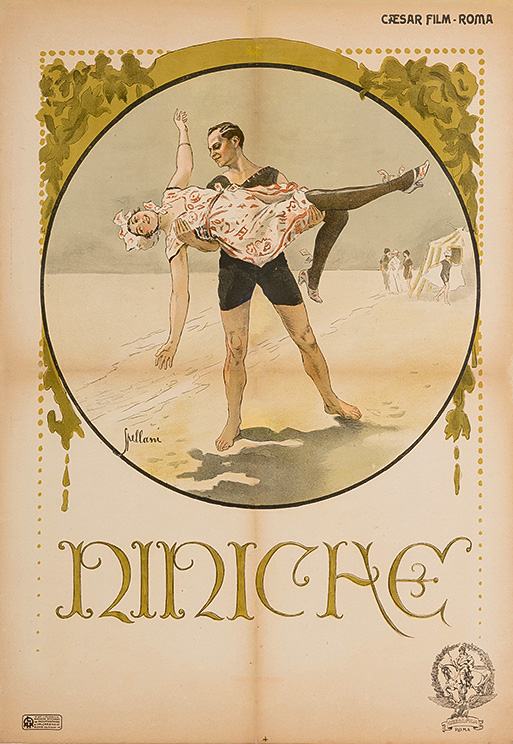
In the yawning archive of world cinema, certain films smolder like hidden coals; Niniche is one such ember. Shot in the exhausted autumn of 1918, when Europe exhaled the mustard-tinged dust of war, this Parisian oddity arrives to modern viewers like a hand-tinted postcard scorched at the edges. Its plot—ostensibly a sentimental orphan’s climb from gutter to gilded cage—unfurls with the fever logic of a opium-laced fable. Director-cum-illusionist Albert Millaud, better known for boulevard comedies, here weaponizes the medium’s raw youth: double exposures ripple like absinthe in water; irises swallow faces whole; intertitles fracture into glyphs of anxiety. The result is a celluloid séance where melodrama bleeds into modernist horror long before He Who Gets Slapped patented the carnival-grotesque.
2. Faces Carved by Gaslight
Franco Gennaro’s impresario, Garofolo, possesses the oleaginous charm of a Montmartre Mephistopheles—every eyebrow lift is a rent increase on someone’s soul. Tilde Kassay’s Niniche, by contrast, is a kinetic contradiction: knees bruised from rooftop escapades yet eyes wide as communion wafers, she navigates each frame like a sparrow that suspects the cathedral will collapse. Their chemistry crackles less as romance than as predation observed through a brass peephole. When Garofolo slams the marionette-theatre curtain, the camera lingers on his stubby fingers branding Niniche’s wrist; the shadow cast resembles a hawk over a lamb. The scene lasts barely four seconds, yet it etches the film’s core thesis: bodies in poverty are collateral for the powerful, and the stage is merely a more glittering marketplace.
3. A Palette of Rot and Gold
Unlike the pastel pastorals of The Apple-Tree Girl, Niniche wallows in chromatic dissonance. The surviving 35 mm nitrate (rescued from a bricked-up cellar in Liège) carries hand-painting that has oxidized into sulfurous oranges and gangrenous greens. Nighttime revelers glow like medieval demons; the balloon that will eventually immolate Niniche is tinted a queasy arterial red. Each frame resembles a Toulouse-Lautrec poster left to marinade in absinthe and candle smoke. This decay becomes narrative: the more the colors mutate, the more they externalize Niniche’s psychological corrosion—her innocence literally eaten by time’s chemistry.
4. The Blindness That Sees
Mid-film, Gustavo Serena’s painter, Raoul, suffers acid flung by a spurned actress. The act occurs off-screen; we only witness the aftermath—eyes milked over like antique marbles. From here, Millaud flips perspective: we share Raoul’s subjectivity through superimposed mist, chandeliers smearing into comets, Niniche’s face dissolving whenever he reaches. Blindness becomes the film’s most ruthless metaphor: those who romanticize poverty cannot bear to look at its consequences. In a bravura sequence, Raoul wanders a carnival, sculpting Niniche’s silhouette from air while a calliope grinds a waltz. Children circle him, their masks grotesque parodies of his absent muse. The moment is both heartbreaking and indicting—art, stripped of sight, still refuses to relinquish its fetish.
5. Editing as Guillotine
Millaud’s cutter, rumored to be a former battlefield nurse, wields the splicer like a field surgeon. Cuts slam shut with Eisensteinian brutality yet retain the intimacy of a diary fragment. Note the transition from Niniche’s forced ballroom waltz—where the camera pirouettes with her—to the subsequent shot of a rat twitching in a gutter: the juxtaposition is so savage it feels like a moral interrogation. Later, when the duke’s lackeys strip her for inspection, the film jump-cuts to marionette strings being clipped; the implication lands like a guillotine blade. Niniche’s body is literally segmented by montage, mirroring the societal dismemberment she endures.
6. Sound of Silence, Echo of Shells
Though released two months after Armistice, Niniche vibrates with post-war shell shock. Note the recurring auditory voids—intertitles appear without musical notation, leaving dead air that modern restorers wisely left untouched. When the balloon burns, the orchestra would typically swell; here, silence howls. Viewers report hearing phantom shell whistles, so potent is the contextual bleed. Compare this to the sonic balm of Peace on Earth, released the same year—one film whispers “forget,” the other commands “remember the scorch.”
7. Gender as Costume, Costume as Coffin
Costume designer Ines Imbo (also playing the acid-wielding actress) sews sartital prisons. Niniche’s orphan smock is stitched from discarded theatre curtains—an omen that she’ll never exit the stage. As Garofolo’s star attraction, she’s encased in a Pierrot suit whose pom-poms weigh leaden. When the duke dresses her in courtesan lace, the bodice is so tight Kassay’s breathing visibly shallows. Each wardrobe change signals a contractual death: childhood, autonomy, hope. The final balloon ascension sees her strip to a chemise—at last unadorned flesh—yet the surrounding flames fashion a fiery coronation robe. Nudity becomes monarchy; liberation, annihilation.
8. Modern Echoes and Corridors
Cine-philes will spot DNA strands linking Niniche to later venom-laced reveries. The acid attack prefigures the disfigurement in Green Eyes; the balloon inferno anticipates the climactic immolation in Life's Whirlpool. Yet Millaud’s film never succumbs to the moral absolutism of its descendants; it wallows in ambiguity like a pig in truffle-soil. Niniche’s ascent is framed against cheering crowds—are they celebrating her escape or her sacrificial spectacle? The camera refuses to adjudicate, lingering instead on a child deviating cotton candy, sugar redder than the flames above.
9. Reception: Then and Now
Contemporary critics dismissed the film as “unwholesome penny-dreadful gilded with Expressionist gimmicks.” A Parisian reviewer suggested the censor’s scissors be “laundered in holy water.” Yet within bohemian circles, Niniche became a clandestine bible—Apollinaire reportedly carried a folded still in his breast pocket when he shipped to the front. The picture vanished in 1923, vaulted by its own distributor who deemed it “box-office belladonna.” Resurfacing in 2019, the restored print premiered at Il Cinema Ritrovato where viewers wept, laughed, vomited—sometimes sequentially. Social media dubbed it “#TraumaTinted,” a hashtag now co-opted by fashion houses selling distressed Pierrot collars at $600 a pop.
10. Final Verdict: The Burn You Invite
To watch Niniche is to press one’s palm against a ghost-ember; it scars because it illuminates. Millaud orchestrates a danse macabre where every pirouette leaves footprints in blood-talc. The film indicts spectacle, yet is itself spectacular—hypocrisy rendered in rust and gold leaf. Niniche’s flaming ascent feels less tragic than logical: in a world commodifying innocence, self-immolation is the only authorship left. When the balloon becomes a comet against the Parisian night, we realize the true horror—not that she dies, but that the city applauds, already crafting legends for tourist brochures. Niniche escapes narrative, becomes myth, and myths, as we know, are far more flammable than flesh.
11. Where to Witness the Scorch
As of this writing, the only sanctioned stream is via the European Film Archive’s paywall, encrypted like wartime telegrams. A 2K restoration Blu-ray drops this winter from Cauldron Cinematique, complete with a commissioned score by Éliane Radigue—expect drone frequencies that vibrate dental fillings. Bootlegs circulate on niche forums; their color-bled grayscale mutes the film’s septic vibrancy—avoid. For the full infection, catch the 35 mm roadshow stopping at micro-cinemas from Bruges to Bogotá; each print carries unique chemical blemishes, so no two viewings scald alike.
12. Your Turn to Burn
Have you undergone Niniche? Did the final silence leave you gasping or rolling your eyes into existential orbit? Slide down to the comments, but check your innocence at the door—this is a space for scarred sparrows only. If you crave more celluloid bruises, wander over to our takes on The Spy or The Girl from Outback. But be warned: once you’ve tasted Millaud’s belladonna, ordinary melodrama feels like sugared water. Welcome to the burn ward.
IMDb —
1928
Community
Log in to comment.