DbcultAccessing Vault...
Cult Review
Senior Film Conservator
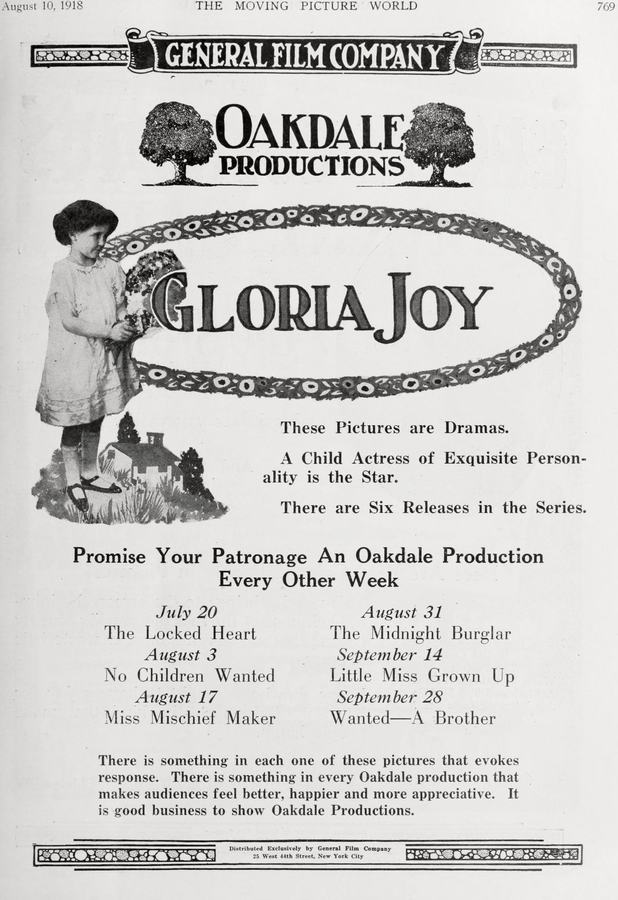
The cinematic landscape of 1918 was often a mirror to the shifting anxieties of a world transitioning from Victorian rigidity to the frenetic pace of the modern era. In No Children Wanted, we find a narrative that is as much a social indictment as it is a domestic melodrama. The film operates on a frequency of profound isolation, capturing the plight of Little Dot Jarvis, portrayed with a haunting vulnerability by Gloria Joy. This is not merely a story of a child lost; it is a story of a child systematically erased from the blueprints of her parents' social aspirations.
The central conceit of the film—the move to a fashionable apartment building that explicitly forbids children—serves as a chilling metaphor for the dehumanization inherent in the pursuit of status. Neil Hardin and Clara Kahler deliver performances that oscillate between chilling indifference and the eventual, frantic realization of their moral bankruptcy. Their characters represent a specific type of early 20th-century upward mobility where the family unit is viewed not as a source of vitality, but as a liability to be managed or, in this case, sequestered. The apartment itself becomes a character—a silent, gilded cage that demands the sacrifice of natural affection at the altar of aesthetic and social conformity.
This theme of children as obstacles to adult pleasure is a recurring motif in the silent era, often explored with more nuance than the 'talkies' that followed. When we look at similar thematic explorations in films like The Little Duchess, we see a parallel obsession with the fragility of childhood within the rigid structures of class. However, 'No Children Wanted' strips away the fairy-tale veneer, opting instead for a gritty, almost naturalistic portrayal of how easily a child can be discarded by those sworn to protect her.
The second act plunges Dot into the abyss of a boarding school that feels less like an educational institution and more like a Dickensian workhouse. The cinematography here shifts, utilizing shadows and stark framing to emphasize Dot’s diminutive stature against the oppressive architecture of her exile. The cruelty she endures is depicted with a visceral intensity that challenges the viewer’s endurance. It is a sequence that evokes the same sense of moral decay found in Corruption, where the institutional failure is a direct byproduct of a society that has lost its ethical moorings.
Dot’s escape and her subsequent encounter with the kind farmer provide the film's only moments of respite. This pastoral interlude serves as a sharp contrast to the cold, urban environments of the apartment and the school. The farmer, played with a grounded sincerity by Daniel Gilfether, represents a return to agrarian values—a common trope in early American cinema where the city is a site of vice and the country a site of virtue. Yet, the film refuses to allow this escape to be permanent. The return to the police station and the subsequent reunion with her parents is not a moment of joy, but one of renewed tension, highlighting the inescapable nature of her legal and social tethering to her negligent parents.
Perhaps the most startling element of 'No Children Wanted' is its final act pivot into the realm of international intrigue. The father’s involvement in a scheme to smuggle arms into Mexico adds a layer of high-stakes tension that feels almost like a different film entirely. This narrative lurch, while potentially jarring, serves to illustrate the complete moral disintegration of the Jarvis patriarch. His willingness to engage in illegal activity mirrors his domestic negligence; both are driven by a desperate, short-sighted greed. The inclusion of the Mexican border conflict places the film within a specific historical context, reminiscent of the political tensions explored in 1810 o Los libertadores de México, though here it is used more as a backdrop for personal redemption.
The resolution hinges on the power of the image—a photograph of Dot that prevents Robert Chase (played by Edward Saunders) from exposing the father’s crimes. This moment is a masterclass in silent film symbolism. The photograph acts as a surrogate for Dot’s physical presence, a reminder of the innocence that the father’s actions have endangered. It is the visual evidence of his humanity, or what remains of it, that ultimately saves him from total ruin. This reliance on the visual medium to convey complex ethical dilemmas is a testament to the sophisticated storytelling techniques of the era.
Gloria Joy is the emotional heartbeat of the film. Her ability to convey profound sorrow without the aid of dialogue is remarkable, even by the standards of the silent era. She avoids the saccharine pitfalls that often plagued child actors of the time, opting instead for a quiet, observant performance that makes the cruelty she faces feel all the more egregious. The supporting cast, including Ethel Ritchie and H.E. Archer, provide a solid foundation, though the film belongs squarely to Joy. The direction is purposeful, favoring long takes that allow the emotional weight of a scene to settle before the next cut. This pacing creates a sense of dread that is essential to the film’s critique of the Jarvis household.
When comparing the emotional resonance of this film to other contemporary works like Souls Triumphant, one notices a similar preoccupation with the soul's survival in a materialistic world. However, 'No Children Wanted' feels more grounded in the specific social realities of its time. It doesn't rely on spiritual intervention for its climax; instead, it relies on the human capacity for shame and the transformative power of guilt.
As we look back at 'No Children Wanted' through a century of cinematic evolution, its themes remain uncomfortably relevant. The tension between career ambition and familial responsibility, the vulnerability of children within institutional systems, and the corrupting influence of social status are all contemporary concerns. The film’s final scenes, where the parents finally offer Dot the love she has been denied, are often criticized as being too tidy. Yet, in the context of 1918, this 'repentance' was a necessary catharsis for an audience navigating their own moral uncertainties.
The film’s visual style, while perhaps primitive to the modern eye, possesses a clarity and an intentionality that is often lost in today’s hyper-edited cinema. Every frame is designed to communicate a specific emotional state. The contrast between the dark, cramped interiors of the boarding school and the bright, airy (yet cold) apartment of the parents is a visual shorthand for the various forms of imprisonment Dot faces. In this regard, the film shares a certain aesthetic DNA with Hell Bent, which also used landscape and environment to reflect the internal struggles of its protagonists.
Technically, the film is a product of its time, but it utilizes the limitations of the medium to its advantage. The use of title cards is sparse but effective, allowing the performances to carry the narrative weight. The lighting, particularly in the newspaper office scenes with Robert Chase, shows an early understanding of how to create atmosphere and professional tension through shadow. While it may not have the stylistic flourishes of a film like Montmartre, it possesses a rugged, American sincerity that is deeply compelling.
In the pantheon of 1918 cinema, 'No Children Wanted' stands as a vital, if overlooked, work. It is a film that refuses to look away from the darker impulses of the human heart, even as it ultimately seeks a path toward light. It serves as a reminder that the greatest tragedies are often not found in grand geopolitical conflicts, but in the quiet, devastating silence of a home where a child is not wanted. For those interested in the evolution of domestic drama and the social history of the early 20th century, this film is an essential watch. It captures a moment in time when the world was beginning to grapple with the consequences of its own modernization, and it does so with a heart-wrenching honesty that still resonates today.
Final Verdict: A hauntingly effective social critique that uses the silent medium to amplify the voices of the unheard. A must-see for historians and cinephiles alike.
IMDb —
1925
Community
Log in to comment.