DbcultAccessing Vault...
6.1/10
Senior Film Conservator
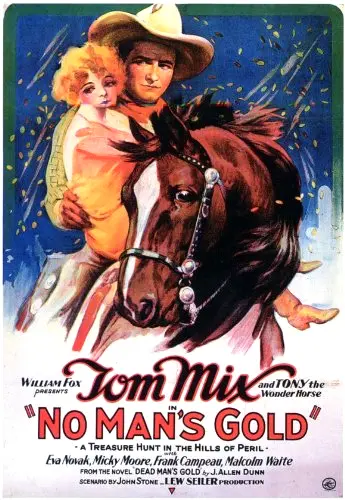
A definitive 6.1/10 rating for a film that redefined the boundaries of cult cinema. No Man's Gold remains a cornerstone of transgressive art.
Is No Man's Gold worth seeking out in the modern era of high-octane blockbusters? Short answer: yes, but only if you appreciate the raw, physical choreography of early Hollywood stardom over complex psychological plotting.
This film is specifically for enthusiasts of silent-era Westerns and those who want to see the blueprint for the 'treasure map' trope that would later define the genre. It is certainly not for viewers who demand fast-paced dialogue or those who find the sentimental 'orphan' tropes of the 1920s to be overly cloying.
1) This film works because: The central gimmick of the three-part map creates a natural, ticking-clock tension that keeps the narrative focused despite its episodic nature.
2) This film fails because: The tonal shifts between Frank Campeau’s genuine villainy and Harry Grippe’s slapstick relief feel jarring and often undermine the stakes.
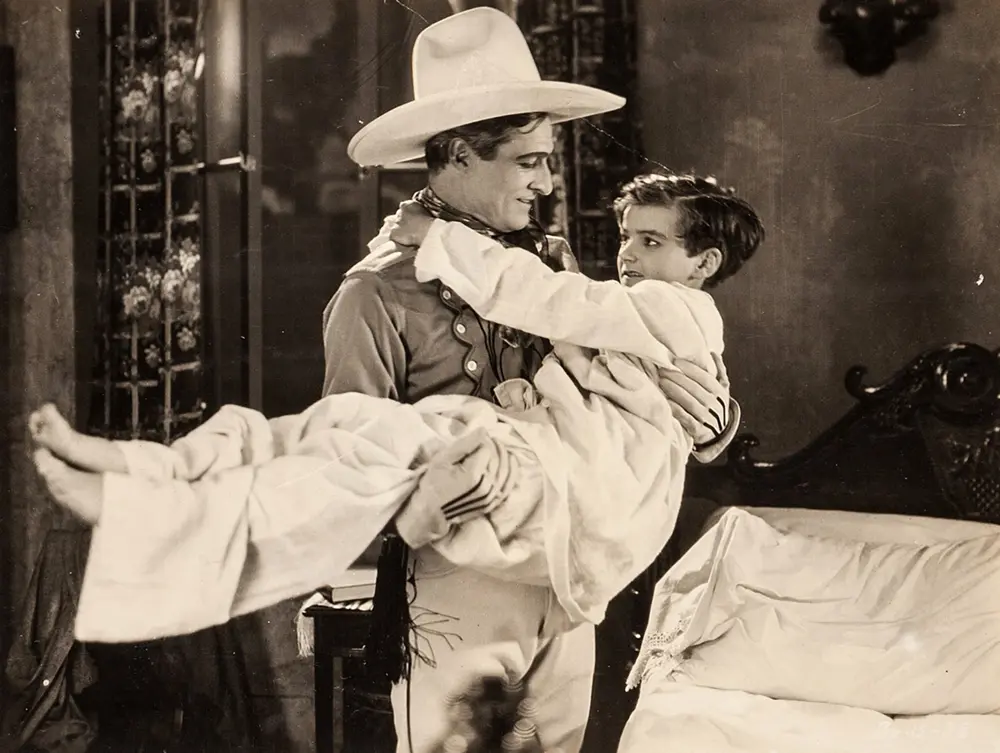
3) You should watch it if: You want to witness Tom Mix at the height of his physical prowess, performing stunts that modern actors would leave entirely to CGI doubles.
The narrative engine of No Man's Gold is surprisingly modern. By splitting the map into three parts, writers John Stone and J. Allan Dunn created a forced proximity between the hero and the villain. This isn't just a chase; it’s a strategic puzzle. While many films of this era, such as When a Man Sees Red, relied on simple revenge, this film introduces a layer of greed-driven cooperation that feels ahead of its time.
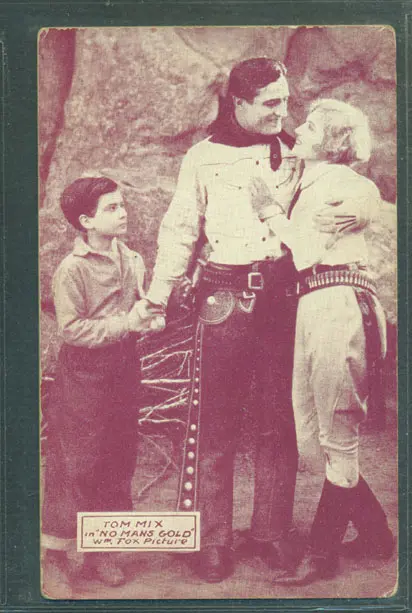
The dying prospector's decision to give a piece of the map to the man who shot him is an unconventional choice. It suggests a cynical view of the West—where the only way to ensure the map reaches its destination is to involve the person most desperate to find it. This cynicism is quickly balanced by the introduction of the orphan, Mickey Moore, who serves as the moral anchor for Mix.
Tom Mix was the antithesis of the gritty, somber Western stars that would follow decades later. In No Man's Gold, he is a whirlwind of charisma. Unlike the domestic drama found in The Little Fool, Mix treats the frontier as an arena. His athleticism is the film's primary special effect. There is a specific moment during the canyon chase where Mix and his horse, Tony, navigate a narrow ridge that still induces vertigo in a modern viewer.
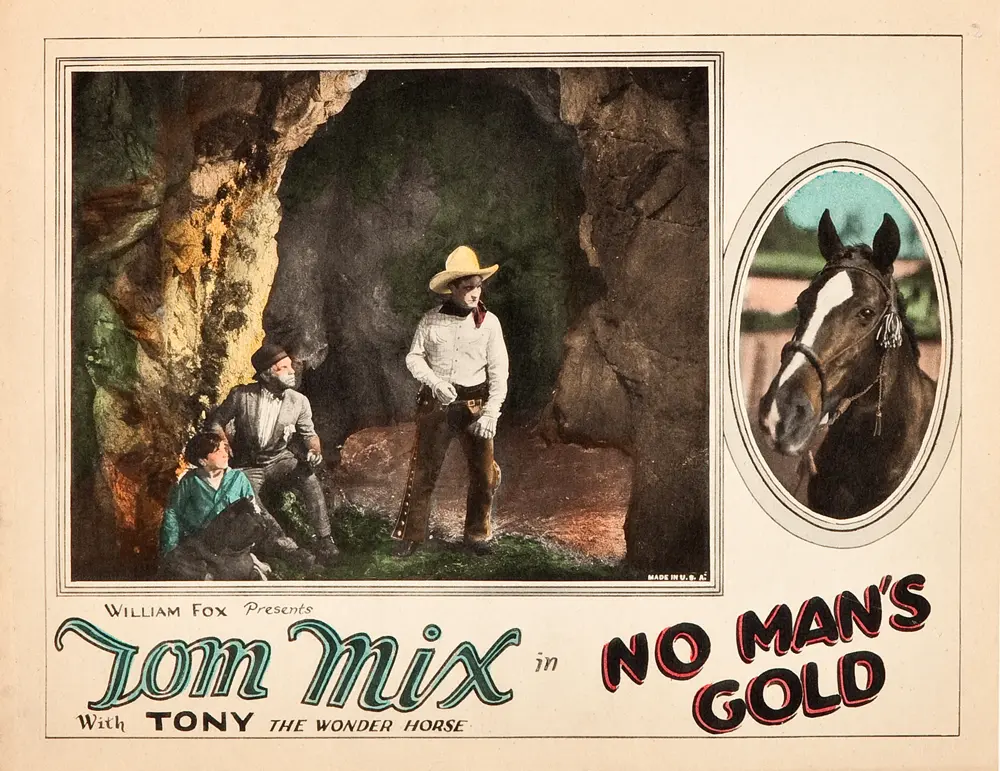
Tony the Horse deserves his own billing. In many ways, the chemistry between Mix and his equine partner is more convincing than the romantic subplots found in contemporaries like Zonnetje. Tony isn't just a mode of transport; he is an active participant in the stunts, showing a level of training and screen presence that was rare for the time.
Frank Campeau provides a necessary weight to the film. While some silent villains lean into mustache-twirling caricature, Campeau plays his role with a cold, calculating edge. He represents the encroaching lawlessness that threatens the innocent orphan. His performance stands in stark contrast to the more theatrical acting styles seen in Mürebbiye.
The rivalry between Mix and Campeau is the film's strongest asset. When they are on screen together, the air feels thin. The film doesn't rely on gunfights as much as it relies on the threat of violence. This restraint makes the eventual climax in the mine feel earned rather than inevitable.
The cinematography in No Man's Gold makes excellent use of the natural landscape. The wide shots of the desert are not just for scale; they emphasize the isolation of the characters. While films like The Woman from Nowhere often felt stage-bound, this production feels lived-in and dusty. The lighting in the mine sequences is particularly impressive for 1926, using high-contrast shadows to hide the limitations of the set design.
The pacing is brisk, avoiding the narrative bloat that sometimes plagued silent epics. However, the insertion of Harry Grippe’s comedy beats often slows the momentum. It’s a common flaw of the era—the felt need to provide 'something for everyone'—but here it feels like a distraction from the primary quest.
Yes, No Man's Gold is a vital watch for anyone interested in the evolution of the action genre. It successfully combines the 'protective father' trope with a high-stakes treasure hunt, a formula that remains popular in Hollywood today. While the comedy is dated, the stunts and the central conflict remain surprisingly effective.
Pros:
Cons:
Beneath the action, the film grapples with the idea of what constitutes a 'man's' gold. Is it the physical metal, or is it the legacy left behind in a child? Mix’s transition from a lone rider to a protector of the boy Moore parallels the closing of the American frontier itself—the shift from lawless exploration to the building of families and communities. This thematic depth elevates it above simpler fare like Bobby the Office Boy.
The film also touches on the concept of 'honor among thieves' (or lack thereof). By forcing the outlaw and the hero to share the map, the film explores the fragility of trust. It’s a cynical observation wrapped in a hero’s journey. It works. But it’s flawed by its own era's conventions.
No Man's Gold is a robust example of 1920s entertainment that manages to transcend its age through sheer physical energy. While it lacks the psychological complexity of modern Westerns, its core mechanics are sound. Tom Mix remains a fascinating figure, a bridge between the real West and the mythic West of the silver screen. If you can look past the creaky comedy, you will find a treasure worth the hunt. It is a piece of cinematic history that still has a pulse.
"A testament to the era when stars did their own stunts and horses were as famous as the men who rode them."

IMDb —
1931
Community
Log in to comment.