DbcultAccessing Vault...
Cult Review
Senior Film Conservator
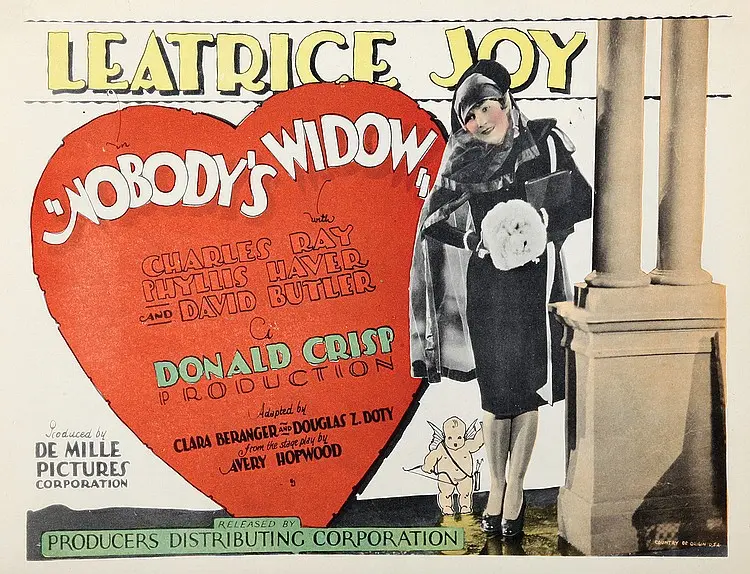
Is Nobody's Widow worth watching in the modern age? Short answer: Yes, but only if you appreciate the sophisticated, theatrical artifice of 1920s stage-to-screen adaptations. This film is a specific vintage of comedy that requires the viewer to accept a world where a simple conversation could solve everything, yet everyone chooses the most complicated lie instead.
This film is for enthusiasts of silent-era farce and those who enjoy seeing gender roles deconstructed through the lens of early 20th-century social mores. It is definitely NOT for viewers who demand gritty realism or fast-paced physical slapstick, as the humor here is derived almost entirely from situational irony and character performance.
1) This film works because the chemistry between Leatrice Joy and Charles Ray elevates a standard 'misunderstanding' plot into a psychological battle of wills.
2) This film fails because the second act relies too heavily on the supporting characters' obliviousness, which can feel repetitive even for a farce.
3) You should watch it if you want to see how silent cinema handled the 'sophisticated' comedy tropes that would later define the screwball era of the 1930s.
The setup of Nobody's Widow is classic Avery Hopwood. Hopwood, a master of the 'bedroom farce,' understood that the funniest thing in the world is a person trying to maintain a lie while the truth is standing right in front of them. When Roxanna declares herself a widow, she isn't just lying; she is performing a social ritual that grants her a specific kind of power. In 1927, a widow had more social agency than a divorcee or a single woman. By 'killing' John Clayton, Roxanna gains the freedom to flirt and move through the world without the 'stain' of a failed marriage.
The arrival of John, played with a surprising amount of nuance by Charles Ray, flips the script. Ray was often known for playing 'country boy' roles, but here he manages to pull off the 'Duke of Morebay' with a twinkle in his eye that suggests he’s enjoying the game as much as Roxanna is suffering through it. The scene where he first introduces himself to the American house party is a highlight of silent timing. His exaggerated bow and the way he catches Roxanna’s eye—knowing she can't scream 'That’s my husband!' without admitting she’s a liar—is pure comedic tension.
It’s a lie that works until it doesn’t. And in this film, it doesn't work beautifully.
Yes, Nobody's Widow is worth watching for anyone interested in the evolution of the romantic comedy. While many silent films from this era, like A Night Out, leaned into broader physical comedy, this film attempts something more cerebral. It focuses on the internal panic of the characters, conveyed through expressive close-ups and clever title cards. It offers a fascinating look at the 'New Woman' of the 1920s—independent, impulsive, and unwilling to be a victim of her husband's indiscretions.
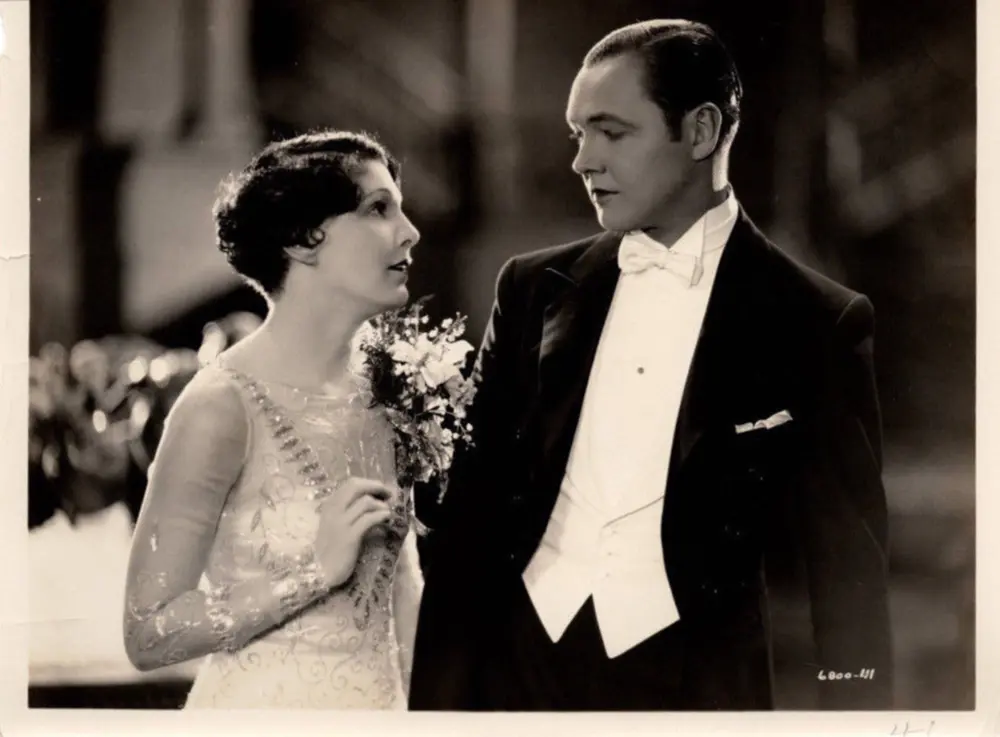
Leatrice Joy is the anchor here. Her Roxanna is not a weeping willow; she is a woman of action. Even her grief is a costume, worn with the precision of a fashion model. Contrast this with the more grounded performances in films like Sally in Our Alley, and you see the range of the silent era's leading ladies. Joy uses her eyes to communicate a blistering range of emotions: fury at seeing John, panic when Ned proposes, and a simmering, hidden affection that she refuses to acknowledge.
The direction by Donald Crisp (though uncredited in some circles, his influence is felt) keeps the camera relatively static, allowing the actors to treat the frame like a stage. This could have been a disaster if the pacing were off, but the editing keeps the transitions between the English prologue and the American main act fluid. The use of shadow in the English estate scenes creates a sense of traditional weight that contrasts sharply with the bright, airy, and slightly chaotic American garden parties.
The cinematography in Nobody's Widow isn't trying to be experimental like Rhythmus 23. Instead, it focuses on clarity. The lighting in the scene where Roxanna 'mourns' her husband while he stands behind a curtain is expertly handled. The audience needs to see both her fake tears and his smug satisfaction simultaneously. This is achieved through clever blocking that maximizes the depth of the set.
There is a specific moment when Roxanna is forced to describe her 'late' husband to the guests while John is in the room. She describes him as a paragon of virtue, a man of incredible height and bravery—basically everything John isn't in that moment. The camera cuts back and forth between her increasingly absurd descriptions and John’s reacting face. It’s a sequence that would be right at home in a modern sitcom, proving that the language of comedy hasn't changed as much as we think.
Cons:
One of the most striking things about Nobody's Widow is how it treats Roxanna's lie. Usually, in these films, the woman is punished for her deception. Here, the film almost seems to cheer her on. The 'widow' persona is her armor. It’s a cynical but refreshing take on marriage: sometimes you have to pretend your husband is dead just to get him to treat you like a living human being. It’s a brutal sentiment wrapped in a silk ribbon of comedy.
Compared to the more somber explorations of guilt in Guilt or the melodramatic turns of Dark Secrets, this film is light as air. But that lightness shouldn't be mistaken for a lack of substance. It’s a critique of the performative nature of marriage itself.
Nobody's Widow is a delightful, if slightly uneven, romp through the pitfalls of pride. While it lacks the sheer kinetic energy of a Buster Keaton film or the haunting beauty of the era's dramas, it excels as a character study. It reminds us that the silent era wasn't just about falling down stairs; it was about the subtle lifting of an eyebrow and the devastating power of a well-timed lie. It works. But it’s flawed. Yet, in its flaws, it finds a very human kind of charm.
"A sharp-edged comedy that proves a woman's best accessory is a dead husband—even if he's still breathing."
IMDb —
1921
Community
Log in to comment.