DbcultAccessing Vault...
Cult Review
Senior Film Conservator
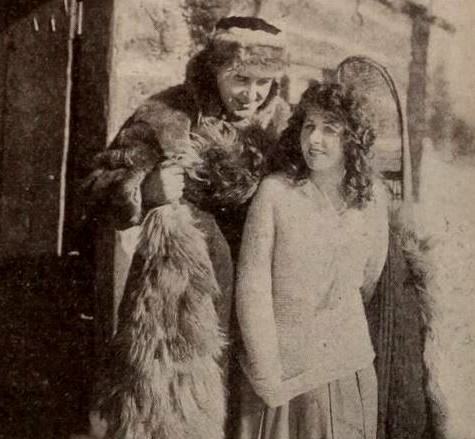
Stepping into the cinematic world of North of Fifty-Three is to be transported to a bygone era, where the untamed Canadian wilderness served as both a crucible and a canvas for human drama. This 1917 silent film, starring the formidable Dustin Farnum, is a robust exemplar of the frontier Western, blending elements of visceral revenge, unyielding justice, and a blossoming romance against a backdrop of breathtaking, yet perilous, landscapes. It's a testament to the enduring power of silent storytelling, where emotion is conveyed through gesture, expression, and the sheer force of visual narrative. The film, adapted from Bertha Muzzy Sinclair's novel by Gardner Hunting, plunges us directly into a world where life is cheap and loyalty is paramount, crafting a compelling journey through the icy grip of the North. Far from being a mere historical curiosity, it offers a fascinating glimpse into the nascent art of filmmaking, demonstrating how early pioneers crafted compelling narratives with limited technological means yet boundless creativity.
The narrative wastes no time in establishing its somber tone. We are introduced to "Roaring" Bill Wagstaff, a character whose very moniker suggests a man of formidable spirit and perhaps a volatile nature, discovering his partner, Joe Brooks, tragically murdered and left for dead in the unforgiving snows. This brutal opening act immediately grounds the film in a stark reality, setting a palpable sense of injustice and impending retribution. The visual of a solitary figure kneeling over a fallen comrade in a vast, white expanse speaks volumes without a single intertitle. It evokes the harshness of a land where human life is fragile, and the law often takes a backseat to personal codes of honor. This initial scene masterfully establishes Bill's motivation, his stoic grief hinting at the storm brewing within. The silence of the moment, punctuated only by the imagined howl of the wind, amplifies the profound shock and sorrow that engulfs Bill, propelling him onto a path from which there can be no turning back. The psychological weight of this discovery is immense, transforming a man of the wilderness into an instrument of vengeance, his quiet resolve more menacing than any spoken threat.
Just as Bill's world seems irrevocably darkened by loss, a peculiar twist of fate introduces a ray of unexpected light. Hazel Weir, portrayed with a nuanced blend of vulnerability and resilience by Winifred Kingston, arrives on the scene. Her journey westward, undertaken with the noble intention of teaching, becomes a metaphor for her own lostness, both geographically and perhaps emotionally, as she finds herself adrift in the woods surrounding Cariboo Meadows. Her appearance marks a significant shift in the film's emotional landscape, injecting a much-needed element of hope and complexity into Bill's otherwise singular pursuit of vengeance. Kingston brings a quiet dignity to Hazel, ensuring she is far more than a mere damsel in distress; she is an intelligent, principled woman navigating a world unprepared for her. Her presence challenges Bill's solitude and offers a glimpse of a different future, one not solely defined by the grim demands of frontier justice.
Bill's discovery of the lost Hazel leads to one of the film's most intriguing moral ambiguities. Under the pretense of guiding her to safety, he leads her instead to his secluded cabin, a bold, almost primitive assertion of his burgeoning feelings. This act, while born of a deep, if misguided, affection, carries a palpable tension. It’s a moment that could easily veer into villainy, yet Farnum’s portrayal imbues Bill with an earnestness that makes his actions understandable, if not entirely justifiable. His declaration of love, raw and untutored, is met with Hazel's swift rejection. Her refusal stems not just from the impropriety of the situation, but from her own recent bruising encounter with societal judgment, having been unfairly accused of scandal. This refusal is crucial; it establishes Hazel as a character of agency and principle, refusing to be swept away by circumstance or a man's forceful will, however passionate. Her departure for Cariboo Meadows is a statement of independence, a stark contrast to the expected submission of women in many narratives of the era. This sequence, with its blend of desperation and misguided passion, elevates the romance beyond simple tropes, hinting at a deeper, more complex connection awaiting its proper foundation.
The narrative deftly intertwines the two plot threads: Bill's personal quest and Hazel's societal struggles. When Bill learns of the unfair accusations leveled against Hazel, his initial love transforms into a deeper respect and a fierce desire to defend her honor. This moment elevates his character beyond a mere avenger; he becomes a protector, his faith in Hazel a powerful counterpoint to the slander she endures. His rush to Cariboo Meadows is not merely to win her affection, but to affirm his belief in her inherent goodness, an act that speaks volumes about his evolving moral compass. This journey for affirmation is momentarily sidetracked by a fateful encounter in a saloon, a quintessential Western setting, where destiny, or perhaps sheer coincidence, places Joe's distinctive snowshoes in plain sight. This visual cue acts as a powerful catalyst, reigniting Bill's dormant rage and refocusing his path towards vengeance. The juxtaposition of his protective instincts for Hazel and his primal urge for retribution creates a compelling internal conflict, showcasing a man grappling with both his tender and brutal sides.
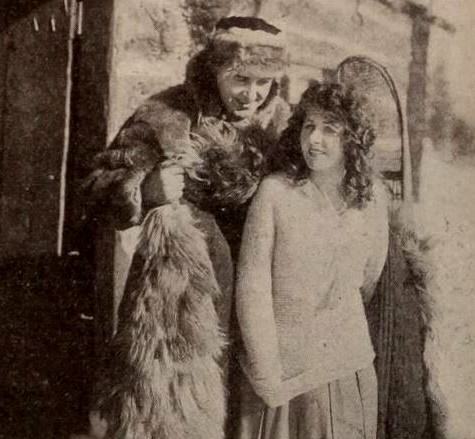
The discovery of the snowshoes in the saloon is a masterstroke of silent film narrative, a simple prop carrying immense emotional weight. With a gun to the saloon keeper's head, Bill extracts the name of Joe's killer: Nig Geroux. This scene, tense and visceral, underscores the lawlessness of the frontier and Bill's willingness to operate outside conventional justice to achieve his aims. The subsequent pursuit of Geroux is where the film truly embraces its Western roots, showcasing a relentless chase through the rugged terrain. The confrontation, while silent, is undoubtedly brutal, a primal act of vengeance that satisfies the audience's desire for justice. Farnum's intensity in these scenes is palpable, his eyes conveying a singular, unwavering resolve. It’s a classic arc of retribution, executed with a raw energy that transcends the limitations of its medium. This sequence, filled with suspense and danger, highlights the physical demands of frontier life and the harsh realities of justice in the absence of formal authority. The silent struggle between Bill and Geroux is a powerful ballet of vengeance, where every movement and expression conveys the deadly stakes.
With his partner avenged, Bill's journey comes full circle. He finds Hazel once more, and this time, her acceptance of his love feels earned. It's not the result of a forced declaration in a secluded cabin, but the culmination of shared trials, mutual respect, and Bill's demonstrated loyalty and unwavering belief in her. The ending suggests a future for them, together, in the vast expanse of the North, a testament to love's capacity to bloom even in the harshest environments. The resolution is satisfying, tying up both the revenge plot and the romantic thread with a sense of hard-won peace. This final embrace is more than a happy ending; it represents a reconciliation of Bill's wild nature with the civilizing influence of Hazel, hinting at a new kind of frontier family, built on understanding and resilience.
Dustin Farnum, a prominent figure in early Westerns, delivers a performance that anchors North of Fifty-Three with a rugged authenticity. His screen presence is commanding, perfectly embodying the stoic, self-reliant frontiersman. Farnum's ability to convey complex emotions through subtle gestures and powerful expressions is a masterclass in silent acting. He carries the weight of grief, the fire of revenge, and the tenderness of burgeoning love with equal conviction. His portrayal of Bill Wagstaff is not merely a caricature of a cowboy but a nuanced exploration of a man shaped by his environment and driven by deeply human impulses. This film stands as a strong example of his enduring appeal and why he was so celebrated in the genre. For those interested in his other works, one might consider his earlier dramatic turns, though North of Fifty-Three certainly showcases his particular strength in the Western idiom, cementing his status as a silent-era icon. His performance here is a testament to the fact that magnetism and skill can transcend the lack of spoken dialogue, communicating worlds through the flicker of an eye or the set of a jaw.
Winifred Kingston, as Hazel Weir, provides an essential counterpoint to Farnum's rugged masculinity. Her performance is imbued with a quiet strength, portraying a woman who, despite being placed in vulnerable situations, maintains her dignity and moral compass. Her initial rejection of Bill is not born of weakness, but of principle, a testament to her character. She avoids the pitfalls of being a passive love interest, instead presenting a spirited individual who demands respect and earns her place in the narrative. Her journey from lost teacher to a woman who finds love on the frontier is compelling, adding depth and emotional resonance to the central romance. Kingston's ability to convey her internal turmoil and steadfast resolve without dialogue is truly commendable, making Hazel a memorable figure in the silent film landscape. Her portrayal challenges the conventional roles often assigned to women in early cinema, offering a glimpse of burgeoning female agency even within the constraints of the period's storytelling conventions. She is not merely an object of affection but an active participant in her own destiny.
The direction, while uncredited in the provided details, effectively utilizes the vast Canadian landscape to create a powerful sense of place. The film's cinematography, even in its black and white simplicity, manages to convey the stark beauty and formidable challenges of the northern wilderness. Shots of snow-covered expanses and dense forests are not merely backdrops; they are active participants in the drama, reflecting the characters' isolation, their struggles, and the grand scale of their challenges. The visual storytelling is paramount, with carefully composed frames and expressive intertitles guiding the audience through the narrative. The film's pacing balances moments of quiet reflection with bursts of intense action, keeping the audience engaged throughout. The choice of location filming, if indeed it was filmed on location, adds an undeniable layer of authenticity that studio sets of the era often struggled to replicate, creating a believable world for Bill and Hazel's story to unfold. The power of these silent visuals to evoke emotion and atmosphere is truly remarkable, proving that a picture, indeed, is worth a thousand words.
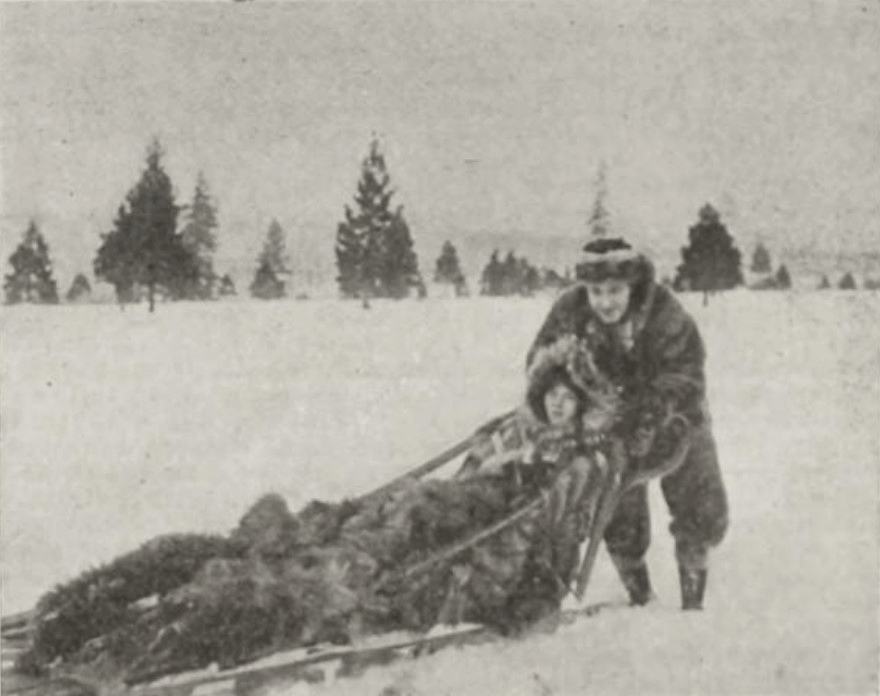
At its core, North of Fifty-Three is a profound meditation on justice—both legal and personal—and the complex morality of the frontier. Bill's decision to avenge his partner's death outside the bounds of the law highlights the necessity of self-reliance in a land where official institutions are nascent or absent. His journey is one of personal redemption, not just for his initial deception of Hazel, but for the very act of taking justice into his own hands, which is ultimately vindicated by the film's moral framework. The film explores how individuals forge their own codes of conduct when confronted with primal instincts and the absence of conventional societal structures. This theme resonates deeply with other frontier narratives of the period, reflecting a widespread fascination with the rugged individualism that defined the era. The narrative subtly questions the very definition of law and order, suggesting that in certain wild territories, a man's honor and his ability to mete out justice were often the only true forms of governance. This exploration of personal ethics versus societal norms adds significant depth to what might otherwise be a straightforward revenge tale.
In the pantheon of early Westerns, North of Fifty-Three holds its own, offering a compelling blend of action and sentiment. While it may not possess the sprawling epic scope of later Westerns, it perfectly captures the intimate, character-driven dramas that defined the genre's formative years. The film's focus on a personal quest for vengeance echoes themes found in other contemporary films, such as the dramatic tension in Black Fear, where personal terror drives the narrative, or the more intricate plotting seen in The Case of Becky, albeit in a psychological drama context. However, North of Fifty-Three distinguishes itself with its specific Canadian setting, which provides a unique flavor distinct from the more common American Southwest backdrop. The silent era was a fertile ground for exploring human emotions in their rawest forms, and this film is a sterling example. It shares a certain dramatic intensity with films like The Strangler's Cord, where the stakes are life and death, but frames it within a more heroic, albeit morally ambiguous, quest. While not directly comparable in plot, the silent drama 'Twas Ever Thus also explores themes of love and longing against challenging backdrops, albeit with a different cultural context. The narrative's reliance on visual cues and strong performances to convey complex emotional arcs is a hallmark of this period, much like the character-driven struggles in Philip Holden - Waster, though that film navigates a different kind of wilderness – the urban jungle of moral decay.
The romance, too, is characteristic of its time, mirroring the earnest, often dramatic courtships seen in films like Lovely Mary, where heroines navigate challenging circumstances to find love. Yet, Hazel's independence sets her apart, making her an earlier example of a strong female character in a genre often dominated by male figures. The journey of self-discovery and the overcoming of societal judgment can be seen in other character-focused narratives of the time, though perhaps not always with the same rugged, outdoor setting. The immediate consequences of Bill's actions and the directness of his pursuit for justice are hallmarks of early Westerns, often presenting clear-cut heroes and villains, even if the hero's methods are unconventional. This film, like many of its contemporaries, including The Price of Fame, delves into the personal costs and rewards of one's choices, but does so with the distinct flavor of the wild frontier. The way North of Fifty-Three balances its thrilling action with a heartfelt romance is a testament to the era's ability to weave diverse genre elements into a cohesive, engaging whole, offering a fuller cinematic experience than some of its more singular-focused brethren.
North of Fifty-Three remains a fascinating artifact of early cinema, a compelling narrative that showcases the strengths of the silent film era. It is a film that, despite its age, still resonates with themes of loyalty, revenge, and the enduring power of love in the face of adversity. The performances of Dustin Farnum and Winifred Kingston are particularly noteworthy, breathing life into characters who could, in less capable hands, feel like archetypes. It’s a testament to the fact that compelling storytelling transcends technological limitations. For enthusiasts of silent films and classic Westerns, this picture offers a rich, immersive experience into a world both wild and deeply human. Its straightforward yet emotionally charged plot, combined with strong visual elements, ensures its place as a significant entry in the history of the genre. The film acts as a powerful reminder of how foundational narratives were crafted in the nascent days of cinema, emphasizing visual drama and raw human emotion above all else.
Ultimately, North of Fifty-Three is more than just a historical curiosity; it is a vibrant piece of cinematic history that speaks to universal themes. It captures the spirit of an era when the frontier was still a tangible concept, and individual courage shaped destinies. The film leaves a lasting impression, not just for its dramatic plot, but for its evocative portrayal of a specific time and place, and the complex human emotions that drive its characters. It's a journey into the heart of the wilderness and the human soul, a silent epic that continues to echo with relevance, proving that the silent screen was anything but quiet in its impact on audiences then, and its enduring appeal now. Its narrative prowess and the compelling performances within it ensure that its story continues to resonate, long after the projectors have dimmed and the piano accompaniment has faded into memory.
IMDb 7.2
1931
Community
Log in to comment.