DbcultAccessing Vault...
Cult Review
Senior Film Conservator
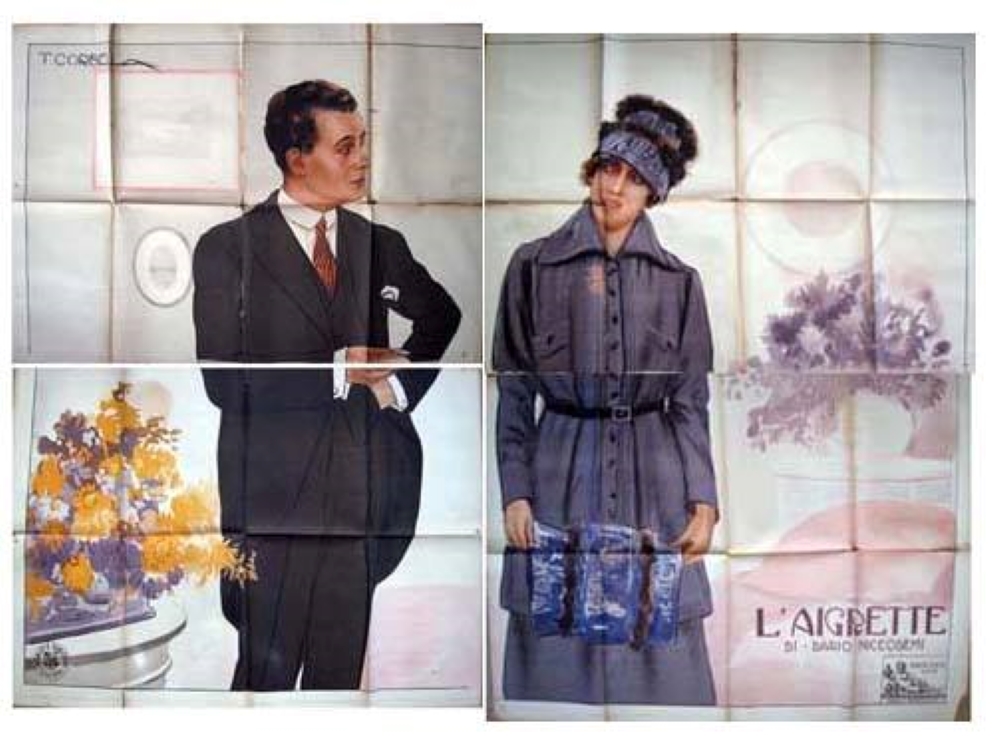
In the annals of Italian silent cinema, specifically the era of the divismo, few works capture the agonizing intersection of class-bound duty and personal dissolution as poignantly as L'aigrette. Released in 1917, a year defined by the seismic shifts of the Great War and the burgeoning transformation of the cinematic medium, this film stands as a testament to the sophisticated collaborative efforts of director Baldassarre Negroni and the esteemed playwright Dario Niccodemi. While contemporary audiences might find the pacing of early silent melodrama a challenge, those with a palate for nuanced psychological drama will recognize in this work a precursor to the existentialist cinema that would bloom decades later. Unlike the more adventurous narratives found in The Adventures of Kathlyn, Negroni’s film is an interior voyage, a claustrophobic examination of the masks we wear to satisfy the societal gaze.
Negroni, a master of the Tiber Film stable, utilizes the camera not merely as a recording device but as a voyeuristic entity that tracks the slow erosion of the Saint-Servant household. The cinematography is drenched in a sense of funereal opulence. Every frame is crowded with the artifacts of a dying age—heavy tapestries, ornate candelabras, and the titular aigrette, which glistens with a meretricious brilliance. This obsession with tactile objects mirrors the themes found in The Golden Rosary, where material icons are inextricably linked to spiritual or social salvation. However, in L'aigrette, the object is a burden, a physical manifestation of the lie that the Countess (played with a chilling, statuesque intensity by Ida Carloni Talli) must maintain at any cost.
The use of shadow in the film is particularly striking. Negroni employs early chiaroscuro techniques that elevate the melodrama into the realm of the gothic. The halls of the Saint-Servant estate are not places of refuge but are instead labyrinthine passages where the characters' shadows seem to loom larger than their physical forms, suggesting that their reputations—their public shadows—have eclipsed their private selves. This thematic preoccupation with the duality of the self invites a fascinating comparison to the psychological tension in The Shadow of a Doubt, where the external reality is constantly undermined by internal suspicion.
At the center of this swirling vortex of debt and dignity is Hesperia, one of the quintessential divas of the period. Her performance is a masterclass in the restrained histrionics of the 1910s. Unlike the more kinetic roles seen in The Ragamuffin, Hesperia’s movements are deliberate, almost ritualistic. She embodies the tragedy of a woman who realizes that the world she was built for is evaporating. Her interactions with Tullio Carminati, who portrays Enrico, are charged with a subtextual desperation. Carminati, who would later find success in Hollywood, displays a youthful vulnerability here that contrasts sharply with the rigid stoicism of his mother. He is the bridge between the old world and the new, and his failure to reconcile the two is the film’s central tragedy.
"The aigrette is not merely a piece of jewelry; it is the anchor that pulls the Saint-Servant family into the depths of the very ocean they sought to rule. It is a synecdoche for the vanity of an entire class."
The supporting cast, including Diomira Jacobini and Andrea Habay, provides a rich tapestry of social archetypes. Jacobini, in particular, offers a softness that highlights the sharpness of the Countess’s edges. The ensemble work here is superior to many contemporary productions, such as The Coquette, because it avoids the pitfalls of caricature. Each character is motivated by a specific brand of fear—fear of poverty, fear of scandal, or fear of irrelevance. This collective anxiety creates a palpable tension that sustains the film through its more contemplative passages.
Dario Niccodemi’s influence on the screenplay cannot be overstated. As a playwright, Niccodemi was obsessed with the intricacies of the social contract. In L'aigrette, he strips away the romanticism often associated with the nobility to reveal the transactional nature of their existence. The dialogue (conveyed through intertitles) is sharp and devoid of the flowery sentimentality that plagued many films of the era, such as The Princess's Dilemma. Instead, there is a brutal honesty to the exchanges, particularly when the characters discuss the financial ruin that threatens to unmask them.
This focus on the harsh realities of survival within a privileged framework brings to mind the fatalism of The Lash of Destiny. Both films explore the idea that one’s social position is both a fortress and a prison. In L'aigrette, the lash is not physical but economic. The invisible hand of the market is far more terrifying than any villain in a melodrama like Saved from the Harem because it cannot be escaped through heroic intervention; it can only be delayed through further moral erosion.
When we look at L'aigrette alongside other 1917 releases, its sophistication becomes even more apparent. While The Scarlet Car focused on the thrill of modern technology and speed, Negroni’s film is a meditation on the stagnant, the slow, and the decaying. It shares more DNA with the Russian historical dramas like Votsareniye doma Romanovykh, which also dealt with the twilight of dynasties, though L'aigrette is more intimate, focusing on the domestic sphere rather than the state.
Furthermore, the film’s exploration of honor and redemption through suffering echoes the themes of The Life of Our Saviour; or, The Passion Play, yet it transposes these religious motifs into a secular, aristocratic context. The Countess is a martyr for a dead god—the god of Nobility. Her sacrifice is not for the salvation of humanity but for the preservation of a title that has lost its meaning. This sense of misplaced devotion is what gives the film its enduring power. It is a critique of a world that values the aigrette more than the person wearing it, a theme that resonates in the later American work My Official Wife, where identity is a commodity to be traded for survival.
Technically, the film is a marvel of its time. The tinting and toning—often lost in poor quality reproductions—add a layer of emotional resonance to the scenes. Deep ambers and sepia tones evoke a sense of nostalgia, while the occasional use of blue for night sequences creates a chilling atmosphere of isolation. The production design is meticulously detailed, creating a sense of lived-in history that is often missing from more fantastical silents like Graustark. In L'aigrette, the environment is a character in its own right, a heavy, suffocating presence that dictates the movements of the actors.
The direction by Baldassarre Negroni is characterized by a remarkable restraint. He allows the scenes to breathe, giving the audience time to observe the micro-expressions of the cast. This is particularly effective in the climax, where the realization of total ruin finally shatters the Countess’s composure. It is a moment of pure cinematic catharsis that rivals the emotional peaks of A Pardoned Lifer, though the stakes here are social rather than legal. The film does not offer a neatly packaged resolution; instead, it leaves the audience with the haunting image of a family standing amidst the wreckage of their own pride, a motif that would be revisited in The Masked Heart.
L'aigrette is more than a relic of a bygone era; it is a profound meditation on the human condition and the lengths to which individuals will go to maintain a fiction. It is a film about the weight of the past and the impossibility of escaping one's heritage. In the context of 1917, it served as a eulogy for a Europe that was being torn apart by war and revolution. Today, it remains a vital piece of cinema history, offering a window into the soul of the Italian silent era. The collaboration between Negroni, Niccodemi, and the luminous Hesperia resulted in a work of art that is as beautiful as it is devastating. It reminds us that while the aigrette may eventually lose its luster, the stories of those who sacrificed everything for it remain forever etched in the flickering light of the silver screen.
For those seeking to understand the evolution of cinematic storytelling, L'aigrette is essential viewing. It bridges the gap between the theatrical traditions of the 19th century and the visual language of the 20th. It is a film of immense lexical diversity in its visual cues, a poem of light and shadow that speaks to the enduring power of the silent image. Whether compared to the high-stakes drama of The Shadow of a Doubt or the socio-economic critiques of The Coquette, L'aigrette holds its own as a masterpiece of psychological depth and aesthetic brilliance.
IMDb 6.9
1913
Community
Log in to comment.