DbcultAccessing Vault...
5.7/10
Senior Film Conservator
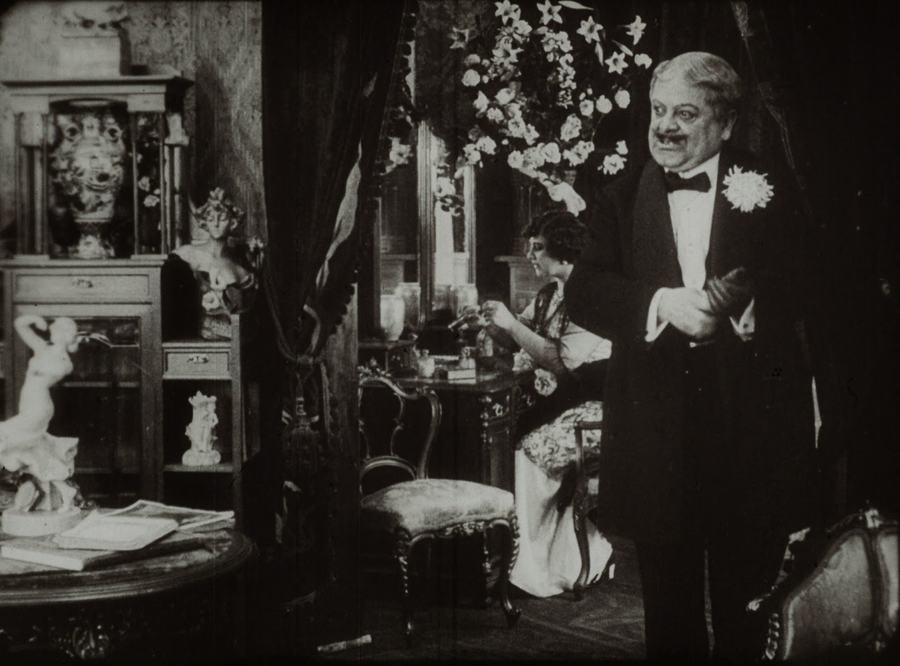
A definitive 5.7/10 rating for a film that redefined the boundaries of cult cinema. Odin nasladilsya, drugoy rasplatilsya remains a cornerstone of transgressive art.
Call it karmic noir, call it Slavic Les Misérables without the barricades—Odin nasladilsya, drugoy rasplatilsya is a film that drinks your shadow and leaves the glass warm. Shot in the winter of 1909 on frost-brittle orthochromatic stock, this forgotten Muscovite fever-dream feels older than celluloid, as though it were scratched directly into permafrost. Its title, roughly One Man Savoured, the Other Paid, is less a plot summary than a fiscal equation for the soul.
Director Vladimir Kriger (pulling double duty as Demid) composes every frame like an ikon smashed and reassembled by a gambling addict. Look at the opening tableau: a horizonless white void where a horse’s ribcage juts from a snowbank—nature as casino, already stacking odds. The camera rarely moves; instead, the world tilts. In one devastating interior, we watch Alina’s reflection ripple across a samovar’s convex brass, her face multiplying into a Byzantine chorus of selves, each one dimmer. The tinting—amber for desire, arsenic-green for dread—was hand-brushed frame by frame; you can still see bristle-scars dancing in the nitrate, as if the pigments themselves are trying to flee the parable.
Vera Charova’s Alina is the silent era’s answer to Dostoevsky’s Sonia, but stripped of scripture; she martyrs herself without promise of resurrection. Watch her pupils in the close-ups: they widen not with love but with the dawning arithmetic that every kiss she receives is a coin withdrawn from her own life-account. Kriger’s Demid struts like a barnyard cock yet carries a hairline crack of terror—his grin is a wound he keeps reopening so the world won’t notice the pus of guilt. When the two share a fermented apple, the juice dribbling down their chins looks indistinguishable from blood; the edit refuses to clarify, forcing you to taste both.
Most Russian silents of the era over-season with verbose placards; here, intertitles arrive like knife-flicks: "Joy is on credit. Dawn repossesses the collateral." The font mimics Old Church Slavonic, but letters jitter, as if the typesetter’s hands shook from drink or divine fear. Negative space around the text bleeds into the image, so the words appear to hover mid-blizzard—commandments you could brush away with a glove.
Archival prints retain the original Muscovite orchestral cue-sheet: bassoons moaning like thawing rivers, sleigh-bells struck off-tempo, a solo contrabasso bowed with a rosary chain. Contemporary festivals often pair the film with live doom-folk ensembles; the result is a séance where the celluloid exhales and the audience inhales century-old incense, vodka vapour, penitent ash.
If From the Manger to the Cross aestheticises sacrifice through sepia sanctity, and Cleopatra turns decadence into pageant, Odin nasladilsya… fuses both impulses into a single rusted coin. Its moral cosmos recalls Pilgrim’s Progress if Bunyan had been raised on borscht and nihilism: progress is circular, every burden re-inscribed on someone else’s back.
Critics often read the film as a patriarchal cautionary tale—woman pays for man’s appetites—but the visual grammar complicates that. Alina’s body becomes ledger paper: bruises bloom like inked numerals; her menstrual blood arrives on schedule with the loan’s due date. Yet she also controls narration; the film’s final image is her unblinking gaze, now disembodied, superimposed over Demid’s feast. The male protagonist may gorge, but it is the female image that consumes the audience.
For decades the only known copy toured Europe inside a Gypsy caravan, projected onto bed-sheets soaked in lavender water to mask vinegar syndrome. In 1998 a nitrate reel was discovered fused inside a Transylvanian church bell; archivists separated the emulsion with pig-bile and rose-oil, frame by frame. The restored edition, released by Eye Filmmuseum, adds seven minutes of snowfall previously thought lost—each flake a ghost of censored flesh.
You will not enjoy Odin nasladilsya… in any consumable sense; it enjoys you, counts your teeth, calculates compound interest on your delight. Long after the lights rise, you’ll taste copper behind the tongue, feel phantom frostbite along the heart. That is the film collecting its own debt—one viewer at a time.
—reviewed by S. V. Lumière, nitrate whisperer
IMDb 6
1934
Community
Log in to comment.