DbcultAccessing Vault...
Cult Review
Senior Film Conservator
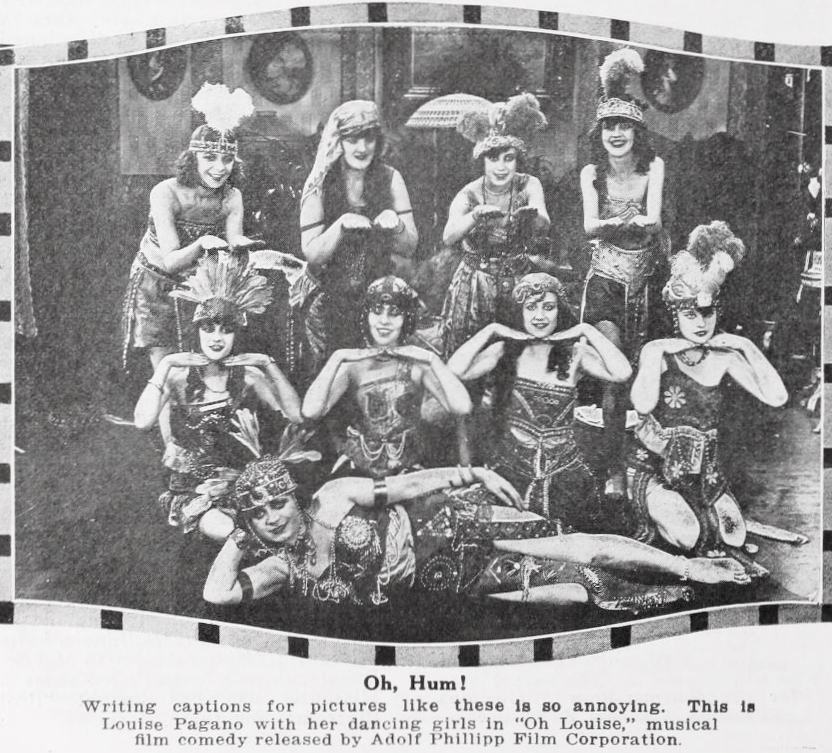
The year 1919 stands as a pivotal meridian in the history of the moving image. It was a period where the primitive visual language of the previous decade began to coalesce into a sophisticated grammar of storytelling. Amidst this transition, Oh! Louise! emerged not merely as a flicking diversion, but as a testament to the enduring influence of the stage upon the burgeoning medium of cinema. Directed and written by the multifaceted Adolf Philipp, this film represents a rare intersection of German-American theatrical sensibility and the burgeoning Hollywood aesthetic. While many contemporary critics fixate on the epic scale of something like Cleopatra, there is an undeniable potency in the intimate, chaotic domesticity found within the frames of this silent gem.
Philipp, a titan of the Yiddish and German-language stage in New York, brought a specific rhythmic urgency to Oh! Louise!. Unlike the sprawling, almost liturgical pacing seen in The Life and Passion of Jesus Christ, Philipp’s work here is breathless. The film operates on a logic of compression. Every room is a stage, every doorway a potential for a comedic collision. The cast, led by the remarkably expressive Hal Peel and the luminous Gladys MacClure, performs with a physicality that transcends the lack of synchronized sound. They do not merely act; they vibrate with the kinetic energy of the era.
The narrative structure of Oh! Louise! mimics the well-made play, a staple of the late 19th century. However, Philipp utilizes the camera to break the proscenium arch. By employing close-ups that emphasize the Marceau sisters’—Emily and Louise—reactions, the film achieves a psychological depth that stage plays often struggle to convey to the back of the house. This transition from stage to screen is far more fluid here than in other contemporary adaptations like Madame la Presidente, which often felt shackled by its theatrical origins. In contrast, Philipp understands that the camera is an active participant in the farce.
When we place Oh! Louise! alongside its peers, its unique flavor becomes even more pronounced. Consider the visual density of Der violette Tod; while that film leans into the macabre and the expressionistic, Philipp’s work remains grounded in a vibrant, albeit exaggerated, reality. There is a lightness here that rivals the acrobatic joy of When the Clouds Roll by, though without the surrealist dream sequences. Instead, the 'dream' in Oh! Louise! is the American Dream itself—a chaotic, upwardly mobile scramble for respectability and romance.
Furthermore, the film’s treatment of social class offers a fascinating counterpoint to The Golden Wall. While the latter takes a more somber, perhaps even moralistic, view of wealth and its barriers, Oh! Louise! treats class as a costume. Characters slip in and out of social roles with the same ease they slip through the various rooms of the Marceau household. This fluidity is quintessential Philipp, reflecting his own experiences navigating different cultural and linguistic spheres in New York City. It is a film about the performance of identity, a theme that feels startlingly contemporary.
Technically, the film utilizes the available technology of 1919 with surprising dexterity. The lighting, while not as overtly dramatic as the chiaroscuro found in The Light, serves a functional, narrative purpose. It illuminates the frantic movements of the cast, ensuring that no subtle gesture from Marie Pagano or Joseph Marquis is lost to the shadows. There is a clarity to the cinematography that suggests a high level of craftsmanship, avoiding the muddy textures that plague many lesser-known films of this vintage.
The editing, too, deserves recognition. Farce requires precision timing. If a cut is too late, the joke withers; if too early, the audience loses the thread. The rhythm of Oh! Louise! is staccato and sharp. It possesses a percussive quality that reminds one of the physical intensity found in World's Heavyweight Championship Between Tommy Burns and Jack Johnson. Just as a boxer must time their jab, Philipp times his visual reveals to maximize the comedic impact of every misunderstanding.
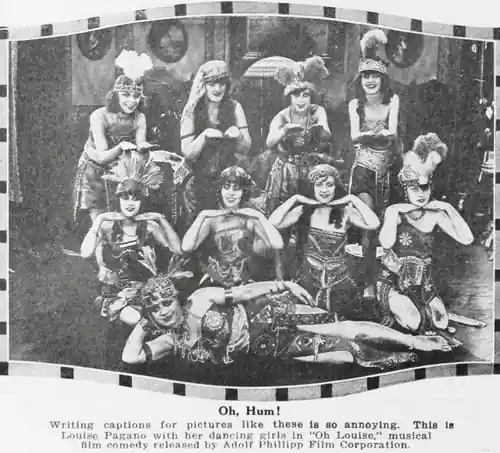
One cannot discuss a film like Oh! Louise! without acknowledging the fragility of its existence. So much of the 1919 output has been lost to the ravages of nitrate decay and historical indifference. In viewing this work, we are looking through a keyhole into a world that was rapidly changing. The film captures the fashion, the manners, and the anxieties of a post-war society eager to laugh. It lacks the heavy-handed moralizing of The Silence of Dean Maitland or the religious austerity of Das Gelübde der Keuschheit. Instead, it embraces a secular, almost hedonistic joy in the present moment.
The performance of Phil Sanford as the foil to Peel’s protagonist is particularly noteworthy. Sanford brings a certain gravitas that prevents the film from floating away into pure fluff. His presence provides the necessary friction that drives the plot forward. When contrasted with the more ethereal qualities of the female leads, the film achieves a balanced ensemble dynamic that was quite advanced for its time. It’s a stark contrast to the singular focus of The Yaqui, which relies heavily on its central figure’s struggle against an environment. Here, the 'environment' is other people—a much more complex and volatile landscape.
Interestingly, the character of Louise, as portrayed by the Marceau sisters (with Louise Marceau herself in the lead), hints at the 'New Woman' trope that would come to define the 1920s. She is not a passive victim of the farce; she is often the one navigating the chaos with the most wit. While the film doesn't go as far as the provocative themes in When a Woman Sins, it certainly allows its female lead more agency than the typical damsel in distress found in contemporary westerns like The Land Just Over Yonder. Louise is savvy, resilient, and ultimately the master of her own romantic destiny.
This agency is reflected in the film's visual composition. Louise is often placed centrally in the frame, her reactions serving as the emotional anchor for the audience. Even when the world around her descends into the kind of madness seen in Kaliya Mardan (albeit without the mythological monsters), Louise remains a relatable, human figure. This grounding is what makes the comedy work; we care about her outcome, making the eventual resolution all the more satisfying.
Adolf Philipp’s contribution to early cinema is often overshadowed by the big studio names, but Oh! Louise! proves that his voice was vital. He understood the immigrant experience and the American middle class with a clarity that few others possessed. His writing—witty, observational, and deeply humane—shines through the intertitles. He was a master of the 'comedy of errors,' and this film is perhaps his most polished cinematic achievement in that genre. It lacks the cynicism of later screwball comedies, opting instead for a warm, almost celebratory tone.
In many ways, Oh! Louise! is the perfect bridge between the Victorian sensibilities of the 19th century and the modernism of the 20th. It respects the traditions of the stage while eagerly embracing the possibilities of the screen. It doesn't have the experimental weight of The Honeymoon, but it possesses a charm and a technical proficiency that makes it an essential watch for any serious student of film history. It is a reminder that even in the silent era, the most powerful tool a filmmaker had was an understanding of the human heart—and the ability to make that heart beat a little faster through laughter.
To watch 'Oh! Louise!' today is to engage with a ghost, but a ghost that is remarkably lively. It is a film that demands your attention not through spectacle, but through the sheer brilliance of its performances and the tightness of its construction. In a world of CGI and hyper-edited blockbusters, there is something profoundly refreshing about the simplicity and the sincerity of this 1919 classic. It is, quite simply, a delight.
IMDb 5
1920
Community
Log in to comment.