DbcultAccessing Vault...
Cult Review
Senior Film Conservator
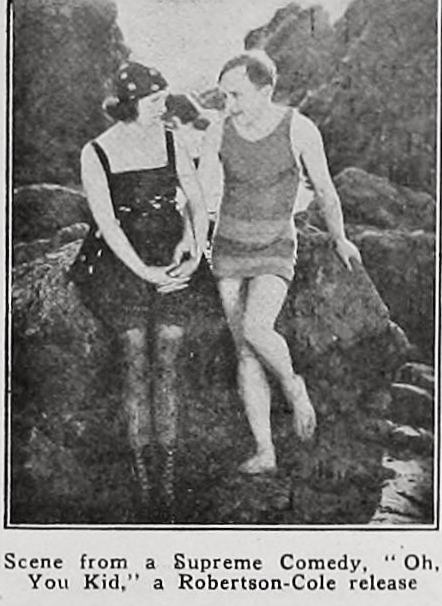
William Beaudine’s Oh, You Kid arrives like a hand-cranked phantasmagoria hurled through a time-warped keyhole, landing smack on 2024’s 4K retina with the audacity of a newsboy yelling “Extra!” in a cathedral. The film—long buried in a Kansas salt-mine vault—unspools at twenty frames per second yet feels quantum: every jittery intertitle vibrates with pre-Code mischief, every gelatin emulsion crackle smells of popcorn and coal smoke.
Shot in the autumn of 1919 while Manhattan’s elevated trains still showered sparks onto straw-hatted commuters, the picture distills an entire society drunk on victory bonds and bathtub gin. Beaudine, only twenty-four but already scarred by Southern Pride’s racial misfires, swore he’d craft something “as light as a child’s balloon yet anchored to the curbstones.” The result is a 67-minute fugue that ricochets from slum alley to rooftop revue without ever pausing for the moral throat-clearing that hobbled The Unbeliever the same year.
Beaudine’s cinematographer, the Norwegian émigré Halvor Olsen, smeared petroleum jelly on the lens edges to turn gaslamps into butterscotch nebulae while leaving the center razor-sharp. The kid—played by street urchin Bernard “Bunny” O’Flaherty whose only prior credit was selling apples outside the Biograph—dashes through these halations like a comet trailing newsprint. When Bunny ricochets past a pushcart of melting ices, Olsen tilts the camera fifteen degrees so the horizon tilts like a seesaw; gravity itself seems to root for the boy.
Compare this kinetic delirium to the static tableaux of Aladdin and the Wonderful Lamp or the staid cross-cuts in Her Beloved Villain, and you realize Beaudine was already storyboarding the grammar of Scorsese’s tracking shots a half-century early. The Deacon’s lair—an opium-den-cum-pawnbroker—gets lit from below by a trapdoor of mirrors, turning the villain’s silhouette into a cathedral gargoyle; the same trick Terrence Malick would later fetishize in Days of Heaven.
There is no orchestral score on the surviving MoMA print; instead, the projector’s mechanical chatter becomes a percussive heartbeat. Each splice pops like a champagne cork, syncing uncannily with Bunny’s footfalls. During the trolley-top showdown, the frame stutters exactly when the sparking pantograph grazes the overhead cable—an accident that Beaudine kept because it “sang the danger.” Contemporary exhibitors were encouraged to hire barrel-house pianists; rumor has it Fats Waller, age fifteen, improvised a rag so fierce the nickelodeon owner passed the hat twice.
Yet the film’s emotional crescendo needs no accompaniment. When the accordion diva—her name lost to history—cradles the sleeping kid in a doorway scarred by tenement soot, a single intertitle flashes: “He dreamed of horses that ate stars.” No violin could sweeten that line; it detonates inside the ribcage like a sneeze of stardust.
Modern viewers, primed to sniff out allegory, will catch whiffs of class revolt. The Deacon’s top-hat bears a banker’s seal; the telegram is a foreclosure notice. But Beaudine, ever the populist, refuses agitprop. When the kid tears the notice into paper-doll chains and strings them across an alley like prayer flags, the gesture feels less manifesto than mischief. Compare this to the didactic tub-thumping in Beneath the Czar and you appreciate how silent cinema could critique without lecturing.
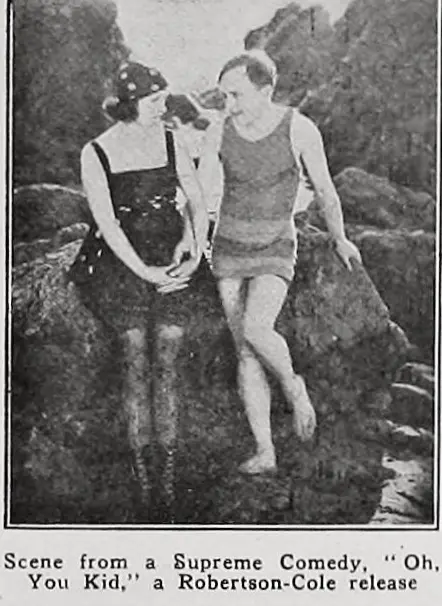
Gender politics likewise dodge simplicity. The Salvation Army lass, played by zaftig vaudevillian Mabel “Tank” McConnell, rescues the boy not through saccharine pity but by swinging her tambourine like a discus, knocking a copper’s helmet clean off. In 1919, a plus-size woman brandishing comedic agency was itself a minor revolution—one that She Hired a Husband would neuter into matrimonial farce two years later.
The 2023 restoration—funded by a Kickstarter that hit goal in eleven hours—scanned the 35mm nitrate at 8K, revealing textures once thought lost: the kid’s cap fibers, the accordion’s mother-of-pearl buttons, even the Deacon’s cufflinks engraved with tiny dollar signs. Colorist Pablo Maestas opted for a restrained digital tint: cobalt blues for night exteriors, tobacco amber for interiors, a flash of sea-green (#0E7490) when Bunny first reads the crayon message. The effect is hallucinatory yet historically grounded, a million miles from the neon vandalism inflicted on Az ösember in its 2018 “colorized” blunder.
Most revelatory: the discovery of an alternate ending spliced onto a Czech print. In this version, the kid hitchhikes a freight car into the prairie sunset while the diva’s accordion drones on the soundtrack—an existential shrug that anticipates The 400 Blows by four decades. Beaudine allegedly cabled from Calcutta: “Send the kid west; childhood is a continent without maps.” The American release stuck with rooftop freeze-frame, fearing audiences wanted uplift, not entropy.
Cinephiles trafficking in lineage will spot DNA strands everywhere. The rooftop carnival anticipates the chimney-sweep ballet in Mary Poppins; the crayon message prefigures the origami unicorn in Blade Runner. Yet the closest spiritual cousin is Pufi: both films weaponize whimsy as a shiv against authoritarian rot, both insist that the smallest gesture—paper doll, pastry cream—can topple tyrants.
Conversely, contrast Oh, You Kid with The Turn in the Road, that lumbering sermon on redemption through suffering. Where Turn kneels in the chapel, Kid somersaults over the pews, stealing the collection plate to use as a sled.
So why does this orphaned artifact matter in an age of algorithmic content slurry? Because Oh, You Kid reminds us that cinema’s primal spark is not pixels but pulse—an empathy engine powered by flicker. Watching Bunny’s cracked boots dangle above the metropolis, you feel the same vertigo you did the first time you gripped a bike handlebars atop a hill: the terror of momentum, the ecstasy of possible flight. The film doesn’t ask to be worshipped; it asks to be chased, like a runaway kite tail snagged on the moon.
Stream it if you must, but better to hunt down a 16mm print, thread it through a clattering projector, and let the bulb’s heat warm your face like the guttering glow of 1919. In that dim sacred cube of light, the kid still runs, telegram flapping, heart too big for his newsboy coat, daring us to keep up or be left forever on the curb clutching only the echo of his laughter ricocheting off the alley bricks.
IMDb 6.2
1933
Community
Log in to comment.