DbcultAccessing Vault...
Cult Review
Senior Film Conservator
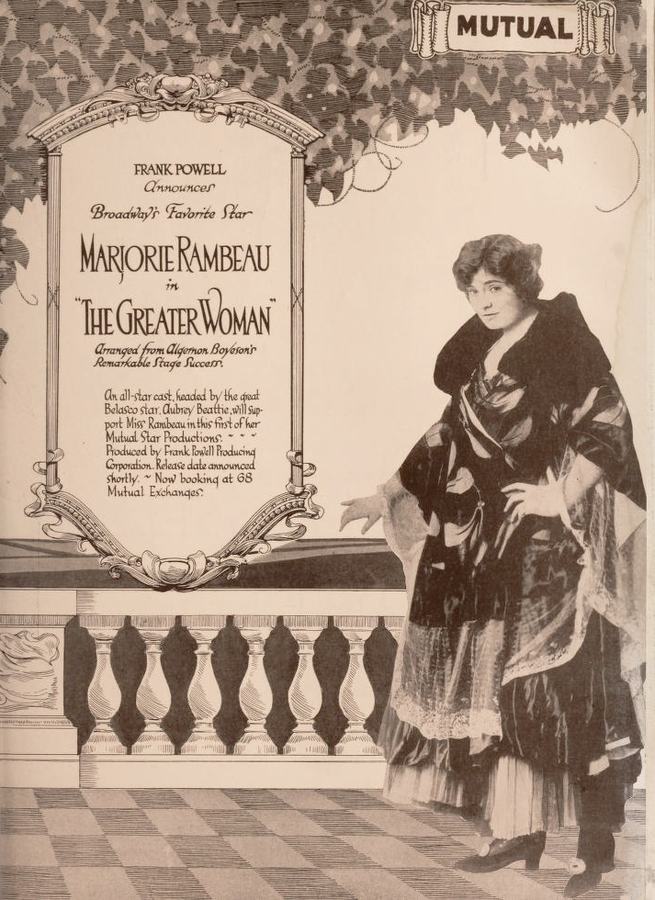
In the annals of early cinema, where narratives often painted in broad strokes yet resonated with profound human emotion, The Greater Woman emerges as a compelling artifact, a testament to the silent era's capacity for intricate psychological drama. Released during a pivotal period of cinematic evolution, this film, penned by the insightful Clara Beranger and Algernon Boyesen, plunges its audience into a world where love, obsession, and betrayal intertwine with devastating consequences. It's a narrative that, despite its vintage, speaks volumes about the timeless fragility of trust and the insidious nature of unrequited desire. The film’s enduring power lies not just in its dramatic flair but in its nuanced portrayal of characters caught in the throes of their passions and vulnerabilities, a characteristic shared by other notable films of the era that explored complex human relationships, such as The Law of Compensation or even the more adventurous The Half-Breed, which also delved into societal pressures and personal struggles.
At the heart of this intricate web is Auriole Praed, brought to vivid life by the remarkable Marjorie Rambeau. Rambeau, a performer whose stage prowess translated beautifully to the nascent art of film, imbues Auriole with a blend of spirit and vulnerability that is instantly captivating. Auriole’s initial plight is one of unwanted attention, a suffocating affection from her neighbor, farmer Leo Bannister. Bannister, portrayed with a menacing intensity by H.H. Pattee, is not merely smitten; he is consumed by an almost pathological fixation. His advances are not romantic overtures but rather a relentless, almost predatory, pursuit that leaves Auriole feeling cornered and desperate for escape. This portrayal of an insistent, almost stalker-like admirer was a daring exploration of personal boundaries for its time, echoing the discomfort found in similar thematic undercurrents in films like The Gentle Intruder, which, despite its title, often hinted at lurking dangers beneath polite facades.
Auriole's decision to flee to Paris, ostensibly to visit her brother, is less a casual trip and more an urgent flight from Bannister's oppressive presence. It's a testament to her character's agency, a nascent assertion of self in an era where women's roles were often rigidly defined. In the bustling, bohemian atmosphere of Paris, she finds not just refuge but romance in the arms of Otto Bettany, a young painter. Frank A. Ford's portrayal of Otto is crucial; he must embody the antithesis of Bannister – a sensitive, artistic soul who offers Auriole the genuine affection and respect she craves. Their whirlwind romance and subsequent marriage offer Auriole a taste of true happiness, a stark contrast to the suffocating dread she experienced back home. This Parisian interlude, vibrant and full of hope, sets the stage for the inevitable clash between her new life and the shadows of her past.
The true antagonist of The Greater Woman is undoubtedly Leo Bannister. His character transcends mere villainy, delving into the chilling depths of obsession. Upon Auriole and Otto's return, Bannister's resolve to claim Auriole remains unbroken, his desire festering into a meticulously crafted plot of vengeance and manipulation. He doesn’t merely wish to win her back; he aims to destroy her newfound happiness, to dismantle her marriage piece by insidious piece. His method is cunning and cruel: employing a beautiful young actress to ensnare Otto, to work her "charms" upon him, thereby revealing what Bannister believes is Otto's inherent untrustworthiness. This particular plot device, using a seductive figure to test or break a marriage, was a common, yet effective, trope in silent cinema, seen in various forms in films exploring marital strife, such as The Marriage Bond or even What Will People Say?.
H.H. Pattee's performance as Bannister is a masterclass in silent film villainy. Without a single spoken word, he conveys a chilling blend of wounded pride, possessive rage, and calculating intellect. His eyes, his posture, the subtle shifts in his facial expressions – all communicate the depth of his malevolent intent. He is not a cartoonish villain but a deeply disturbed individual whose thwarted desires have warped his moral compass entirely. The actress, a pawn in Bannister's game, adds another layer of complexity. While her character might seem one-dimensional, she represents the external temptation, the siren call that threatens to shatter domestic bliss. Josephine Park, Louis Stern, Hassan Mussalli, Aubrey Beattie, Margaret Grey, and Sara Haidez, though perhaps in supporting roles, contribute to the tapestry of this world, each playing their part in the unfolding drama, whether as unwitting observers or active participants in the machinations of Bannister.
Marjorie Rambeau's central performance as Auriole Praed is the film's undeniable anchor. Rambeau was a seasoned stage actress who transitioned to film with remarkable grace, bringing a depth and naturalism to her roles that set her apart. In The Greater Woman, she navigates a vast emotional landscape, from the initial unease and fear of Bannister to the blossoming joy of her Parisian romance, and finally, to the anguish and confusion wrought by Bannister's cruel plot. Her expressions are nuanced, her gestures eloquent, conveying a spectrum of feelings without the aid of dialogue. She embodies the struggle of a woman caught between societal expectations and personal desires, a theme frequently explored in early cinema, notably in films like Fires of Rebellion, which often showcased strong female leads challenging conventions. Rambeau’s ability to project vulnerability and strength simultaneously is what makes Auriole such a compelling figure, garnering audience empathy even as her world crumbles around her.
Her emotional journey is the narrative's heartbeat. We witness her initial dismissal of Bannister, her hopeful escape, the intoxicating freedom of new love, and then the devastating impact of betrayal. Rambeau's performance ensures that Auriole is not merely a victim but a woman of resilience, whose strength is tested but not broken. The dramatic tension largely hinges on our investment in Auriole's fate, and Rambeau masterfully holds our attention, making us root for her triumph over the machinations of her tormentor. Her acting style, devoid of the theatrical over-exaggeration sometimes associated with early silent films, feels remarkably modern, allowing for a genuine connection with her character’s plight.
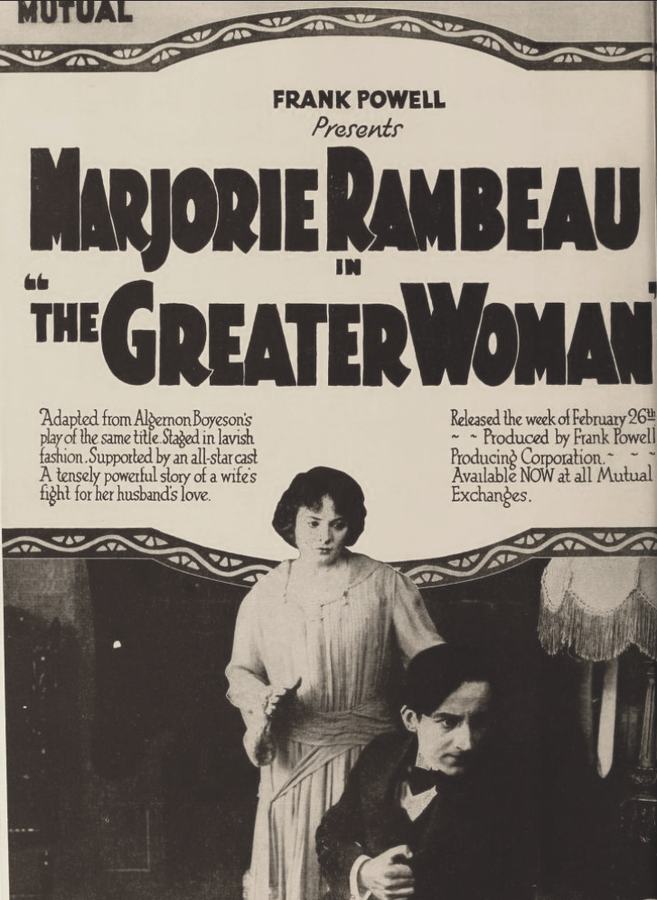
While specific directorial credits for many early films can be elusive or shared, the overall execution of The Greater Woman speaks to a confident command of cinematic language. The pacing is deliberate, allowing the psychological tension to build gradually. The use of close-ups, particularly on Rambeau and Pattee, effectively conveys internal states and motivations, a crucial element in silent storytelling. The settings, from the rustic charm of the countryside to the artistic vibrancy of Paris, are utilized to heighten the emotional contrast in Auriole's journey. The visual storytelling is adept, relying on strong compositions and evocative imagery to communicate the narrative without the crutch of dialogue.
The film grapples with profound themes. Obsession, as personified by Bannister, is depicted as a destructive force that corrupts not only the obsessed but also those around them. Betrayal, whether real or manufactured, shatters trust and leaves emotional wreckage. The film also subtly explores the agency of women in a patriarchal society. Auriole's flight to Paris is an act of defiance, an attempt to forge her own destiny, only to be dragged back into the toxic orbit of male possessiveness. In this regard, it shares thematic DNA with contemporary works like Jane or The Vital Question, which often placed women at the center of moral and social dilemmas. The narrative asks poignant questions about the nature of love, the limits of forgiveness, and the enduring power of manipulation. It’s a study in human fallibility and the consequences of unchecked desire, a timeless narrative that resonates even today.
To fully appreciate The Greater Woman, one must place it within the broader context of silent cinema. This was an era of experimentation and rapid innovation, where filmmakers were still discovering the grammar of their new art form. The reliance on visual storytelling, expressive acting, and evocative musical accompaniment (though not preserved with the film itself, its original exhibition would have included live music) fostered a unique cinematic experience. The film, like many of its contemporaries such as Reaching for the Moon or The Cricket, utilized dramatic intertitles not just to convey dialogue but to offer narrative exposition and emotional commentary, guiding the audience through the story’s complexities. The craftsmanship in set design and costume, while not always lavish, effectively establishes the social strata and emotional tenor of each scene, from the rustic simplicity of the farm to the sophisticated allure of Parisian artist studios.
The screenplays by Clara Beranger and Algernon Boyesen are particularly noteworthy. Beranger was a prolific and respected writer of the era, known for crafting stories with strong female characters and intricate plots. Her involvement likely contributed significantly to the depth and psychological realism of Auriole's character and the narrative's emotional thrust. Boyesen's collaboration would have added another layer of narrative ingenuity, ensuring a well-paced and engaging story. Their combined talents illustrate the often-underappreciated role of writers in shaping the early cinematic landscape, laying the groundwork for complex storytelling that would evolve in later decades. The meticulous plotting, particularly Bannister’s scheme, demonstrates a sophistication that elevates the film beyond mere melodrama, pushing it towards a more psychological thriller territory. This kind of narrative intricacy can be seen in other films where character motivations drive the plot, such as Comrade John, albeit in a different genre.
The Greater Woman, despite its age, remains a potent exploration of human nature's darker impulses and the enduring struggle for personal autonomy. It serves as a stark reminder that the machinations of a jealous heart can be as destructive as any overt act of violence. The film’s dramatic arc, from idyllic romance to harrowing manipulation, keeps the audience engrossed, eager to see whether Auriole will ultimately succumb to Bannister’s machinations or emerge triumphant. The film’s title itself, The Greater Woman, invites contemplation. Is it Auriole, whose resilience is tested and ultimately proves formidable? Or is it a more ironic commentary on the societal expectations placed upon women, forcing them to navigate treacherous emotional landscapes with grace and strength? This ambiguity adds another layer to its enduring appeal, allowing for varied interpretations and discussions, much like the profound historical dramas such as Karadjordje or Charles IV, which, in their own ways, explored the complexities of human ambition and power.
The film’s conclusion, without revealing specifics, aims to provide a resolution that speaks to the themes of justice and redemption, or perhaps the lingering scars of such profound emotional battles. It's a testament to the power of early cinema that such a complex and emotionally charged narrative could be conveyed so effectively without spoken dialogue. The performances, particularly Rambeau’s, elevate the material, transforming what could have been a simple melodrama into a poignant study of character and consequence. It’s a film that demands to be seen by anyone interested in the evolution of cinematic storytelling, the power of silent acting, or simply a gripping human drama that transcends the decades.
Ultimately, The Greater Woman stands as a compelling example of silent cinema’s artistic merit and its capacity to explore sophisticated psychological territory. Through the stellar performances of Marjorie Rambeau and H.H. Pattee, and the astute writing of Clara Beranger and Algernon Boyesen, the film crafts a narrative that is both specific to its time and universally resonant. It’s a powerful reminder of how obsession can corrupt, how love can be fragile, and how resilience can emerge even from the depths of despair. For enthusiasts of classic film, it offers not just a glimpse into a bygone era of filmmaking, but a timeless story of human frailty and the enduring quest for happiness against formidable odds. Much like The Love Doctor or Pirate Haunts, which captured the imagination of their audiences with vivid characters and compelling plots, The Greater Woman solidifies its place as a significant, albeit often overlooked, work in the history of cinema, deserving of renewed attention and appreciation for its rich narrative and masterful execution.
IMDb 6.8
1932
Community
Log in to comment.