DbcultAccessing Vault...
Cult Review
Senior Film Conservator
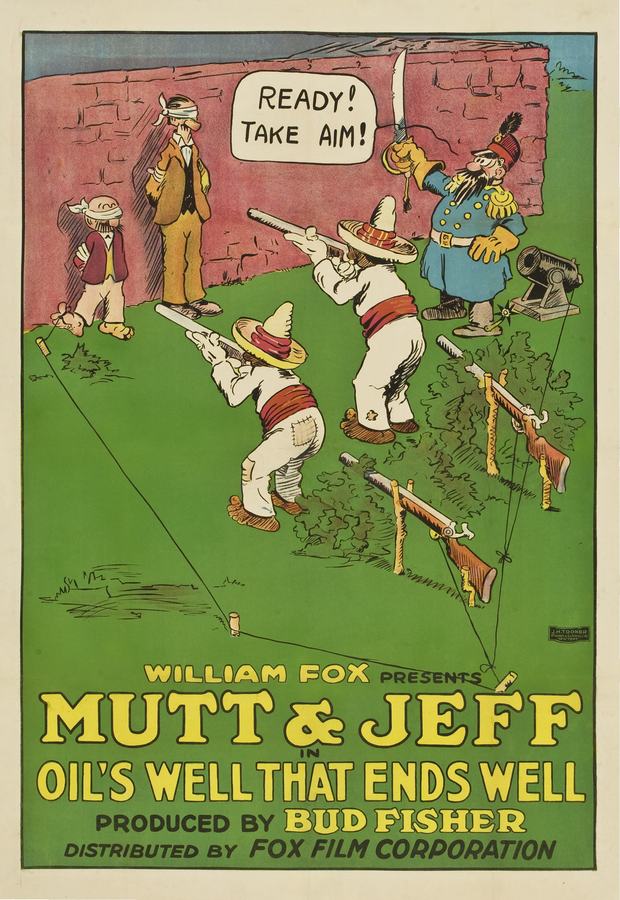
In the vast, often forgotten annals of early cinema, certain films emerge not just as historical artifacts, but as resonant echoes of universal human struggles. Such is the case with “Oil's Well That Ends Well,” a compelling drama that, despite its vintage, speaks with an astonishingly contemporary voice about ambition, integrity, and the relentless march of industrial progress. Directed and written by the prolific Bud Fisher, who also takes on the central role, this picture is a fascinating study in character-driven narrative, showcasing Fisher's surprising depth beyond his more famous animated endeavors. It's a film that demands to be revisited, to be understood not merely as a relic, but as a potent commentary on the foundational myths and moral quandaries that shaped a nation. Its power lies in its unvarnished portrayal of a man pitted against forces far greater than himself, a theme as timeless as the Texas dust storms it implicitly evokes. The film's unassuming title belies a narrative complexity and an emotional heft that firmly plants it among the more impactful dramas of its era, inviting comparisons to the stark realism found in works like Drama na okhote or the moral intricate narratives of Paid in Full, both of which similarly probe the depths of human conscience under duress. This isn't merely a story of oil; it's a story of the soul.
At the heart of “Oil's Well That Ends Well” is John “Grit” Harding, portrayed with a compelling blend of stoicism and simmering defiance by Bud Fisher himself. Grit is an archetypal figure of the American frontier: a man deeply connected to the land, whose existence is defined by honest labor and an unwavering moral compass. He, his wife Elara, and their young daughter Lily carve out a meager but dignified life on a small Texas farm, their days marked by the endless cycle of sun and soil. This pastoral struggle, however, is dramatically upended by a discovery that promises salvation but delivers a crucible: a vast reservoir of oil beneath their seemingly barren acres. Fisher’s portrayal of Grit is remarkably nuanced, capturing the initial euphoria, the cautious optimism, and the eventual, profound weariness of a man thrust into an existential battle. It's a performance that eschews melodrama for a more grounded, internal conflict, a choice that lends the film a palpable sense of authenticity. His silent expressions, particularly in moments of profound despair or resolute defiance, convey more than any intertitle could, cementing his character as a pillar of integrity in a world rapidly succumbing to avarice. This quiet power of resistance is a thread that runs through many compelling narratives of the period, echoing the steadfastness found in characters grappling with difficult choices, much like the protagonists in Her Good Name, who fight to preserve their honor against overwhelming odds.
The antagonist arrives in the formidable shape of Silas Blackwood, an oil magnate whose very name conjures images of unyielding darkness and predatory ambition. Blackwood is not merely a villain; he is the embodiment of the burgeoning, ruthless capitalism that defined an era. His empire is built on acquisition, often through intimidation and exploitation, and his gaze, once fixed upon Grit’s land, becomes an unblinking, relentless force. The film masterfully illustrates how Blackwood's corporate machinery, with its legal maneuvers and veiled threats, slowly but inexorably tightens its grip around Grit's world. This isn't a simple good-versus-evil narrative; it's a stark portrayal of the individual's vulnerability against a system designed to crush dissent and absorb resources. The struggle between Grit and Blackwood transcends personal animosity, evolving into a symbolic clash between agrarian values and industrial might, between ethical rectitude and unbridled greed. The tension is expertly crafted, building through a series of escalating confrontations that leave the audience questioning whether Grit's integrity can possibly withstand such overwhelming pressure. In this depiction of a powerful entity encroaching upon individual rights, one might draw parallels to the systemic challenges faced by characters in films like Pro Patria, where larger forces dictate personal destinies, or the complex moral landscapes explored in Quicksand, where characters find themselves trapped by circumstances beyond their control.
What truly elevates “Oil's Well That Ends Well” beyond a simple melodrama is its profound thematic depth. It's a searing indictment of unchecked corporate power and a poignant exploration of the human cost of progress. The film doesn’t shy away from depicting the environmental degradation and social upheaval that often accompany rapid industrialization, even if subtly conveyed through visual cues and character reactions. The black gold, initially a symbol of hope and prosperity, quickly transforms into a corrosive agent, threatening to poison not just the land, but the very soul of the community. Grit's fight is not just for his property; it's for his way of life, for the sanctity of his family, and for the preservation of an ethical framework that seems increasingly irrelevant in the face of insatiable greed. The film forces us to confront uncomfortable questions about what constitutes true wealth and whether material gain is worth the forfeiture of one's principles. The tension between Grit's moral steadfastness and Blackwood's ruthless pragmatism forms the narrative backbone, providing a compelling exploration of values that remains startlingly relevant in our own time. This ethical quandary, where personal integrity is tested against societal pressures, resonates with the struggles seen in films like The Divorcee (1919), which examines the societal costs of personal decisions, or even the internal conflicts presented in A Romance of the Underworld, where characters must choose between right and wrong in a morally ambiguous world.
Bud Fisher's directorial hand, while perhaps less ornate than some of his contemporaries, is remarkably effective in conveying the narrative's emotional weight and thematic urgency. The cinematography, though characteristic of the era, utilizes wide shots of the desolate Texas landscape to emphasize Grit's isolation and the vastness of the forces he confronts. Close-ups are employed judiciously, highlighting the raw emotion on Fisher's face as Grit endures setback after setback. The intertitles, rather than simply stating dialogue, often serve as poetic commentaries, adding layers of meaning and reinforcing the film's moral core. There’s an almost documentary-like quality to certain sequences, particularly those depicting the rough-and-tumble world of oil prospecting, which lends an air of authenticity to the proceedings. Fisher demonstrates a keen understanding of visual storytelling, allowing the stark imagery and the actors' expressions to carry the narrative's weight. This deliberate approach to filmmaking, where every frame contributes to the overarching message, is a hallmark of strong early cinema, providing a powerful contrast to more overtly theatrical productions. The visual language employed here is reminiscent of the grounded realism sometimes found in works depicting the struggles of ordinary people, such as The Grocery Clerk, despite their vastly different subject matters.
The supporting cast, though given less screen time, contributes significantly to the film's texture. Elara, Grit's wife, embodies quiet strength and unwavering loyalty, her concern for her family a constant counterpoint to Grit's burgeoning obsession with justice. Her subtle performances, conveying fear, hope, and determination through gesture and expression, ground the narrative in a very human reality. The various figures in Blackwood's employ, from slick lawyers to menacing enforcers, are depicted with enough menace to make their threat palpable without resorting to caricature. It's a testament to Fisher's writing that even these secondary characters feel integral to the unfolding drama, each playing a crucial role in the relentless pressure brought to bear on Grit. The film’s ensemble, though operating within the stylistic constraints of silent cinema, manages to create a world that feels lived-in and authentic, allowing the audience to fully immerse themselves in the high-stakes conflict. The collective performances amplify the sense of a community under siege, a theme that resonates strongly with other early dramas exploring social cohesion and conflict, such as Brother Against Brother, where communal ties are tested by internal strife.
The climax of “Oil's Well That Ends Well” is not a simplistic, triumphant resolution, but a nuanced and emotionally charged denouement that reflects the film’s sophisticated understanding of human nature and societal forces. Grit is pushed to his absolute limit, forced to make a desperate gamble that could either secure his family's future or lead to their complete ruin. The tension is excruciating, punctuated by moments of genuine despair and fleeting hope. Without giving away the precise mechanics of the ending, it suffices to say that the film delivers a powerful message about the nature of victory itself. It suggests that true success might not be measured in barrels of oil or piles of cash, but in the preservation of one’s moral integrity and the resilience of the human spirit. The “well that ends well” of the title becomes ironic and deeply profound, implying a triumph that transcends material gain, a hard-won peace forged through immense sacrifice. This complex resolution, where victory is not without its costs, distinguishes the film from more straightforward moral tales and aligns it with narratives that explore the ambiguities of justice, much like the intricate choices faced by characters in All Wrong, where intentions and outcomes are rarely simple. The film’s lasting impression is not one of facile optimism, but of enduring strength.
In conclusion, “Oil's Well That Ends Well” is far more than a historical curiosity; it is a profound and moving cinematic experience that deserves a place in the pantheon of early American dramas. Bud Fisher's dual role as writer, director, and lead actor is a remarkable achievement, showcasing a talent that extended far beyond his comic strip origins. The film's exploration of themes like greed, environmental impact, the individual versus corporate power, and the enduring value of integrity remains startlingly pertinent today. It's a stark reminder that the struggles of the past often mirror the challenges of the present, making its message resonate across generations. For cinephiles and cultural historians alike, this film offers a rich tapestry of narrative and thematic depth, inviting viewers to ponder the true cost of progress and the unwavering spirit required to stand firm against the tides of change. Seek out this compelling piece of cinema; it’s a journey into the heart of a nation’s burgeoning industry and the soul of a man who dared to defy its relentless current. Its legacy is not just in its historical context, but in its timeless ability to provoke thought and stir the conscience, proving that some stories, like the oil beneath Grit's land, contain reserves of meaning that never truly run dry. Its powerful narrative and enduring questions make it a compelling companion to other early works that grappled with the complexities of life and choice, such as the serialized adventures of Beatrice Fairfax Episode 8: At the Ainsley Ball, which, while different in genre, also presented characters navigating a world of challenges and moral tests, albeit with a different kind of urgency. This film stands as a testament to the power of early filmmaking to capture the zeitgeist and universal human drama with remarkable clarity and emotional force.
IMDb 6.3
1931
Community
Log in to comment.