DbcultAccessing Vault...
Cult Review
Senior Film Conservator
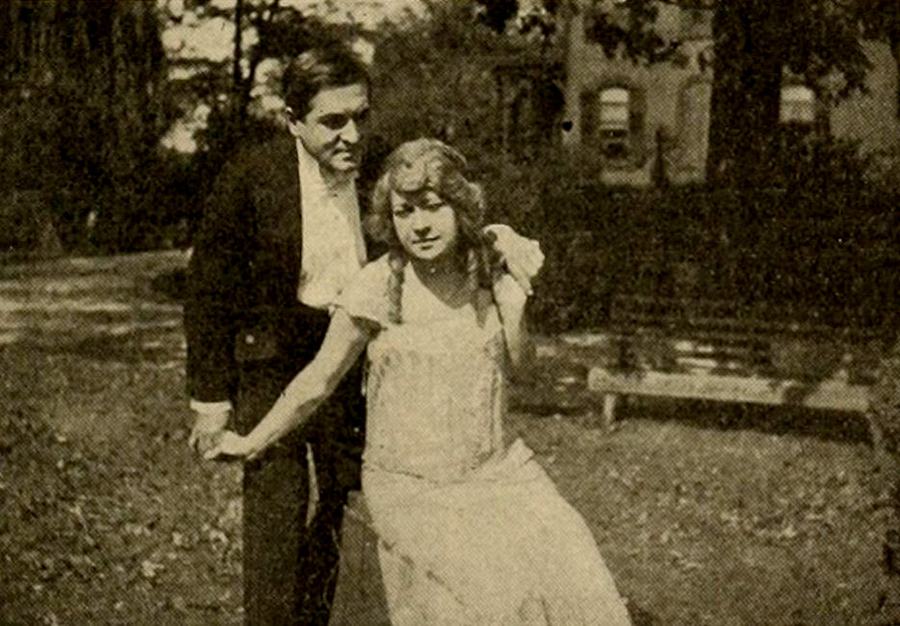
The year 1914 stands as a monumental threshold in the history of the moving image, a period where the primitive flickers of the nickelodeon were rapidly evolving into the sophisticated narrative tapestries of the feature film. Amidst this transition, Lena Rivers emerged as a poignant adaptation of Mary Jane Holmes’ beloved novel, a work that navigated the treacherous waters of sentimentalism and social realism with a surprisingly deft hand. Unlike the high-octane thrills of serials like The Master Key, which captivated audiences through episodic suspense, Lena Rivers sought to engage the viewer’s emotional intelligence through a prolonged study of character, lineage, and the inexorable weight of the past.
The film’s opening movements are steeped in a pastoral New England aesthetic that belies the impending tragedy. The cinematography, while constrained by the technical limitations of the era, manages to capture a sense of place that is essential to the narrative’s moral stakes. When Harry Rivers Graham enters the scene, he brings with him a sense of cosmopolitan intrusion. His decision to truncate his name—a seemingly innocuous act of youthful rebellion—functions as the narrative’s 'original sin.' This omission of his patronymic identity is not merely a plot device; it is a profound commentary on the fragility of female security in a world where a woman’s social standing was entirely contingent upon the transparency of her husband’s name.
One cannot discuss Lena Rivers without addressing the dual role of the titular protagonist—first as the doomed mother and subsequently as the resilient daughter. The death of the elder Lena is portrayed with a stark, almost haunting simplicity. It echoes the thematic despair found in other contemporary works such as Chained to the Past, where the repercussions of historical choices bind the characters to a predetermined path of suffering. The transition from the mother’s demise to the daughter’s maturation is handled with a rhythmic grace that emphasizes the cyclical nature of Holmes’ storytelling.
As the younger Lena moves to Kentucky, the film expands its visual and thematic scope. The shift from the rigid, craggy shores of the North to the sprawling, aristocratic estates of the South introduces a new set of social codes. Here, the film mirrors the grander historical scale seen in The Battle of Shiloh, though its focus remains steadfastly domestic. The Kentucky sequences are notable for their exploration of 'attentions'—those subtle, often misinterpreted social gestures that define the characters’ relationships. The elder Harry’s attempts to compensate for his past negligence through financial and emotional largesse toward Lena are tragic precisely because they lack the clarity of confession.
In an era often criticized for histrionic overacting, the cast of Lena Rivers exhibits a commendable level of restraint. Mary Moore, in the central role, navigates the complexities of her character’s plight with a luminous vulnerability. Her performance is not merely a collection of silent-era tropes; there is a genuine psychological depth to her portrayal of a woman caught between her burgeoning love for Durward and the confusing, paternalistic advances of a man she does not yet know is her father. This nuance is comparable to the sophisticated character work found in European imports of the same year, such as The Child of Paris, which also delved into the intricacies of familial bonds and social displacement.
The supporting cast, including Harrish Ingraham and Martin Faust, provides a sturdy framework for the central drama. The interplay between Durward and Lena, complicated by the arrival of the 'first sweetheart' Carrie, introduces a layer of romantic friction that prevents the film from descending into pure hagiography. The rivalry is staged with a keen eye for spatial dynamics, using the architecture of the Kentucky mansion to isolate and reconnect characters in ways that heighten the narrative tension. It lacks the surrealist undertones of The Mystery of the Yellow Room, but it replaces that intrigue with a grounded, palpable sense of social anxiety.
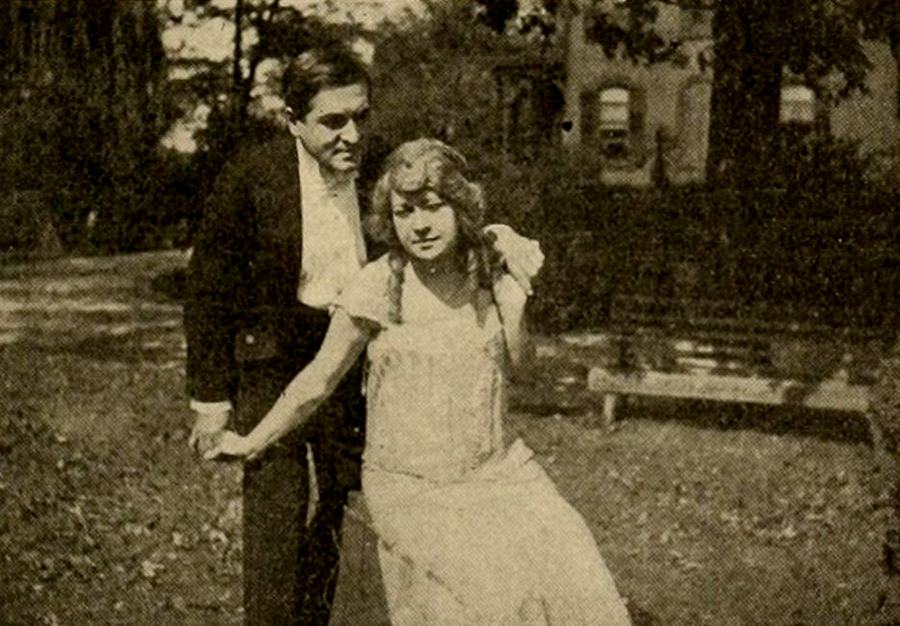
The directorial choices in Lena Rivers reflect a burgeoning understanding of how to use the camera as a tool for empathy. The close-ups, though infrequent compared to modern standards, are strategically utilized to punctuate moments of internal crisis. When Lena collapses under the 'burden of her troubles,' the camera lingers just long enough to invite the audience into her exhaustion. This empathetic gaze is a hallmark of the era’s best dramas, standing in contrast to the more detached, observational style of biographical epics like The Life of Richard Wagner or the sheer kinetic energy of Tigris.
Furthermore, the film’s treatment of the 'fallen woman' and the 'illegitimate child' is remarkably progressive for 1914. While many contemporary films, such as Sumerki zhenskoy dushi (Twilight of a Woman's Soul), leaned into the nihilistic destruction of their heroines, Lena Rivers offers a path toward redemption and societal reintegration. The climax—a masterclass in slow-burn revelation—reconciles the disparate threads of the plot with a satisfying, if somewhat convenient, resolution. The acknowledgment of Lena by her father is not just a personal victory; it is a restoration of her legal and social identity, effectively undoing the damage caused by the initial deception in New England.
When viewed alongside other releases of the same year, Lena Rivers occupies a unique niche. It lacks the overt political messaging of Brother Against Brother, yet it speaks volumes about the internal wars waged within the American family. It doesn't possess the escapist allure of One Wonderful Night or the rugged adventure of Az aranyásó, but its focus on the domestic sphere provides a more intimate look at the anxieties of the time. The film’s pacing, which some modern viewers might find deliberate, actually serves to build a sense of inevitability that is crucial to the melodrama’s efficacy.
The production values, while modest, are utilized effectively to differentiate the various social strata. The contrast between the humble origins of the Nichols family and the opulent world of the Grahams is rendered through costume and set design with a clarity that requires no intertitles. This visual storytelling is a testament to the skill of the 1914 filmmakers, who were increasingly looking to international benchmarks like The Duke's Talisman or the Brazilian A Vida do Barão do Rio Branco for inspiration on how to convey prestige and history on screen.
Ultimately, Lena Rivers is a film about the necessity of truth. It posits that secrets, no matter how well-intentioned, act as a corrosive force within the family unit. The elder Harry’s silence almost costs him his daughter’s life and his stepson’s respect. The film’s resolution, while adhering to the conventions of the novel, feels earned because of the arduous journey the characters have undertaken. It is a story of recovery—not just from physical collapse, but from the spiritual malaise of living under a false name.
For the modern cinephile, Lena Rivers offers a fascinating window into the moral landscape of the early 20th century. It is a bridge between the Victorian stage tradition and the cinematic future, a work that respects its literary roots while embracing the unique possibilities of the silent screen. Whether compared to the gritty realism of From Gutter to Footlights or the hopeful journey of The Road to the Dawn, Lena Rivers holds its own as a definitive example of early American melodrama. It is a film that reminds us that while the technology of storytelling may change, the fundamental human desire for recognition, belonging, and the truth of one’s origins remains immutable.
Final Rating: A seminal piece of silent-era storytelling that transcends its melodramatic trappings through genuine emotional resonance and a sophisticated understanding of narrative structure. A must-watch for historians of the medium.
IMDb 6.6
1919
Community
Log in to comment.