DbcultAccessing Vault...
Cult Review
Senior Film Conservator
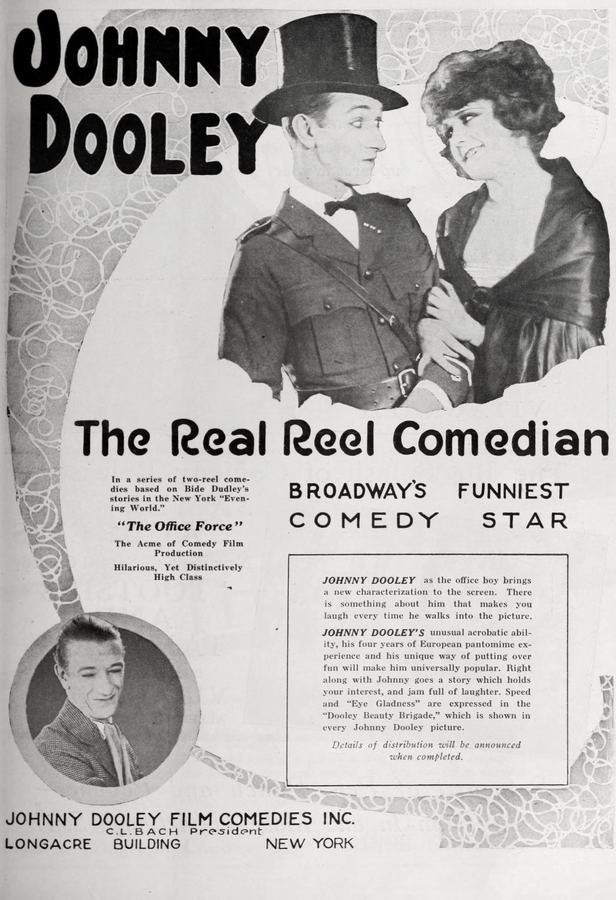
Somewhere between the first flicker of the projector and the last brittle frame, On the Inside stage-dives into the custard of respectability and emerges wearing the custard as a hat. Johnny Dooley—normally a rubber-limbed slapstick jester—here channels a chiaroscuro soul: half harlequin, half hedge-witch. The disguise is not mere petticoat and lace; it is a Trojan horse wheeled straight into the fortress of patriarchal dread.
Visually, the picture drinks deeply from German expressionist chiaroscuro yet keeps one foot in the sun-dappled lawns of American pastoral. Cinematographer Bartolomeo Canetti tilts corridors so they yaw like coffins stood on end; he floods parlors with sodium moonlight until the very air feels guilty. The result is a world where every doorknob could be a witness and every shadow could file a police report.
Act I disorients: we meet Johnny’s alter-ego, "Miss Calliope Merriweather," hired through an agency so bureaucratic it might as well be Kafka’s basement. The contract stipulates she must prevent the Grimble daughters from "receiving male impressions." What unfolds is not a chaste road trip but a Jacobean battle of wits where gender is both armor and Achilles heel.
Mid-film, the tone pivots on a dime from drawing-room farce to something closer to existential exile. Iris smuggles in a copy of The Yellow Book; Rose pens incendiary letters signed "Salome"; Dahlia charts comets that spell out danger in Morse. Their father’s surveillance metastasizes into a surveillance-state ballet—footmen pop from behind tapestries like jack-in-the-box Stasi. Johnny, entombed in corsetry, begins to hyperventilate onscreen; the intertitle simply reads: "Breath is treason."
Dooley’s physical lexicon marries Chaplin’s ankle pivots with Garbo’s languid minimalism. Watch the way "Calliope" lowers herself into a chaise: knees together, spine a question mark, hands folding like closing curtains—then, the lethal flick of an eyebrow that could slice bread. It is comedy as microsurgery.
As Rose, Sybil Seely delivers a masterclass in ocular semaphore; her pupils dilate from demure to daemonic in the space of a single iris close-up. Meanwhile, veteran stage tyrant Edgar Eland turns Mr. Grimble into a walking cautionary tale: every grunt a gunshot, every side-eye a guillotine. The cumulative effect is that rare silent film where silence itself feels garrulous.
Though originally released without official score, contemporary festivals often commission new accompaniment. I caught a 16 mm print with a trio wielding toy pianos, musical saws, and loop pedals. Their motif for Calliope was a waltz in a broken music-box key—three beats forward, two beats back—mirroring the character’s gendered stutter-step. Each crescendo landed like a slap, each decrescendo like a secret swallowed. The absence of spoken dialogue becomes a vacuum that sucks the viewer’s own breath into the screen; you supply the whispers, you become the conspirator.
Where earlier drag comedies treated cross-dressing as a punchline, On the Inside weaponizes it as epistemological sabotage. Johnny’s impersonation destabilizes not merely the Grimble household but the very edifice of epistemic certainty: who owns knowledge of the body? The film anticipates Judith Butler by six decades, yet never curdles into lecture; it pirouettes, it pratfalls, it bleeds.
There is a shot—lasting maybe four seconds—where Calliope’s lace glove snags on a briar while escaping a moonlit greenhouse. The rip sounds louder than any scream. In that tear, the film announces its thesis: identity is fabric, and fabric is always one thorn away from unraveling.
Critics often tether the picture to Hester Prynne’s scarlet stigma or the Alpine perils of Die badende Nymphe. I’d posit a stranger lineage: imagine Oscar Wilde’s The Importance of Being Earnest forcibly sewn into the lining of Billy Wilder’s Some Like It Hot, then left to ferment in a dungeon of Victorian pornography. The stitch marks show, and that is the point—seams are scars, scars are stories.
Yet unlike Wilder’s candy-bright Miami, the world of On the Inside offers no seaside paradise where masks can be safely doffed. Here, the final reel implies that escape is merely another room with trick walls and hungrier mirrors.
For decades the last known copy languished in a Slovenian monastery attic, nibbled by goats, singed by censers. Enter the American Silent Reclamation Project: archivists performed a 4 K wet-gate photochemical exorcism, coaxing mildewed emulsion back into something resembling skin. The tinting—amber for interiors, viridian for gardens—restores emotional chromatics that 1923 audiences would have read like a second language. Scratches remain, of course; they flicker like celluloid Morse, reminding us that history itself is a palimpsest of wounds.
In an era when legislatures police bathrooms and algorithms police pronouns, On the Inside feels less like antique whimsy than like tomorrow’s dispatch beamed backward. Its central gag—authority figures hoodwinked by a man in a dress—might sound dated, yet the underlying dread pulses fresh: bodies surveilled, desires pathologized, identities weaponized for moral panic.
More than once I caught myself glancing over my shoulder in the theater, half expecting a Grimble-style drone to hover above the aisle. Paranoia, the film reminds us, is simply pattern recognition in a corset.
Does the film falter? Briefly. A subplot involving a missing dividend ledger (rhyming thematically with The Dividend) dissipates like cheap smoke. And the youngest daughter’s astronomical obsession, while poetically fertile, never earns narrative payoff beyond a symbolic comet streak during climax.
Yet these quibbles evaporate under the projector’s carbon-arc blaze. On the Inside delivers what few silents ever manage: a visceral, cerebral, libidinal maelstrom that leaves you laughing through clenched teeth. It is a party, a panic, a protest. It is the film you didn’t know you needed, disguised as the film you thought you could ignore—rather like its protagonist, winking behind a veil of powder and prophecy.
Seek it out wherever archival miracles screen. Sit close enough that the projector’s heat warms your cheek. Let the orchestra saw at your nerves. And when the final intertitle fades—"The door is open, but the room is larger"—you may find your own disguise slipping, stitch by trembling stitch.
IMDb 5.2
1931
Community
Log in to comment.