DbcultAccessing Vault...
Cult Review
Senior Film Conservator
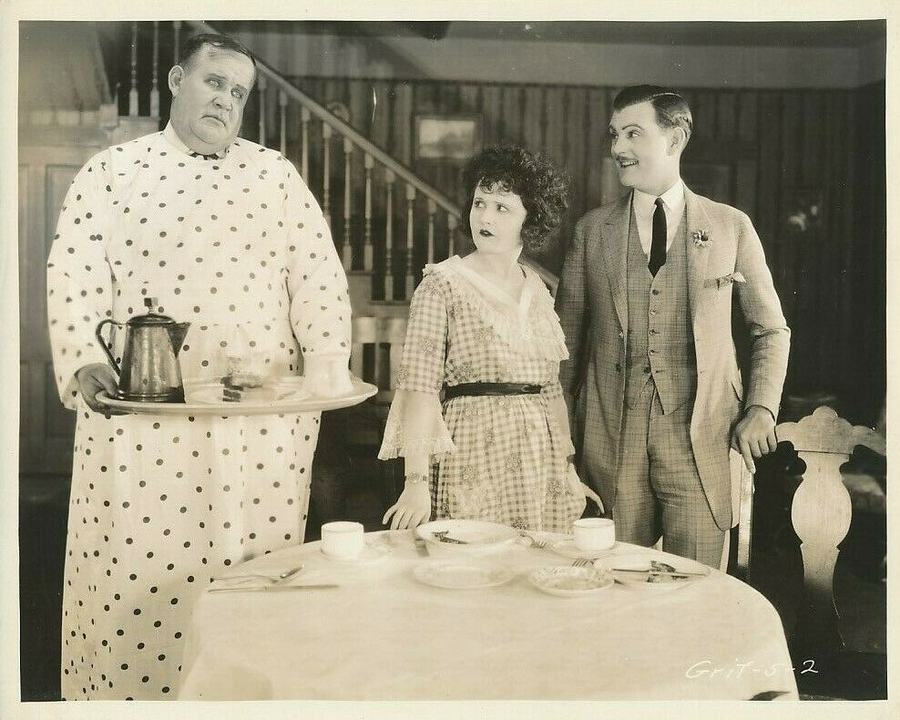
In the pantheon of silent cinema, where the line between tragedy and farce is often as thin as a strip of nitrate film, The Devilish Romeo emerges as a fascinating artifact of domestic discontent. Released during an era when the cinematic medium was rapidly evolving from mere novelty to a sophisticated narrative art form, this film serves as a poignant, if often hilarious, critique of the early 20th-century marital contract. Unlike the brooding intensity found in contemporary dramas like The Man Inside, this production leans heavily into the kinetic energy of the 'henpecked' trope, a staple of the period that reflects deeper anxieties about shifting gender roles and the crushing weight of suburban banality.
The film opens with an almost tactile sense of household stagnation. We are introduced to a husband whose life has become a repetitive cycle of appeasement and auditory assault. The 'squalling baby' is not merely a plot device; it is a sonic representation of the protagonist's internal chaos. Bess True delivers a performance of remarkable subtlety as the indolent wife, capturing a sense of listlessness that predates the more overt social critiques seen in films like The Girl in Number 29. There is a palpable friction here, a domestic friction that provides the perfect kindling for the fire that Hallam Cooley’s character is about to light.
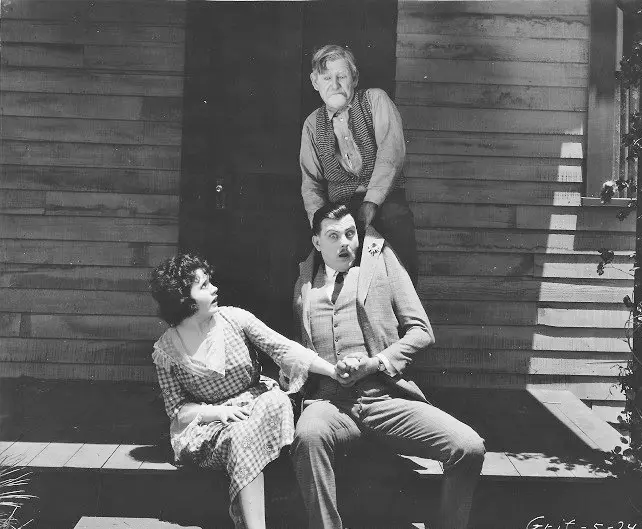
Joe Roberts, perhaps best known for his legendary collaborations with Buster Keaton, brings an unexpected gravitas to the role of the beleaguered husband. His physicality is his greatest asset; every slump of the shoulders and weary glance toward the ceiling communicates a history of quiet desperation. When the 'handsome villain' enters the frame, the film shifts gears from a static comedy of manners to a high-stakes melodrama. Cooley plays the former lover with a slick, oily charm that stands in stark contrast to Roberts’ rugged, everyman appeal. This is not the primal villainy one might encounter in The Man from Bitter Roots, but rather a more insidious, socialized malice—the kind that uses the law as a scalpel to excise a rival.
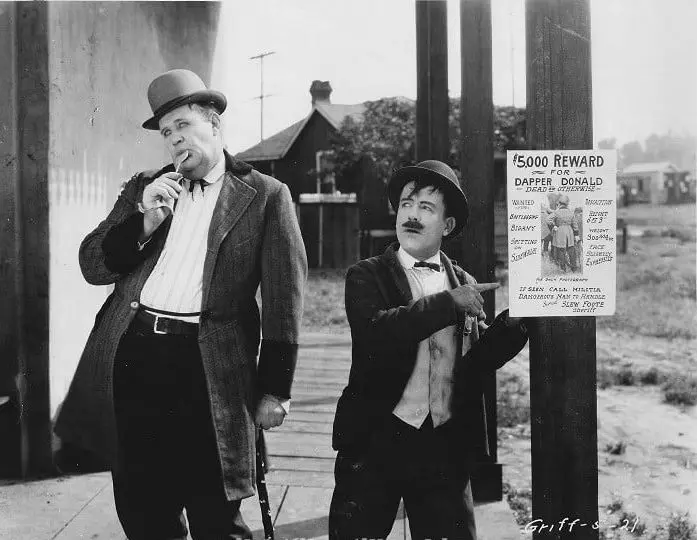
The pivot point of the narrative—the framing of the husband—is a stroke of satirical genius. By accusing the protagonist of forgery, bootlegging, and the hilariously trivial 'spitting on the sidewalk,' the writers highlight the arbitrary nature of moral panic in the 1920s. It is a sequence that feels surprisingly modern, echoing the bureaucratic nightmares found in later works like Camera obscura. The sheriff, played with a delightful rigidity by Ford West, becomes the unwitting instrument of the villain’s vendetta, representing a legal system that is more concerned with the appearance of order than the pursuit of justice.
As the husband is carted off to the local bastille, the film’s visual language becomes more expressive. The shadows lengthen, and the camera movements—though limited by the technology of the time—begin to reflect the protagonist's growing agitation. This transition from the bright, flat lighting of the domestic sphere to the more chiaroscuro-inflected prison scenes suggests a descent into a personal purgatory. It reminds one of the tonal shifts in Outcast, where the environment itself becomes an antagonist.
The third act of The Devilish Romeo is where the film truly finds its pulse. The prison break is not merely a functional plot point; it is a cathartic release of energy. Roberts’ transformation from a submissive spouse to a man 'good and sore' is handled with a wonderful sense of timing. Bobby Dunn’s involvement in these sequences adds a layer of acrobatic slapstick that elevates the chase from a simple pursuit to a choreographed dance of chaos. This is a far cry from the more somber explorations of duty found in Told in the Hills; here, movement is everything.
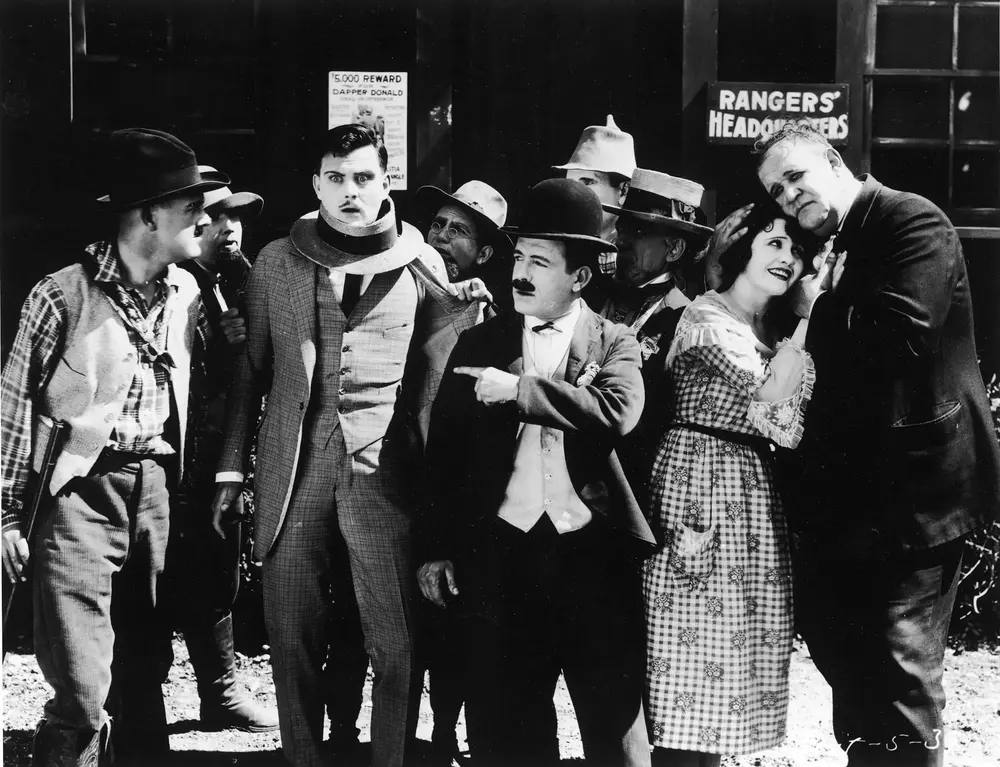
The chase sequence itself is a masterclass in silent era pacing. It utilizes the geography of the small town to create a sense of escalating stakes, moving from rooftops to alleyways with a fluidity that anticipates the great action-comedies of the mid-1920s. The 'Romeo' of the title is, of course, a misnomer—or perhaps a cruel joke. Our protagonist is no romantic lead in the traditional sense, but his journey toward self-actualization through sheer physical exertion is more compelling than many of the period's more straightforward romances, such as Runaway Romany.
One must look at the cast through the lens of their era. Hallam Cooley was the quintessential 'other man,' a figure who represented the external threats to the American home. His performance here is a fascinating precursor to the more predatory 'vamp' figures seen in A Fool There Was, albeit transposed into a comedic key. Meanwhile, the presence of Joe Roberts reminds us of the sheer physicality required of silent performers. Unlike the more static historical epics such as Giuliano l'apostata, this film relies on the actor's ability to communicate complex emotional shifts—from exhaustion to betrayal to righteous fury—without the aid of a single spoken word.
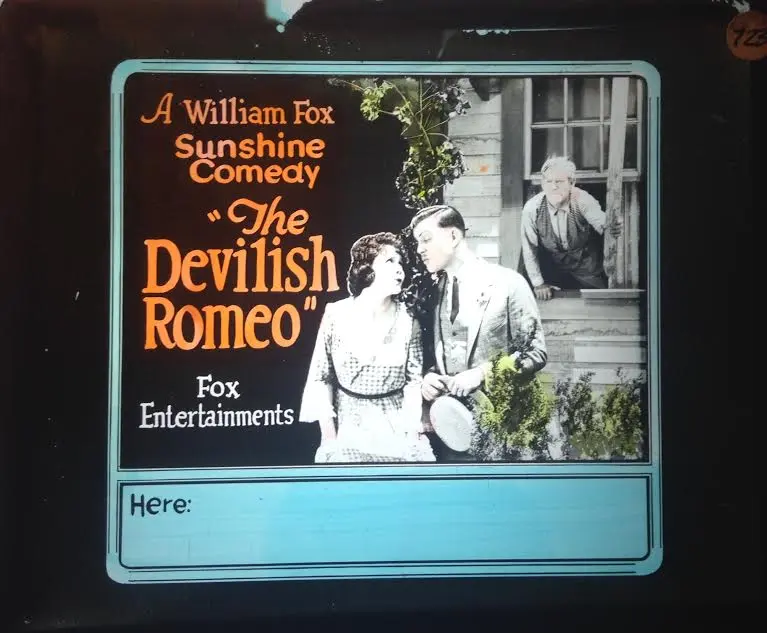
The writing, though uncredited in many historical records, displays a keen understanding of the 'Regiment of Two' dynamic (a nod to A Regiment of Two), where two opposing forces within a marriage are forced into a state of mutual realization by an external threat. The 'Devilish Romeo' is the catalyst that forces the husband to reclaim his identity, albeit through the medium of a farcical jailbreak. It’s a narrative structure that suggests that sometimes, the only way to save a marriage is to burn down the societal expectations that surround it.
When comparing this to other works of 1921, such as the ambitious Creation or the atmospheric Fesseln, 'The Devilish Romeo' might seem like a lighter fare. However, its longevity lies in its relatability. The squalling baby, the lazy spouse, the manipulative ex—these are archetypes that transcend the silent era. The film manages to be both a product of its time and a timeless exploration of the breaking point of the human spirit. It shares a certain DNA with the rugged individualism of The Sheep o' Leavenworth, though it trades the high plains for the picket fence.
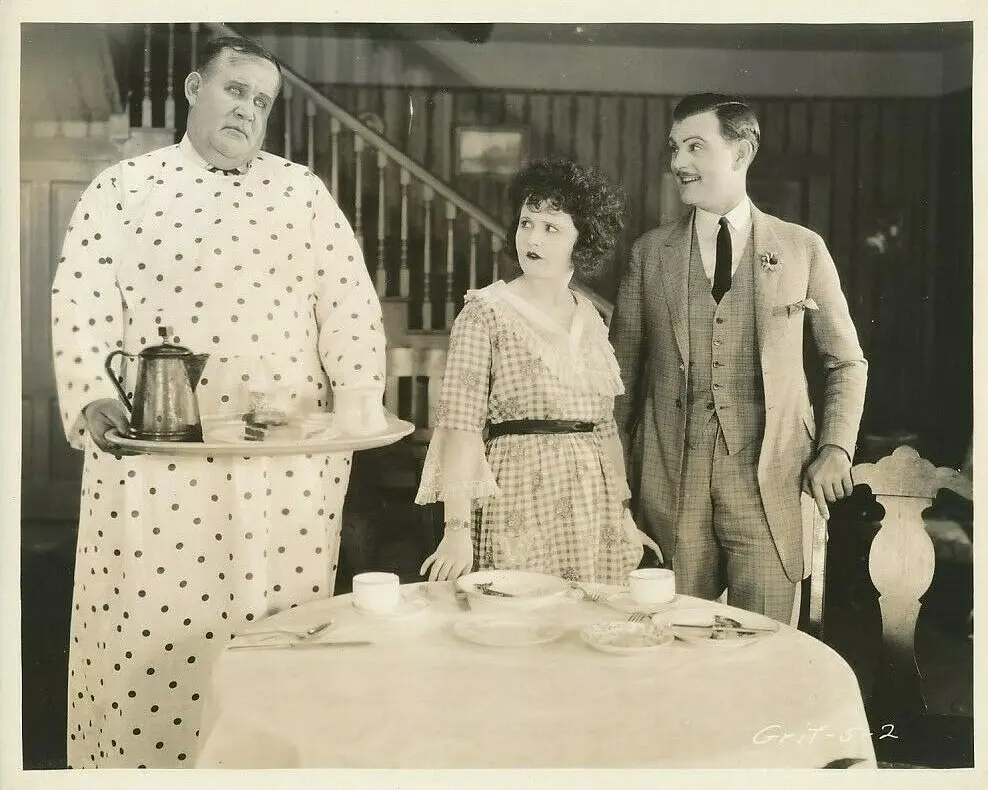
The conclusion of the film, which permits the comedy to 'end in a chase,' is perhaps the most honest way to resolve such a convoluted domestic knot. There is no grand reconciliation, no tearful apology—only the pure, unadulterated motion of a man running away from his problems and toward a new version of himself. It is a resolution that feels earned, far more so than the forced royalism of From Broadway to a Throne or the pugilistic simplicity of The Battler.
Ultimately, 'The Devilish Romeo' stands as a vibrant testament to the power of silent comedy to reflect the messy, unglamorous realities of life. It is a film that deserves to be viewed not just as a historical curiosity, but as a sharp, satirical work that understands the inherent humor in our most desperate moments. Whether you are a scholar of the genre or a casual viewer looking for a laugh, this 1921 classic offers a rich, multi-layered experience that continues to resonate a century later.
IMDb —
1925
Community
Log in to comment.