DbcultAccessing Vault...
6.6/10
Senior Film Conservator
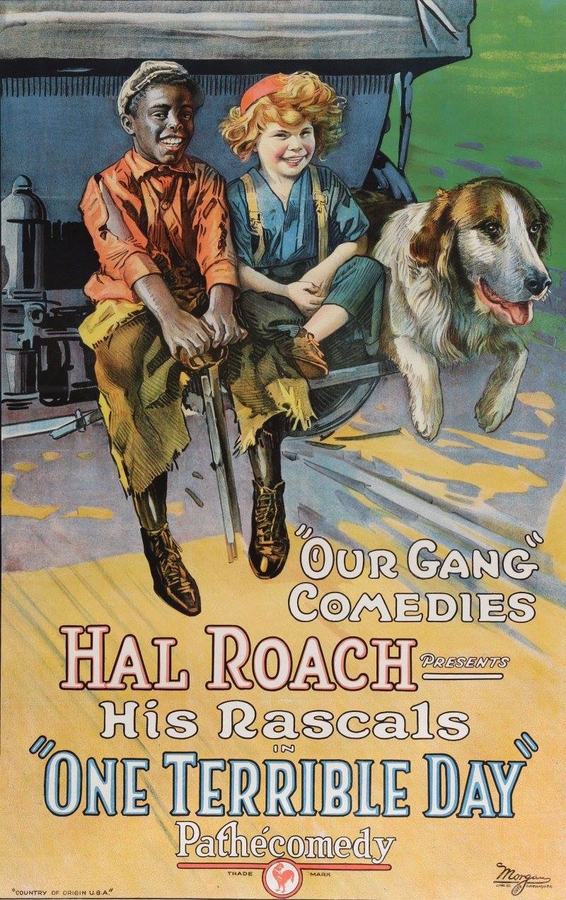
A definitive 6.6/10 rating for a film that redefined the boundaries of cult cinema. One Terrible Day remains a cornerstone of transgressive art.
Imagine Edith Wharton on laughing gas and you’ll glimpse the gleeful civic sabotage of One Terrible Day. Hal Roach’s 1923 one-reeler—barely the length of a modern sitcom episode—packs more anarchic velocity than most franchises manage across trilogies. The premise is deceptively dainty: a pearl-draped philanthropist, Mrs. Pennington Van Renssalaer, decides that nothing burnishes a family crest like a charitable children’s outing. What follows is a master-class in escalating catastrophe, a Rube Goldberg contraption of etiquette violations that leaves reputations, vehicles, and waistcoats in tatters.
Shot on the hilly backlots that would soon become the Roach studio empire, the film is a kaleidoscope of sun-flared meadows, flapping parasols, and pre-Code naughtiness. Director Tom McNamara—who cut his teeth drawing newspaper comic strips—frames every pratfall like a panel that’s leapt off the funny pages. The camera glides, then stops just long enough for a kid to shove a cream puff into the lens. Silent comedy often ages into quaintness; this thing still feels feral.
High society in early-’20s cinema was usually treated with velvet-gloved reverence—think champagne bubbles and gardenias. Roach and scenarist H.M. Walker instead dunk it head-first into a trough of sticky soda pop. Mrs. Van Renssalaer’s mansion is introduced with an iris-in straight out of a society-page photo spread, but within seconds a rogue football shatters the stained-glass heraldry. The symbolism is delicious: old-money iconography demolished by juvenile chaos.
Walker’s intertitles—razor-sharp little haikus of snark—give the film a modern satirical zing. When the chauffeur salutes his employer, a title card sneers: “He clicked his heels—soon everything else clicked too… including the gearbox.” It’s the kind of wit you’d expect in a Leap to Fame or If Women Only Knew, but compressed into throwaway subtitle bursts.
The juvenile cast—headed by Mickey Daniels, Jack Davis, and scene-stealer Allen “Farina” Hoskins—operates like a pint-sized tornado. Farina, in particular, weaponizes cuteness: he tilts his head, widens those saucer eyes, then torches a linen tablecloth with a wayward sparkler. Roach understood that comedy works best when innocence and mayhem coexist in the same facial expression.
Roy Brooks and Charles Stevenson, playing the long-suffering chauffeur and the apoplectic butler, supply the adult anchor. Their slow-burn reactions—Stevenson’s left eyebrow climbs higher with each disaster—provide the metronome that keeps the chaos from becoming mere noise. It’s a trick Harold Lloyd would later perfect, but here it’s deployed with reckless toddler energy.
McNamara’s staging is a lesson in escalation. First comes the harmless ice-cream drip, then the plate of éclairs launched via seesaw, culminating in a full-scale food fight that leaves white gloves looking like Jackson Pollock canvases. The visual payoff is timed like jazz: every splash lands on the off-beat, so the audience never anticipates the next splatter.
One bravura sequence follows a runaway Model T as it ghost-rides down a hill, children dangling from the running boards like barnacles. The camera tracks parallel, no rear-projection trickery, just kinetic stunt work that would give today’s safety supervisors heart palpitations. The car finally hydroplanes into the duck pond—an emblem of nouveau-riche dreams capsized by proletarian slapstick.
Beneath the whipped-cream warfare lurks a sly critique of performative charity. Mrs. Van Renssalaer doesn’t crave altruism; she hungers for photo-ops. The press photographers who shadow the picnic are portrayed as vultures with flashbulbs, ready to immortalize her benevolence—until the goat eats the celluloid. Roach implies that media spectacle has already corrupted even the most genteel philanthropies, a theme that resonates louder in today’s influencer culture than it possibly could in 1923.
Gender politics also bubble under the surface. The society dames flutter their fans and faint delicately, yet the real power lies with the kids, who gleefully dismantle patriarchal pomp. In that sense the film nods toward Queens Are Trumps and The Weaker Vessel, only here the matriarchs are dethroned by ten-year-olds wielding banana peels.
Roach released One Terrible Day the same year as Sylvia on a Spree and That Devil, Bateese, but this film’s breakneck pacing feels closer to the later How I Became Krazy. The difference is discipline: no gag overstays its welcome, no reaction shot lingers beyond the comic half-life. Compare it to His Daughter Pays, which stretches a single mistaken-identity joke over three reels; One Terrible Day is a haiku of havoc.
Technically, the film also outstrips many contemporaries. McNamara experiments with under-cranking the camera to accelerate motion, yet he keeps backgrounds in crisp focus so the eye can track multiple planes of action. The result is a depth-of-field richness that prefigures the visual gags of The Vanishing Dagger and even early Jacques Tati.
Mickey Daniels, freckles fizzing with mischief, has the elastic physicality of a rubber band pulled to snapping. Watch how he times a double-take: head swivels, eyes bulge, then the entire torso recoils as though yanked by invisible fishing wire. It’s a proto-CGI effect achieved with sinew and sinfulness.
Farina Hoskins, the sole Black performer in the ensemble, is saddled with the era’s stereotypical costuming—tattered shirt, oversized shoes—but subverts the caricature through sheer scene-stealing aplomb. His comic timing is so precise that modern viewers may cringe at the racial coding yet still admire the artistry. He’s the live wire that ignites every frame, a reminder that early Hollywood’s marginalized talents could weaponize limited roles into iconic moments.
Helen Gilmore, as the pearl-strangled hostess, delivers a master-class in hauteur collapsing into apoplexy. Her nostrils flare like tiny opera curtains; each new indignity widens them further until they threaten to swallow her cheekbones. It’s a performance pitched at operatic levels, yet grounded in the recognizably human fear of public humiliation.
Contemporary exhibitors would have accompanied the film with everything from salon ensembles to rickety pianos, yet the on-screen rhythm is so percussive you can almost hear the xylophone. Slapstick, at its purest, is visual music: the pratfall is the downbeat, the double-take the syncopation. McNamara orchestrates chaos like a conductor who’s drunk on bathtub gin—every crescendo slams into a rest, allowing the audience to gasp before the next cymbal crash of custard.
Modern restorations often slap on jaunty royalty-free piano, but seek out the Cineteca di Bologna 4K print featuring a bespoke score by Donald Sosin: woodblocks clatter against muted trumpets, evoking the Roaring Twenties’ brittle gaiety while underscoring the class tensions that the gags merely graze.
Strip away the title cards and the sped-up frame rates, and you’ll recognize the blueprint for everything from Little Rascals (literally—this short birthed the franchise) to Home Alone. The equation is simple: sanctuary + intrusion × escalation = cathartic laughter. Yet few modern films match the ruthless efficiency of One Terrible Day. At 18 minutes, it’s the comedy equivalent of a punk single: raw, brisk, and over before you can process the bruises.
Television sitcoms pilfered its setups for decades: the fancy garden party trashed by rowdy kids, the snob deflated by slapstick humiliation. Even the Jackass crew owe a debt—their gleeful bodily harm is just Farina’s pratfalls updated with HD slow-motion.
Absolutely—preferably at 2 a.m. when adulthood feels most oppressive. The film is a vaccine against pomposity, a reminder that the stiffest social hierarchies can be toppled by a well-aimed custard pie. Stream it on Internet Archive or hunt down the Blu-ray boxed set Hal Roach: The Early Years. Either way, surrender to its velocity; you’ll exit dazed, grinning, and probably craving a cream puff—though maybe not while wearing white gloves.
Rating: 9.5/10 — A flawless distillation of silent-era anarchy that still scorches bourgeois pretensions a century on.
IMDb —
1921
Community
Log in to comment.