DbcultAccessing Vault...
Cult Review
Senior Film Conservator
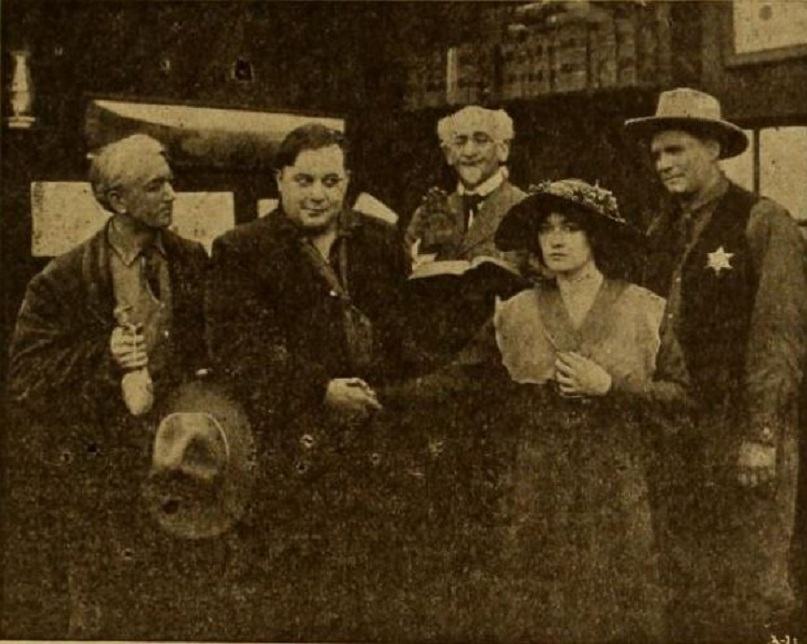
In the annals of early cinema, where flickering shadows gave voice to profound human drama, some narratives resonate with an intensity that transcends their silent origins. L. Genez's 'One Touch of Sin' (1917) is precisely such a film, a compelling frontier melodrama that plunges into the tumultuous currents of love, betrayal, and sacrificial devotion. It's a testament to the raw power of visual storytelling, anchored by a performance from Gladys Brockwell that is nothing short of mesmerizing. This isn't just a period piece; it's a timeless exploration of moral ambiguity and the heart's labyrinthine choices, delivered with an emotional punch that feels remarkably contemporary.
The film introduces us to Mary Livingston, portrayed with a delicate yet robust sensibility by Gladys Brockwell. Mary's initial state is one of blissful, albeit perhaps naive, infatuation with Richard Mallaby (Jack Standing), a man whose dashing exterior belies a gambler's fickle heart. Their love story, seemingly passionate, is quickly undermined by Mallaby's inherent instability. When he departs for the West, leaving Mary and their child behind due to a misunderstanding – or perhaps a convenient abandonment – her world crumbles. This precipitous desertion is the catalyst for Mary's arduous transformation, forcing her from the presumed comforts of the East into the unforgiving crucible of frontier life. It’s a narrative arc that immediately draws parallels with other strong female protagonists of the era, such as those found in films like The Huntress of Men, where women are often forced to forge their own destiny in harsh environments.
Mary's westward migration isn't a romantic adventure but a desperate flight, a mother's relentless pursuit of survival for her child. The stark realities of this existence push her to the brink, culminating in an act of theft—a desperate measure to secure sustenance. This moment is critical, not just for the plot's progression, but for establishing the film's nuanced moral landscape. Is Mary truly 'sinful,' or is she a victim of circumstance, forced into an impossible choice by a society that offers little solace to abandoned women? This question reverberates throughout the film, challenging simplistic notions of good and evil. Sedley Brown and Frankie Lee also contribute to these early scenes, setting the stage for the unfolding drama.
Enter Watt Tabor, portrayed by Willard Louis with a quiet dignity that becomes the film's moral compass. Tabor is not the dashing hero of melodrama, but a man of profound integrity and understated strength. He witnesses Mary's plight, understands her desperation, and, in an act of extraordinary selflessness, shoulders the blame for her theft. This singular act of chivalry, however, is misconstrued by Mary. Believing his marriage proposal to be born of obligation rather than genuine affection, she harbors a deep-seated resentment. This emotional chasm between them forms the heart of their relationship, a tragic irony where genuine love is perceived as a mere whim, an act of charity rather than devotion. Louis's portrayal of Tabor is crucial; he embodies the stoic, self-sacrificing archetype, a character whose true depth is revealed not through grand declarations, but through consistent, unwavering action. This kind of silent, enduring love is a powerful counterpoint to the more volatile passions depicted elsewhere in the narrative.
The marriage between Mary and Tabor is a fascinating study in unrequited love and perceived duty. Mary, still nursing the wounds of Mallaby's betrayal and her own shame, is unable to see Tabor's true feelings. Her disdain, though understandable from her perspective, creates a palpable tension that permeates their shared existence. It's a nuanced portrayal of emotional entanglement, where external actions don't always align with internal realities. This intricate dance of emotions is a hallmark of silent cinema, where actors relied heavily on facial expressions and body language to convey complex psychological states, and Brockwell and Louis excel in this regard.
The fragile peace of Mary's life is shattered by the return of Richard Mallaby. His re-emergence is not one of remorse or reconciliation, but of possessive demand. Mallaby, ever the self-serving individual, expects Tabor to simply relinquish Mary. This confrontation ignites the film's climax, transforming the personal drama into a battle for agency and honor. Tabor's refusal to surrender Mary is not merely an act of defiance but a declaration of his unspoken love and commitment. This moment elevates the film beyond a simple melodrama, imbuing it with the gravitas of a classic struggle between right and wrong, between genuine affection and selfish desire.
The ensuing battle between Tabor and Mallaby is a masterclass in silent film action. Set within the treacherous confines of a mine, amidst surging water and profound darkness, it is a visceral depiction of their final, desperate struggle. The environment itself becomes a character, mirroring the tumultuous inner lives of the combatants. This sequence is reminiscent of the dramatic, high-stakes confrontations found in other adventure films of the era, such as The Flying Torpedo, though 'One Touch of Sin' grounds its action in deeply personal stakes. The cinematography here would have been particularly challenging for its time, utilizing light and shadow to heighten the suspense and emotional impact. Charles Edler and Carrie Clark Ward also make their presence felt in these tense moments, adding to the ensemble's strength.
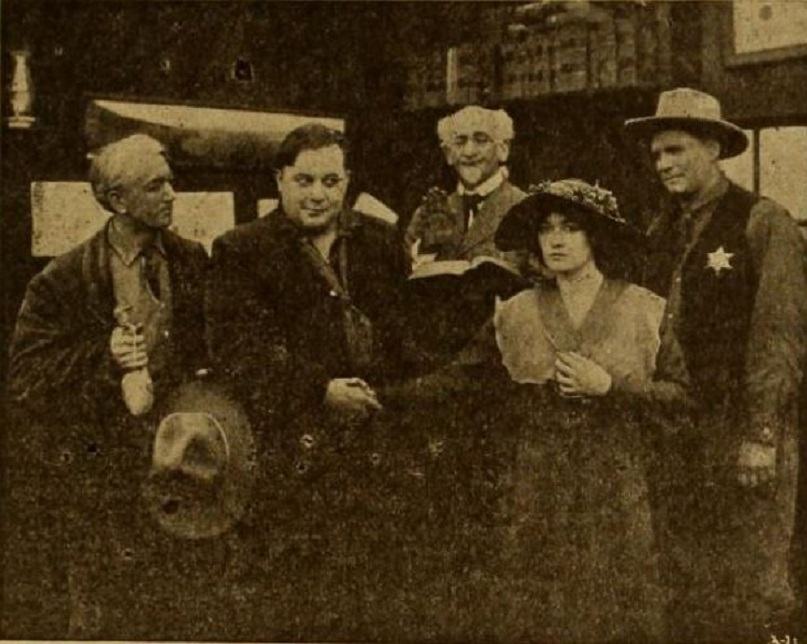
In a climactic act of profound self-abnegation, Tabor, having bested Mallaby, chooses compassion over vengeance. He rescues his unconscious rival, leaving Mary free to make her own choice. This moment is the film's true 'sin' – not Mary's theft, but the agonizing choice she is forced to make between the man who abandoned her and the man who sacrificed everything for her. Her decision to return to Mallaby, despite his past transgressions and Tabor's undeniable devotion, is heartbreakingly human. It speaks to the irrationality of the heart, the enduring pull of a first love, and perhaps, a subconscious desire to reclaim a past that was unjustly stolen. This echoes the tragic choices seen in classics like Othello, where passion and misunderstanding lead to devastating outcomes, albeit in a different context.
Gladys Brockwell's portrayal of Mary in this final act is nothing short of masterful. Her silent anguish, the conflict warring within her eyes, conveys a depth of emotion that words could scarcely capture. It's a performance that solidifies her status as a leading dramatic actress of the era, capable of conveying complex internal struggles with subtle gestures and powerful expressions. The film's ending, while potentially frustrating for audiences who might root for Tabor, is a bold artistic choice. It refuses to offer a neatly tied, morally prescriptive conclusion, instead opting for a more realistic, albeit painful, depiction of human desire and the complexities of love.
'One Touch of Sin' is more than just a dramatic tale; it's a window into the societal anxieties and moral frameworks of the early 20th century. The precarious position of women, especially single mothers, is starkly highlighted. The film subtly critiques the hypocrisy of a society that condemns a woman's desperate act while often overlooking the male transgressions that lead to it. The frontier setting, with its lawlessness and rugged individualism, provides a perfect backdrop for these themes, illustrating how extreme circumstances can strip away social niceties and reveal raw human nature. Jack McDonald also makes a notable appearance, adding to the film's rich tapestry of characters.
L. Genez's screenplay, while conforming to some melodramatic conventions of the time, also possesses a surprising depth. The characters are not one-dimensional; even Mallaby, despite his flaws, is presented as a figure capable of inspiring enduring affection. Tabor, the epitome of silent strength, is allowed his moment of profound heartbreak. The narrative avoids easy answers, preferring to explore the messy, often contradictory nature of human relationships. This complexity distinguishes 'One Touch of Sin' from simpler morality plays, aligning it more with the intricate character studies found in films like Thou Art the Man, which also delves into questions of moral judgment and redemption.
From a technical perspective, the film likely showcased the burgeoning artistry of silent cinema. While specific details on cinematography or editing might be scarce without direct access to the film, the plot description suggests a reliance on strong visual contrasts – the bleakness of abandonment, the harshness of the frontier, the claustrophobia of the mine. The use of intertitles would have been critical in conveying the emotional nuances and plot developments, guiding the audience through the intricate emotional landscape. The direction would have emphasized the physicality of the performances, allowing the actors' expressions and movements to carry the narrative weight, a common characteristic of films like Filibus, which relied on strong visual storytelling.
In an era teeming with new cinematic releases, 'One Touch of Sin' carved out its own space through compelling storytelling and powerful performances. It stands as a testament to the enduring appeal of human drama, regardless of the technological advancements in filmmaking. The film's examination of sacrifice, the nature of love, and the consequences of moral choices continues to resonate. It reminds us that sometimes, the greatest acts of love are those that demand the most profound personal surrender, even if that surrender means letting go. The ambiguity of Mary's 'sin' and her final, heart-wrenching decision ensures that the film lingers in the mind long after the final frame.
For modern audiences, revisiting 'One Touch of Sin' offers a unique opportunity to appreciate the foundational elements of cinematic narrative. It highlights how powerful emotions can be conveyed without dialogue, relying instead on the artistry of acting, the careful composition of shots, and the universal language of human experience. It's a reminder that truly great stories, like those found in The Destroying Angel or The Bushranger's Bride, transcend their time, offering insights into the enduring struggles and triumphs of the human spirit. 'One Touch of Sin' is not merely a historical artifact; it is a vibrant, emotionally charged drama that continues to speak to the complexities of the heart and the harsh realities of a world where love often demands the ultimate price.
The film, with its intricate plot woven by L. Genez, its memorable characters brought to life by Gladys Brockwell, Willard Louis, and Jack Standing, along with supporting cast members Sedley Brown, Frankie Lee, Charles Edler, Carrie Clark Ward, and Jack McDonald, remains a compelling example of early American cinema's capacity for profound storytelling. It is a cinematic experience that invites reflection on morality, sacrifice, and the often-unpredictable course of human destiny. The 'one touch of sin' it explores is less about a single transgression and more about the indelible marks left by love, loss, and the choices that define us.
IMDb —
1927
Community
Log in to comment.