DbcultAccessing Vault...
Cult Review
Senior Film Conservator
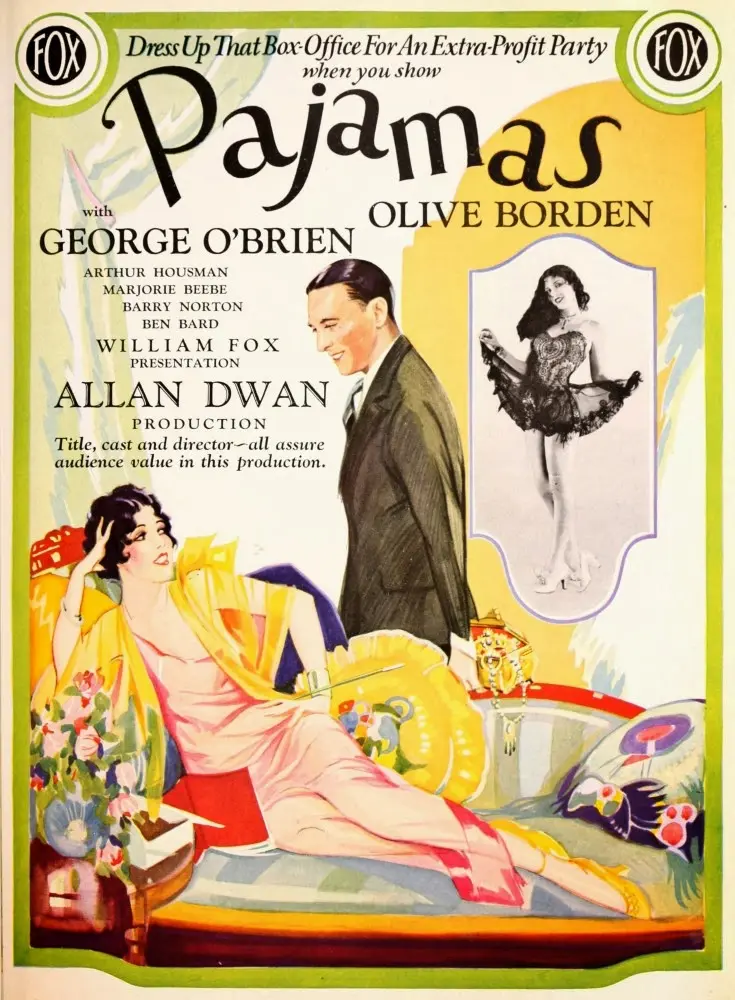
Is Pajamas worth your time in the modern era? Short answer: Yes, but primarily as a masterclass in the 'Joy Girl' persona that defined the late silent period. This film is a must-see for historians of the flapper era and those who enjoy seeing the 'battle of the sexes' played out with physical comedy, though it will likely frustrate viewers who require complex, multi-dimensional character arcs or high-octane pacing.
This film works because Olive Borden possesses an almost radioactive screen presence that makes her character's narcissism feel like a magnetic force rather than a personality flaw.
This film fails because the central conflict relies on a series of repetitive coincidences that even by 1927 standards felt a bit thin.
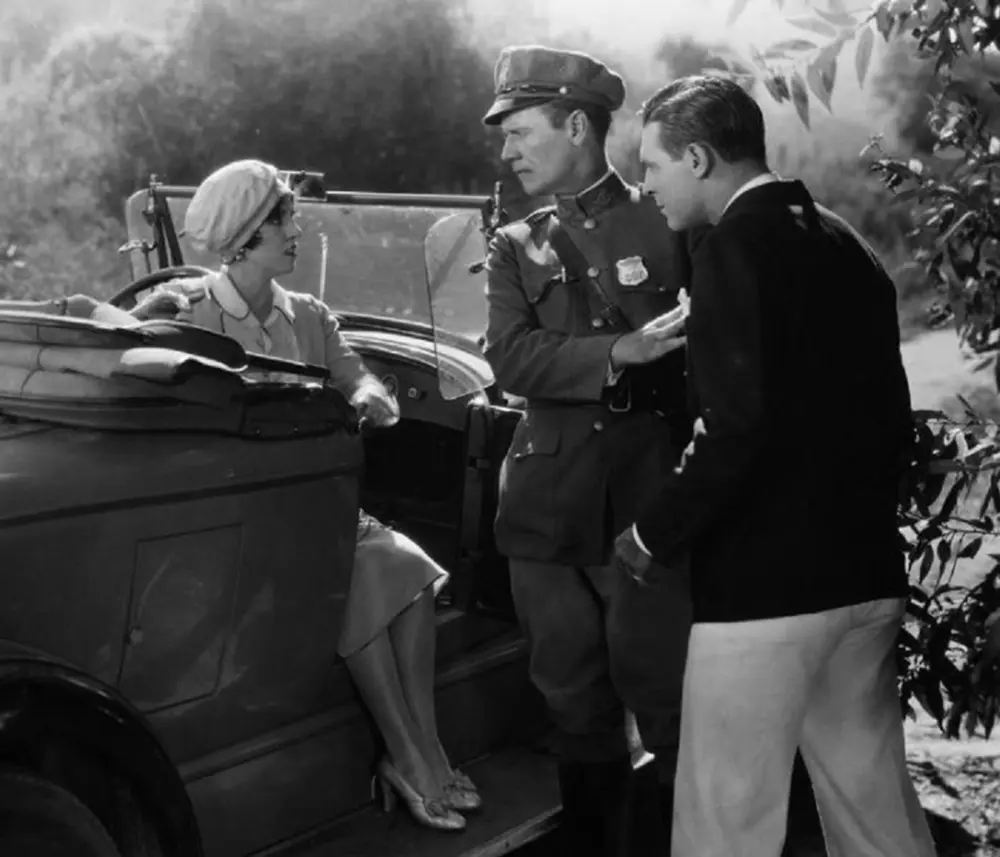
You should watch it if you want to see the exact moment when silent cinema transitioned from Victorian melodrama into the sharp, cynical social comedies that would eventually lead to the screwball era.
Yes, Pajamas is worth watching for its historical significance and Borden's performance. It captures a specific cultural anxiety of the late 1920s regarding the 'New Woman' and her place in a world still dominated by traditional masculine professions like aviation. While the plot is predictable, the visual storytelling is efficient and often surprising in its boldness.
To talk about Pajamas is to talk about Olive Borden. Known as 'The Joy Girl,' Borden was Fox's answer to the rising tide of rebellious youth on screen. In this film, she plays Frances Blackburn not as a villain, but as a force of nature who has never been told 'no.' There is a specific scene early in the film where she first encounters the pilot, played by Jerry Miley, and her reaction isn't one of hurt pride, but of amused confusion. It’s a subtle bit of acting that elevates the material.
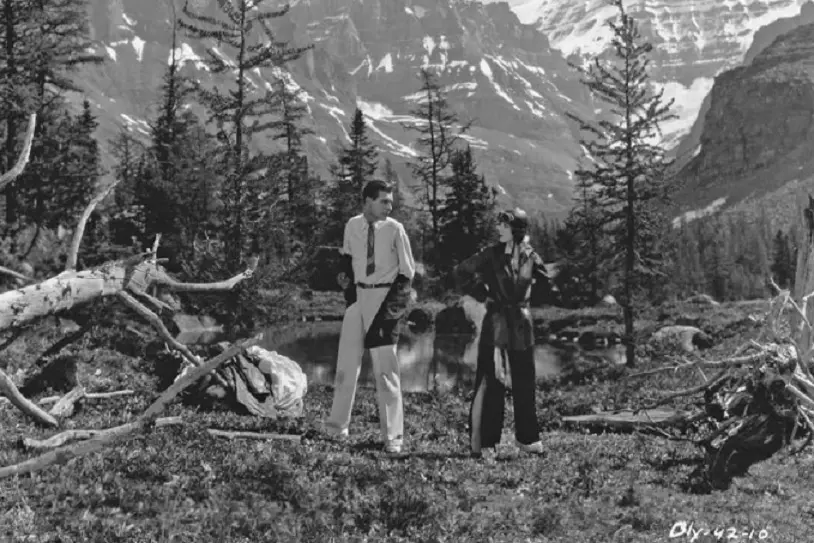
Unlike the more grounded performances found in Adam's Rib, Borden leans into the artifice. She uses her eyes to communicate a level of entitlement that is both grating and fascinating. You don't necessarily want her to win, but you can't look away from her attempt. This is the hallmark of a true silent star; the ability to hold the frame through sheer charisma when the script offers little more than a premise.
Jerry Miley’s pilot serves as the perfect foil. In 1927, pilots were the ultimate symbols of modern masculinity—stoic, technical, and untethered from the grounded trivialities of the wealthy. The contrast between his grease-stained overalls and Frances's elaborate wardrobe (which, yes, eventually includes the titular pajamas) creates a visual shorthand for the class divide. It’s a trope we’ve seen in films like The Busher, where professional pride clashes with romantic pursuit.
The directing by John G. Blystone ensures that the aviation sequences feel expansive. While they don't have the visceral intensity of a war drama, they provide a necessary breath of fresh air compared to the claustrophobic drawing rooms of the Blackburn estate. The camera work here is functional, focused on the actors' expressions rather than experimental angles, which keeps the focus squarely on the emotional tug-of-war.
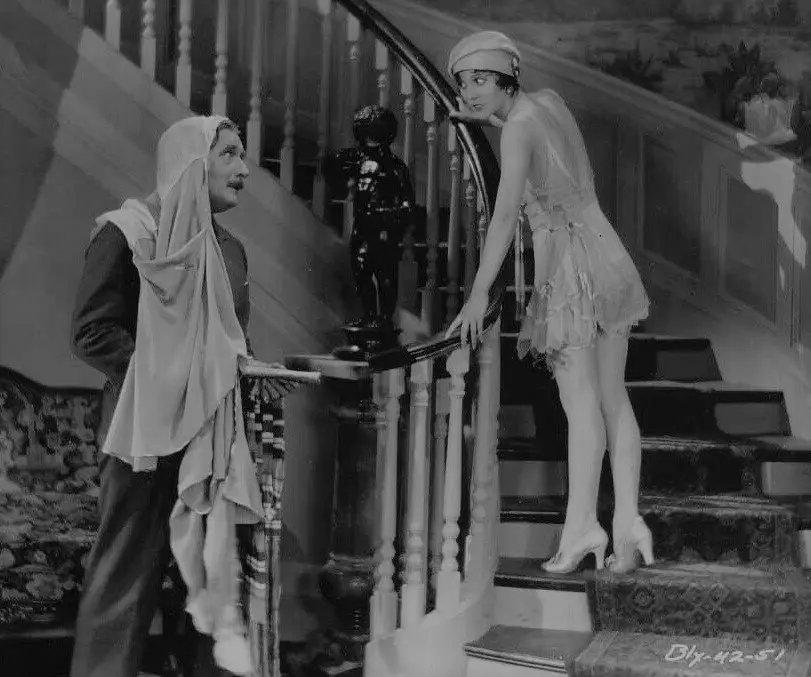
Writers William M. Conselman and Malcolm Stuart Boylan were masters of the title card. In Pajamas, the dialogue—as presented through text—is surprisingly biting. There is a cynicism beneath the surface of this comedy. It’s not just a girl chasing a boy; it’s an interrogation of whether the wealthy can ever truly understand the value of labor. This thematic weight is what keeps the film from floating away into total irrelevance.
Compare this to the more traditional romantic structures in The Girl of the Golden West. While that film relies on the grandeur of its setting, Pajamas relies on the internal engine of its protagonist’s ego. It is a much more modern approach to storytelling, even if the resolution feels tied to the moral expectations of the 1920s. The pacing is brisk, rarely lingering too long on a single gag, which prevents the 'spoiled heiress' routine from becoming intolerable.
The cinematography by Chester Lyons is clean and effective. He manages to capture the textures of the era—the silk, the steel of the plane, the dust of the airfield—with a clarity that helps ground the more ridiculous plot points. The lighting in the evening scenes is particularly noteworthy, using shadows to emphasize Frances's isolation when her money fails to get her what she wants. It’s a visual representation of her internal state that doesn't require a single title card.
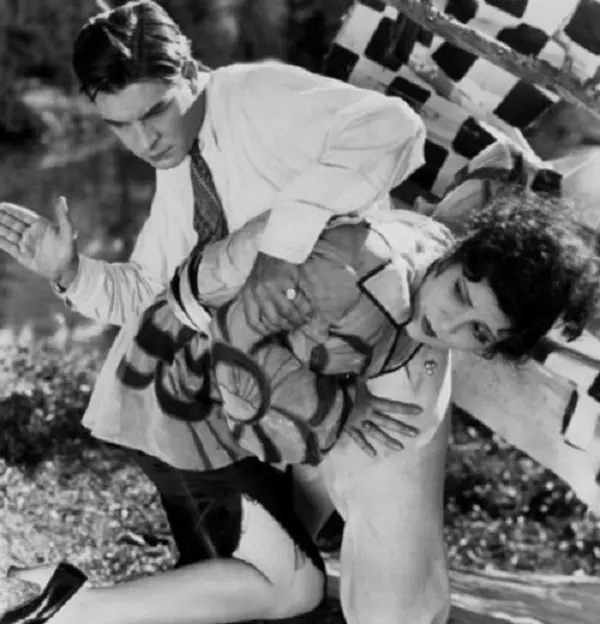
However, the pacing does suffer in the second act. The 'chase' begins to feel a bit circular. There are only so many ways a woman can pursue a man who is trying to do his job before the audience starts to sympathize entirely with the man. The film narrowly avoids this pitfall by introducing a series of secondary characters who provide much-needed comedic relief, though they aren't nearly as memorable as the leads.
Pros:
- Exceptional lead performance by Olive Borden.
- Sharp, witty title cards that hold up today.
- High production values for the era, especially the costumes.
- A fascinating look at the 1927 social hierarchy.
Cons:
- The male lead is somewhat wooden compared to Borden.
- The plot is extremely thin and relies on tropes.
- Some of the gender dynamics are, predictably, very dated.
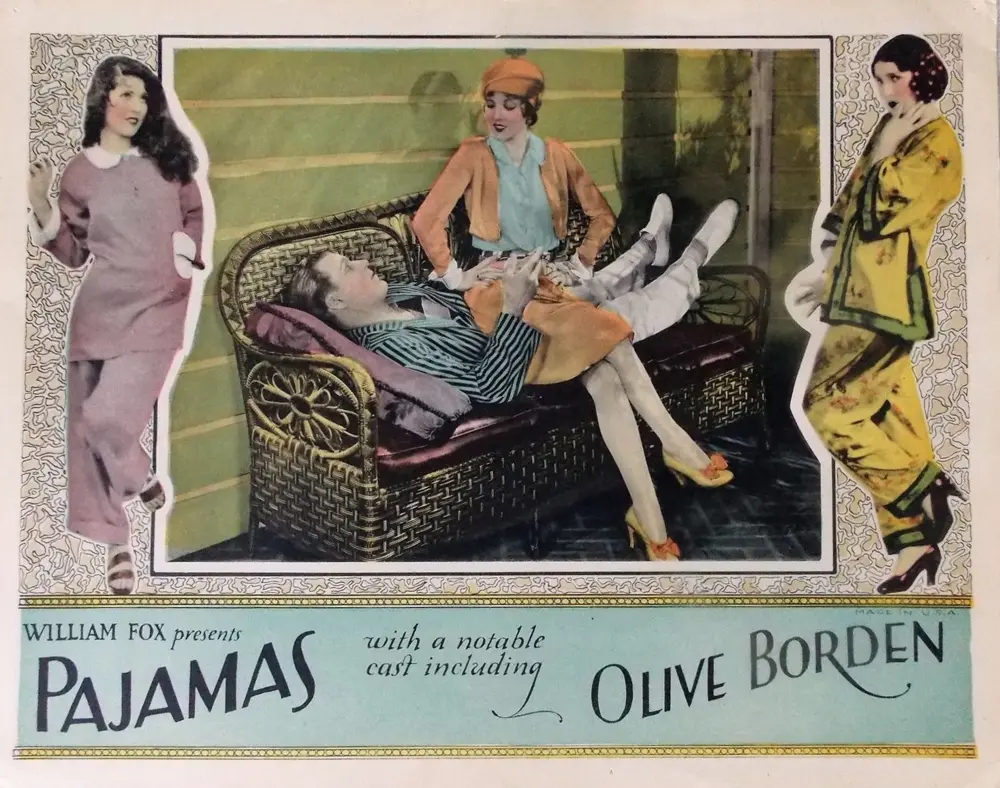
Here is a take that might ruffle some feathers: Pajamas is actually a proto-feminist film disguised as a light comedy. While the ending suggests a traditional 'taming' of the heiress, the majority of the runtime is dedicated to a woman who refuses to accept the boundaries set for her. She uses her agency—however misguided—to invade a masculine space (the airfield). In a landscape where films like A Daughter of the Law were exploring women in authority, Pajamas explores women as disruptors. It’s a subtle but important distinction.
The title itself is a provocation. In 1927, a woman in pajamas was a symbol of modernity and semi-scandalous domesticity. By centering the film around this garment, the producers were signaling to the audience that this was a 'new' kind of story. It works. But it’s flawed. The tension between the old world and the new is palpable in every frame.
Pajamas is a delightful, if slight, piece of silent cinema. It doesn't have the grand ambition of Wilhelm Tell or the dramatic weight of Lest We Forget, but it doesn't need them. It is a star vehicle, plain and simple. Olive Borden carries the film on her shoulders, proving that she was one of the most capable performers of her generation. If you can look past the repetitive nature of the plot, you'll find a charming, sharp-edged comedy that offers a vivid window into the heart of the roaring twenties. It’s a film that knows exactly what it is and doesn't apologize for it. In the end, that confidence is what makes it worth the watch.
IMDb 5
1931
Community
Log in to comment.