DbcultAccessing Vault...
Cult Review
Senior Film Conservator
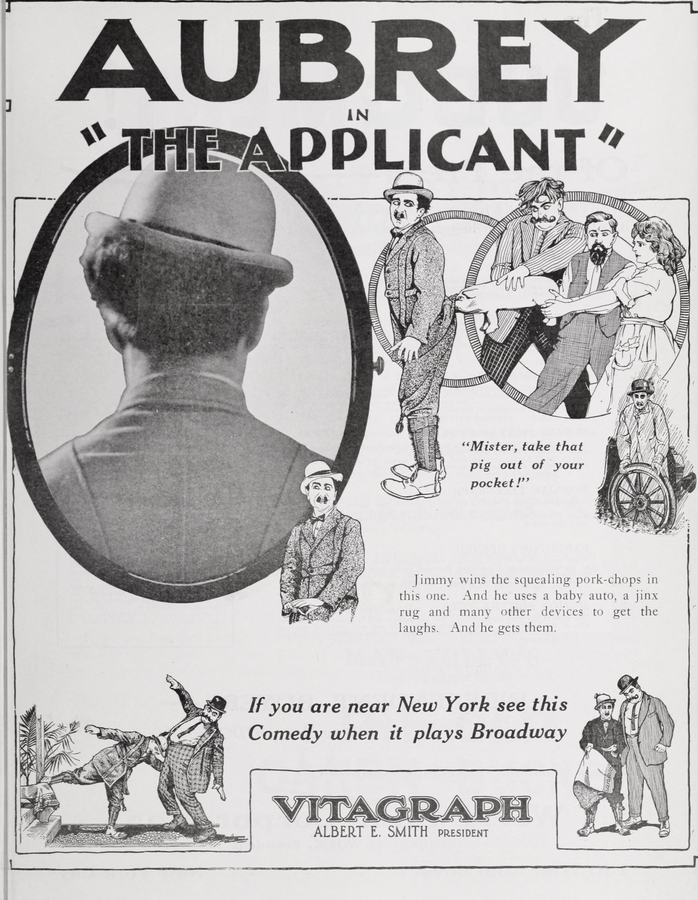
There are comedies that tickle; there are those that bite. The Applicant gnaws straight to the bone, then whistles through the perforations. Clocking in at a svelte twenty minutes, Bud Ross’s 1920 one-reeler stages a microcosm of social warfare inside a drawing room that feels like Versailles compressed into a coffin. The film’s engine is misrecognition—Jimmy’s innocuous résumé misread as a dowry invoice—yet the real spectacle is the choreography of objects: gloves slap like duelists’ gauntlets, a teacup becomes a porcelain minefield, and a grandfather clock ejaculates its cuckoo with the urgency of a snitch.
Jimmy Aubrey, rubber-limbed and popeyed, moves through this maelstrom as both victim and silent commentator. His gait—part marionette, part penitent—recalls Buster Keaton’s granite impassivity but replaces stoicism with a tremulous servility. Watch how he doffs his cap: the brim snaps outward like a startled halo, then folds back as if ashamed of its own presumption. The gesture contains the whole masochistic grammar of employment. When the father, a walrus-moustached colossus, hurls him into a chaise longue, Jimmy’s rebound is less physical gag than ontological recoil—an object lesson in how bodies transgressed by capital learn to trampoline.
Ross’s visual lexicon borrows from both carnival and courtroom. Deep-space compositions cram mahogany sideboards and stag heads into the same suffocating continuum; depth becomes a moral indictment. The camera, usually static, delivers one subversive pan: it glides from the patriarch’s apoplectic jowls to the butler’s discreet smirk, exposing complicity stitched into starched uniforms. In that lazy traverse, class solidarity is revealed as a silent conspiracy against the interloper.
Color tinting—hand-applied amber for interiors, cyan for exteriors—works like emotional sepsis. Amber sequences feel preserved in gastric acid; the cyan gate scenes suggest a world rinsed in diluted hope. Modern restorations can’t decide whether to preserve these chromatic scars or bleach them into orthodox grayscale, yet the flicker between apricot and bruise-blue is integral: it literalizes the protagonist’s oscillation between claustrophobia and the mirage of escape.
Comparative glances toward contemporaries illuminate Ross’s stealth modernity. Where The Monk and the Woman drapes Gothic mysticism over melodramatic scaffolding, The Applicant excises transcendence entirely; salvation is neither celestial nor romantic but bureaucratic—an incorrectly filled form. Likewise, Life’s Twist moralizes over fate’s caprice, whereas Ross insists caprice is merely capital wearing a clown nose. Even the western retributions of The Trigger Trail seem ceremonious compared to the savage etiquette here: no showdown at high noon, merely a job interview at high tea.
Sound, of course, is absent, yet the film manipulates silence like a percussive instrument. Each time the father inhales—an asthmatic bellows—you anticipate a roar that never arrives; the vacuum amplifies the violence of restraint. Contemporary exhibitors sometimes accompanied the reel with jaunty xylophone rags, a grotesque mismatch that only heightens the sadomasochistic undertow. Better to screen it with nothing but projector clatter: the mechanical stutter becomes Jimmy’s heartbeat, irregular and mortally hopeful.
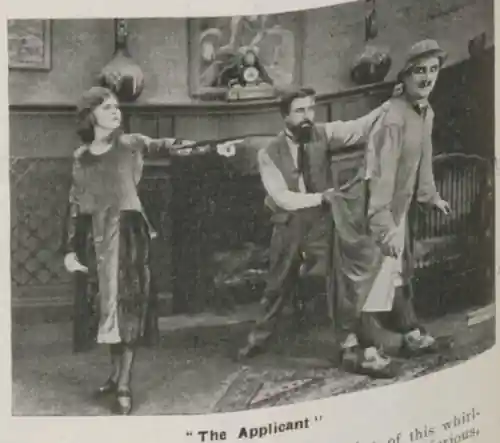
Gender, though ostensibly peripheral, leaks acid through the wallpaper. The daughter—barely sketched, always veiled—functions less as character than as currency. Her unseen desirability powers every blow; men pummel each other with the abstract fury of brokers speculating on futures. One could splice her absence into La belle dame sans merci and scarcely notice the scar, so completely does she embody the lethal cipher of unattainable femininity.
Formalists will salivate over Ross’s match-cuts. A slammed door segues to a dresser drawer yanked open; the graphic continuity implies household violence as infinite recursion. Eisenstein would not film a massacre for another six years, yet here is domestic battle rendered with the same montage ferocity, albeit wrapped in slapstick gift paper. The cuts arrive like guillotines, severing cause from effect so that every fresh bruise feels both arbitrary and inevitable—the very grammar of precarious labor.
Historians sometimes slot the film beside collegiate capers like Brown of Harvard, but the Ivy League shenanigans appear upholstered in privilege, whereas Jimmy’s skirmish is pure proletarian. Note the costuming: the father’s brocade robe versus Jimmy’s frayed coat, sleeves shy of wristbone—a visual wage gap. When the robe’s cord belt whips free, it becomes a flail; wardrobe itself mutinies, weaponizing affluence.
Philosophically, The Applicant lands nearer to existential shorters such as His Conscience His Guide, where moral reckoning occurs in claustrophobic real time. Yet conscience here is not divine but clerical: a clerical error, to be precise. Salvation lies not in virtue but in paperwork—a nihilism so modern it could headline tomorrow’s gig-economy op-ed.
Restoration nerds obsess over the final shot: Jimmy limping toward a horizon that the aperture literally cannot reach. The frame’s edge slices his torso in half, suggesting history itself will finish the job. Some prints splice in a facsimile intertitle: “The Position—Filled by Fate.” Whether apocryphal or original, the epigram crystallizes the film’s pessimistic syllogism: to seek employment is to apply for victimhood; to be hired is to be fired by the universe.
Yet within this fatalism flickers a perverse autonomy. Jimmy’s last glance back—half grimace, half grin—implies resistance birthed from abjection. Viewers attuned to the anarchic sublime will detect a proto-Beat attitude: the beatific acceptance of beatings. In that sense, the short converses across decades with Il fuoco, where Puccinian passion combusts into ash; here passion is replaced by process—application, rejection, survival—and the ash is already the air we breathe.
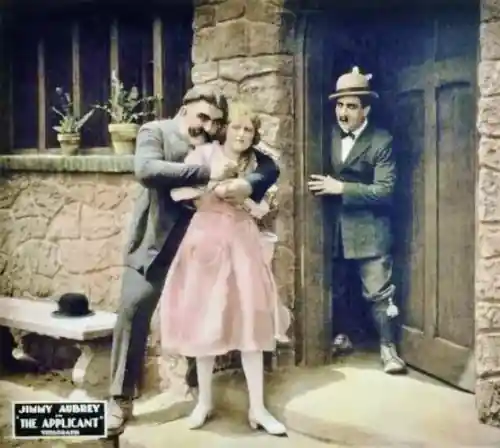
Commercially, the picture vanished almost upon arrival, trampled by flashier two-reelers. Trade papers of 1920 dismissed it as “a hiccup of housemaid humor,” blind to its class corrosives. Modern curators resurrecting silent comedy should consider double-billing it with Milestones of Life: the sentimental pieties of the latter would act as foil, exposing how Ross refuses the narcotic of uplift. Alternatively, juxtapose with The Return of Helen Redmond to trace diverging paths of female absence—one melodramatic, one mechanistic.
Critical discourse tends to slot silent comedy into a continuum whose poles are Chaplin’s humanism and Keaton’s engineering. Ross carves a third pole: the bureaucratic uncanny. His gags do not liberate; they entangle further. The laugh sticks in the craw because we recognize the scenario: a résumé mislaid, an identity mispronounced, a life misaligned. The film’s true antagonist is not the irate father but the invisible HR ledger tallying who deserves bread and who deserves bruises.
Cine-essayists hunting for Easter eggs should scrutinize the father’s study: behind his desk hangs a foxhunt lithograph. In the final fracas, a thrown inkwell splatters across the fox’s eye, creating a black tear. It is the sole instance of empathy the patriarch allows, albeit by proxy—a tear he himself would never shed. Such micro-textual graffiti transforms slapstick into fresco.
Audience reception, then and now, hinges on whether viewers locate themselves in Jimmy or in the boot that kicks him. Bourgeois comfort might guffaw at the buffoon’s contortions; precarious workers feel the boot’s tread in each ribcage reverberation. This bifurcated gaze—comic for some, corrosive for others—renders the film more Brechtian than Keystone. Laughter becomes a litmus test of your ZIP code within the class anatomy.
Technically, the print survives in 9 mm, sprocket-holed like a doomed punch card. Grain swarms every frame as if the celluloid itself were nervously sweating. Some cinephiles fetishize pristine 4K restorations; Ross’s nightmare benefits from blemish. Each scratch is a scar, each flicker a nervous twitch—the medium enacting the protagonist’s trauma.
Ethical viewing note: sharing the film on muted phones would be vandalism. Crank the projector loud; let the shutter clack become a second soundtrack. Only then does the household’s war drum sync with your own cardiac tempo, and Jimmy’s humiliation graduates from antique curiosity to live biopsy of labor under capital.
Ultimately, The Applicant endures because its pain is date-stamped yet dateless. The particulars—horse-drawn carriages, maid-starched aprons—evaporate; the structure calcifies. We are all applicants now, begging at gates less iron yet equally implacable. Watch Jimmy straighten his battered cap in the final frame: the gesture is futile, self-deluding, and quietly heroic—exactly the posture we adopt every time we refresh an inbox hoping for an offer, any offer, while somewhere off-screen an invisible patriarch reloads.
IMDb —
1932
Community
Log in to comment.