DbcultAccessing Vault...
Cult Review
Senior Film Conservator
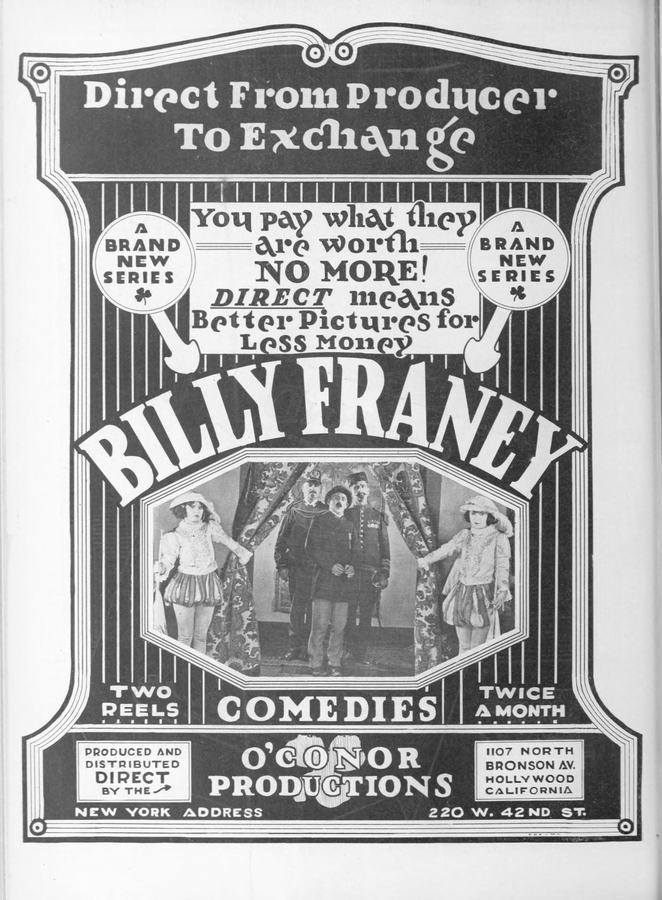
To witness Peace in Pieces is to observe the systematic dismantling of Victorian-era composure through the lens of a camera that seems to vibrate with the same nervous energy as its protagonist. Billy Franey, a performer whose name often resides in the penumbra of giants like Chaplin or Keaton, demonstrates here a specific brand of wiry, unpredictable chaos that feels startlingly modern. Unlike the balletic grace of his contemporaries, Franey’s movement is jagged, a series of staccato bursts that mirror the very title of this work. The film operates as a laboratory of physical frustration, where the simple act of maintaining a peaceful domicile becomes an exercise in Sisyphean futility.
The set design of Peace in Pieces functions as a secondary character, a rigid structure designed specifically to be pulverized. One cannot help but draw parallels to the stark social realism found in Germinal; or, The Toll of Labor, though where that film finds tragedy in the collapse of systems, Franey finds a perverse, liberating joy. The domestic space is treated not as a sanctuary, but as a minefield. Bob O'Connor’s presence provides the necessary gravitational pull to Franey’s centrifugal force. O'Connor represents the 'Establishment'—the rigid, unyielding expectation of decorum that must, by the laws of comedic physics, be brought low.
In one particularly harrowing sequence involving a collapsing sideboard, the timing is so precise it borders on the mathematical. It lacks the whimsical artifice of The Three Black Trumps, opting instead for a gritty, almost tactile sense of impact. When things break in this film, you feel the weight of the debris. This is a far cry from the lighthearted domesticity of The Old Maid's Baby; here, the stakes feel strangely existential. If the home cannot hold, what can?
Billy Franey’s face is a map of burgeoning anxiety. His eyes, perpetually wide as if anticipating the next blow from a malevolent universe, carry the film through its more episodic moments. There is a specific cadence to his performance that suggests a man who has already lost the war against reality and is now merely negotiating the terms of his surrender. This performance style is a fascinating precursor to the more polished antics seen in The Pest, yet Franey retains a raw, unvarnished edge that feels more dangerous, more authentic.
The cinematography, though restricted by the technical bounds of its era, utilizes depth of field in a way that heightens the sense of impending doom. We often see the cause of the next disaster lurking in the background while Franey busies himself with a current catastrophe in the foreground. This layering of comedic tension creates a claustrophobic atmosphere that elevates the work above standard slapstick. It shares a certain thematic DNA with Sturm, albeit through a comedic lens—the idea that external forces are constantly conspiring to unravel the individual's sense of self.
While Franey is the lightning, Bob O'Connor is the rod. His performance is a masterclass in the 'slow burn.' In the context of silent cinema, where overacting was often the default, O'Connor’s subtlety is a revelation. He anchors the film, providing a baseline of normalcy that makes Franey’s deviations all the more hysterical. Their interplay reminds me of the nuanced character work in A Waiter's Wasted Life, where the comedy is derived as much from the silence between the gags as from the gags themselves.
O'Connor’s reactions—often just a slight adjustment of his collar or a weary blinking of the eyes—speak volumes about the fatigue of the common man. He is the audience surrogate, the one who just wants the 'peace' promised by the title, only to find himself surrounded by 'pieces.' This dynamic is essential; without O'Connor’s groundedness, the film would spin off into unintelligible noise. Instead, it becomes a rhythmic dance of action and reaction, a precursor to the great comedy duos of the talkie era.
To understand the importance of Peace in Pieces, one must look at the broader cinematic output of the time. While films like Up the Road with Sallie offered a more whimsical, adventurous spirit, Franey’s work is rooted in the gritty reality of failure. There is no romantic escape here; there is only the broken china and the torn wallpaper. Even when compared to the high-stakes mystery of Madame Sphinx, the tension in Peace in Pieces feels more immediate because it is so mundane. We have all felt the frustration of a collapsing chair; we have not all been chased by a sphinx.
The film also serves as an interesting counterpoint to the masculine ideals presented in Tarzan of the Apes. Where Tarzan is the master of his environment, Franey is its victim. This subversion of the 'heroic' male figure is a recurring theme in the best of silent comedy, providing a necessary pressure valve for a society obsessed with industrial progress and physical prowess. In the same vein as Robinson's Trousseau, the humor is found in the indignity of the human condition.
Technically, the film is a marvel of primitive editing. The 'invisible' cuts that facilitate the more complex physical stunts are handled with a dexterity that rivals the suspenseful pacing of The Burden of Proof. There is a sequence involving a runaway vacuum cleaner (an object of high-tech terror in its day) that is edited with a ferocity that predates Soviet montage. The camera doesn't just record the action; it participates in it, pushing into the characters' personal space to emphasize their desperation.
The lighting, too, deserves mention. While many comedies of this era relied on flat, high-key illumination, Peace in Pieces occasionally dips into more dramatic, shadowy compositions. This visual depth hints at the underlying darkness of the material. It’s a subtle nod to the more serious dramatic works like Sukanya Savitri or The Heart of a Gypsy, suggesting that even in the most ridiculous circumstances, there is a core of human struggle that remains universal.
What ultimately lingers after the credits roll on Peace in Pieces is the sense of profound exhaustion. This is comedy as endurance art. Franey and O'Connor have survived the film, but only just. They are left standing in a room that no longer functions as a room, surrounded by the debris of their own making. It is a powerful metaphor for the human experience—the constant effort to build something stable in a universe that is inherently entropic.
In the final analysis, the film transcends its humble origins as a short-form comedy. It is a document of a specific cultural anxiety, a precursor to the absurdist theatre of Beckett and Ionesco. It captures a moment in time when the world was changing too fast for the average person to keep up, and the only sane response was to laugh as everything fell apart. It lacks the overt sentimentality of Comradeship, preferring instead a cold, hard look at the mechanics of failure. And yet, in that failure, there is a strange, beautiful dignity.
For those willing to look past the grainy film stock and the absence of dialogue, Peace in Pieces offers a rich, rewarding experience. It is a reminder that the greatest stories are often found in the smallest moments—the slip of a foot, the crash of a plate, the silent realization that nothing will ever be the same again. Billy Franey might not have the global recognition of the 'Big Three,' but in this film, he proves himself a titan of the medium, a man who understood that sometimes, the only way to find peace is to break everything into pieces first.
Final Verdict: A cacophonous, essential fragment of cinematic history that demands to be reassembled in the mind of every serious cinephile.

IMDb —
1930
Community
Log in to comment.