DbcultAccessing Vault...
5.6/10
Senior Film Conservator
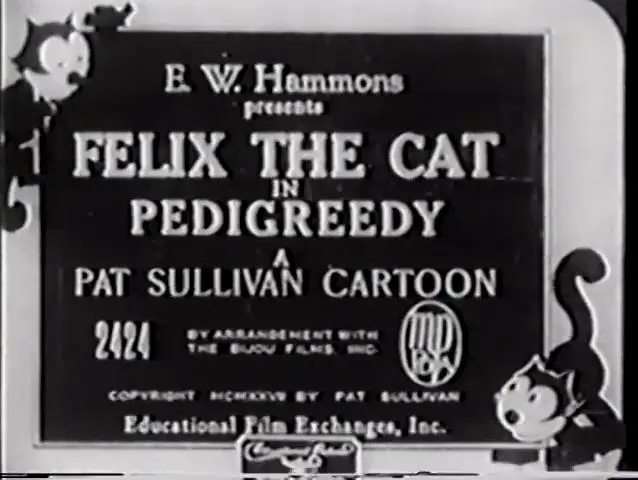
A definitive 5.6/10 rating for a film that redefined the boundaries of cult cinema. Pedigreedy remains a cornerstone of transgressive art.
Is 'Pedigreedy' worth watching today? Short answer: absolutely, if you appreciate the foundational artistry of silent comedy and the pioneering spirit of early animation. This film is a delightful, if brief, peek into animation's nascent wit, perfect for film historians, animation enthusiasts, and anyone curious about the roots of visual storytelling and social satire.
It's likely not for viewers seeking modern pacing, complex narrative arcs, or the kind of explicit dialogue that defines contemporary entertainment. For those, 'Pedigreedy' might feel too quaint, too rapid-fire in its gags, or simply too silent.
This film works because of its audacious premise and Otto Messmer's visual inventiveness, delivering sharp, anachronistic humor with remarkable efficiency. This film fails because its inherent brevity, typical of silent shorts, limits any deep character development or thematic exploration. You should watch it if you enjoy clever sight gags, appreciate the historical significance of early animation, and are keen to see how satire was delivered without a single spoken word.
Often overlooked in the vast catalog of early cinema, 'Pedigreedy' stands as a testament to the enduring charm and surprising depth of silent animation. It's more than just a relic; it's a vibrant, insightful piece that continues to resonate, albeit quietly.
At its core, 'Pedigreedy' is a brilliantly simple premise: Felix the Cat's eternal struggle for acceptance into an elite social sphere, where the bouncer's gatekeeping demands proof of "unquestioned lineage." This isn't merely a tale of trying to get into a club; it's a satirical dissection of arbitrary social barriers and the lengths to which individuals will go to overcome them.
Felix, ever the resourceful trickster, doesn't just tell stories; he conjures entire historical revisions, populating his family tree with figures whose contributions to humanity are as grand as they are hilariously anachronistic. We’re treated to tales of ancestors who supposedly taught Egyptian pharaohs how to dance the Charleston – a delightful collision of ancient history and roaring twenties exuberance.
Another ancestral claim involves enlightening Christopher Columbus on the true shape of the Earth, repositioning Felix's forebears as unheralded intellectual pioneers. These aren't just gags; they are clever subversions of historical narrative, designed to mock the very idea that one's worth is tied to the accomplishments of distant relatives.
The film culminates in a physical manifestation of Felix's elaborate charade: a literal, arboreal family tree, complete with roots and branches, presented as the ultimate proof of his illustrious heritage. This visual punchline underscores the absurdity of inherited status, suggesting that pedigree can be as easily grown as it is genuinely earned – or, in Felix's case, entirely invented. It’s a bold, imaginative stroke that makes the film memorable.
Otto Messmer’s directorial genius for visual storytelling shines brightly in 'Pedigreedy.' He understands the mechanics of a gag, how to build anticipation, and how to deliver a punchline with maximum impact, all without dialogue. The pacing is rapid, characteristic of silent animation shorts, yet it never feels rushed or unclear. Each beat, each visual flourish, serves a purpose in advancing Felix's increasingly outlandish claims.
The tone is playfully satirical, infused with a distinct sense of the absurd. Messmer lampoons pretension and social snobbery with a light, almost mischievous touch. He doesn't preach; he entertains, allowing the ridiculousness of the situation to speak for itself. This approach makes the film's social commentary digestible and enduring, rather than heavy-handed or dated.
Consider the sequence where Felix's ancestor teaches the pharaohs the Charleston. It's a brilliant piece of anachronistic humor, executed with such fluid, expressive animation that the impossible seems hilariously plausible. Messmer uses the medium's inherent flexibility to bend reality, creating a world where historical figures are easily swayed by modern dance moves, all for the sake of a laugh and a point.
This kind of imaginative visual wit, where the mundane and the fantastical collide, is what makes 'Pedigreedy' so engaging. It's a quality that can also be found in other inventive silent shorts, such as the whimsical narratives of The Fates and Flora Fourflush, which similarly leverages visual ingenuity to tell its story. Messmer’s direction here elevates what could have been a simple cartoon into a sharp, memorable piece of social commentary.
The animation in 'Pedigreedy' is a testament to the pioneering spirit of early cinema. Felix the Cat's iconic design—simple, yet incredibly expressive—is central to the film's success. His rubber-hose limbs and ever-changing facial expressions allow for a wide range of emotions and actions, conveying frustration, triumph, and mischievous glee without a single spoken word. It’s a masterclass in non-verbal communication, setting a high bar for character animation.
The transformation sequences and historical flashbacks are where the animation truly shines, demonstrating early techniques for depicting dynamic motion and character interaction. The visual shifts from Felix in the present to his ancestors in various historical settings are seamless, a technical marvel for the era. The animators skillfully use squash and stretch principles to give life and elasticity to Felix and his world, making even the most impossible actions feel organic.
While 'cinematography' in animation is a slightly different concept than live-action, the framing and composition of the animated cells are incredibly effective. The 'camera' work consistently keeps Felix centered, allowing his reactions and actions to drive the narrative. Close-ups on his face emphasize his expressions, while wider shots establish the absurdity of his surroundings, such as the grand, imposing nightclub entrance.
A particularly strong example is the distinct character designs and shifting backgrounds used for each of Felix's 'ancestors.' From the ancient Egyptian setting to the deck of Columbus's ship, each scene is clearly delineated, showcasing a surprising range of artistic styles and visual depth for a film of this era. The literal family tree at the end is not just a clever visual metaphor; it's a beautifully animated sequence where the tree grows and fills the frame, a tangible representation of Felix's fabricated legacy. This attention to detail and creative visual problem-solving distinguishes 'Pedigreedy' as more than just a series of drawings; it's a carefully crafted visual narrative.
While 'Pedigreedy' doesn't feature live actors, the concept of 'performance' is incredibly relevant through the artistry of Otto Messmer. As the primary animator and creative force behind Felix the Cat, Messmer's influence is akin to a director guiding an actor, meticulously crafting every gesture, expression, and movement. Felix's personality – his mischievousness, his resilience, his expressive face – is entirely a product of Messmer's genius, making Felix one of animation's first true 'stars' with a distinct, recognizable character.
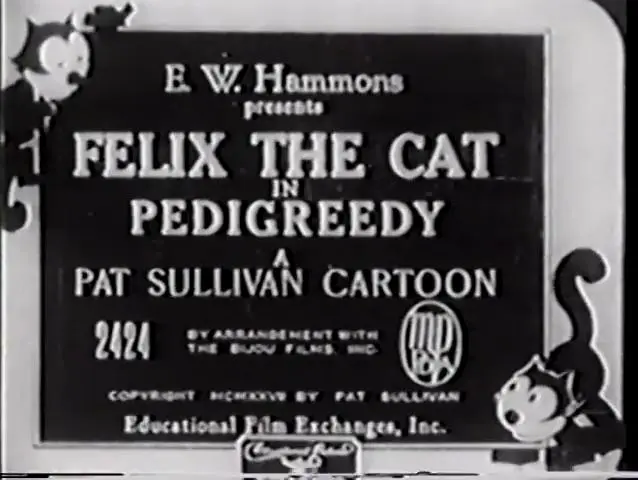
Messmer imbues Felix with a remarkable range of emotions. We see Felix's initial frustration at being denied entry, his cunning calculation as he concocts his stories, and his triumphant swagger as he delivers each exaggerated tale. These are not merely cartoon movements; they are character beats, meticulously designed to convey intent and emotion without dialogue. It’s a level of nuanced, non-verbal communication that many live-action actors would envy.
Consider Felix's frustrated shrugs, the confident tilt of his head as he recounts his tales, or the way his eyes narrow in thought. These small, subtle animations are incredibly human, conveying complex emotions and driving the narrative forward. This foundational work in character animation was groundbreaking, setting a precedent for how animated figures could possess genuine personality and emotional depth. It paved the way for the expressive characters seen in later animated shorts, influencing the development of animated performance in films like Good Morning, Nurse.
Otto Messmer's work on Felix here is arguably more impactful for the future of character animation than many live-action performances of its era, laying groundwork for personality-driven cartoons. He proved that animated characters could be more than just moving drawings; they could be compelling, relatable personalities that audiences would invest in. This 'performance' by Felix, guided by Messmer, is a testament to the animator's profound understanding of character and storytelling.
The pacing of 'Pedigreedy' is brisk, almost relentless, a hallmark of silent shorts designed to grab attention quickly and deliver their punchline efficiently. There’s no wasted frame, no lingering shot that doesn’t contribute to the comedic build-up or the narrative progression. It moves from one absurd historical anecdote to the next with an energetic flow that keeps the audience engaged, a testament to Messmer's understanding of comedic timing in animation.
This rapid-fire delivery of gags is crucial for a film without dialogue, relying entirely on visual cues and the audience's ability to quickly grasp the humor. The film’s brevity, far from being a weakness, becomes a strength, ensuring that its satirical bite is sharp and impactful without overstaying its welcome. It gets in, delivers its laughs, and gets out, leaving a lasting impression.
The lasting impact of 'Pedigreedy' extends beyond its technical achievements. Its commentary on social status, though presented through a whimsical lens, remains surprisingly relevant. The idea of fabricating credentials or exaggerating one's background for acceptance is a timeless human folly, one that continues to play out in various forms in contemporary society, from social media profiles to professional networking.
The film subtly critiques the very notion of "pedigree" by making it so ridiculously easy to invent. It suggests that lineage, often held up as a measure of worth, is frequently just a well-spun story, subject to embellishment and outright fabrication. This is an unconventional observation for a silent cartoon, proving that early animation wasn't just about slapstick; it could also deliver nuanced social critique.
Indeed, the film’s satirical edge, despite its age, is arguably sharper and more relevant than many contemporary comedies attempting similar social commentary. It forces us to question the arbitrary nature of social hierarchies and the often-absurd criteria we use to judge one another. It’s a simple message, conveyed with delightful complexity.
Yes, 'Pedigreedy' is absolutely worth watching.
It's a short, incredibly clever silent animation.
The film offers sharp, enduring satirical humor.
It showcases groundbreaking early animation artistry.
It's an important piece of cinematic and animation history.
It’s perfect for animation enthusiasts and film scholars.
It provides a quick, engaging dose of classic Felix the Cat.
Here’s a quick breakdown of what works and what doesn't in Pedigreedy:
Pedigreedy is a delightful, insightful, and historically significant animated short. It works. But it’s flawed. Its humor, rooted in the absurd, still lands, and its critique of social barriers feels surprisingly contemporary. While its brevity prevents it from being a truly profound statement, it delivers exactly what it promises: a clever, engaging slice of early cinematic wit. It’s a must-see for anyone interested in the evolution of animation and satirical storytelling, offering a unique window into the past that continues to amuse and provoke thought today.
IMDb 6.8
1917
Community
Log in to comment.