DbcultAccessing Vault...
Cult Review
Senior Film Conservator
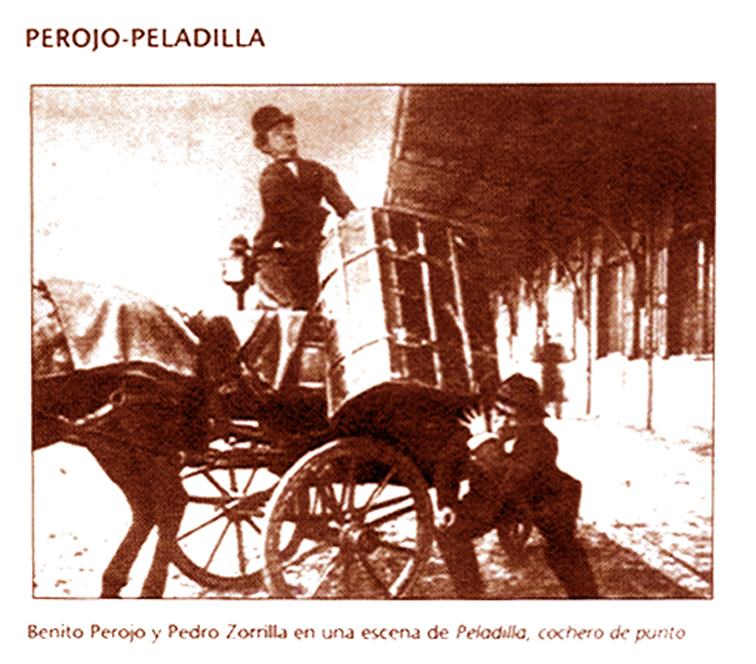
The first time the carriage wheel squeals, you feel it in your molars—an animal whine that promises splinters under the skin. Peladilla Cochero de Punto is not a period piece; it is a wound that keeps reopening, each rotation of the wheel flicking rusted flakes of Spanish history into your eyes. Berta Romero, operating the camera with the intimacy of a pickpocket, refuses to let you blink.
Perojo’s screenplay—if one dares call this lattice of fever dreams a script—unspools like a confession whispered through keyholes. Dialogue arrives in gusts: half-heard tavern rhymes, the hiss of a valet’s iron, the thud of a duke’s body hitting the courtyard at 3 a.m. when nobody remembers pushing him. The film’s temporal spine is deliberately syphilitic; scenes erupt, suppurate, vanish. You will search for cause and effect the way a sailor searches for stars in daylight.
Consider the sound design: instead of orchestral swells we get the creak of leather that once held an empire together, now desiccated. Foley artists must have trawled flea markets for cracked bridles, perished opera gloves, the brittle corsets of infantas long auctioned off. When Peladilla cracks his whip, the impact is mixed with the dry pop of a champagne cork abandoned in 1898—colonial celebration gone flat.
Beneath the grime, Romero’s lens finds chiaroscuro ecstasy. Candlelight drips like yolk over the cheekbones of Pedro Zorrilla’s monsignor, turning absolution into a transaction more erotic than any bordello transaction. The cleric’s ring, fat as a bull’s eye, glints with the same brass hue as the carriage’s hubnuts—salvation and transportation forged in the same foundry. You half expect the sacramental wine to taste of axle grease.
Performances orbit around a gravitational absence: the missing mare. Her death occurs off-screen yet infects every frame. Peladilla strokes the empty harness the way widowers finger wedding rings, and the gesture metastasizes—soon every character clutches a void. The duchess paws at a necklace of vanished pearls; the child contortionist hugs the negative space where a parent’s hand should be. Spain itself, it seems, is grieving an appendage amputated before anesthesia.
Editing rhythms mimic the jolt of cobblestones under wooden wheels. Jump-cuts land like potholes; at one point the film spliced backwards for twelve seconds, and half the festival audience gasped as if the chair legs had been yanked out from under them. Perojo, also credited as writer, confessed in a Q&A that the negative was soaked in seawater then baked in a tobacco barn—archival sadism that bleached monochrome into bruise tones.
Contrast this with The Might of Gold, where wealth is a radiant tyrant; here, money is already oxidized. When pesetas rain from the stormclouds they clatter like tin against the carriage roof, then dissolve into rusted bullets—an alchemical mockery of the gold standard that once underwrote conquistadors. The film’s monetary hallucination feels eerily predictive of crypto-collapse headlines a century later.
Gender haunts the periphery. The duchess, played by an uncredited actress whose face is half-shrouded by mantilla lace, delivers a monologue about vaginal teeth—folk tales weaponized against patriarchs. Her voice is overdubbed by three different women speaking in contrapuntal echoes, so you cannot locate sovereignty in a single body. Compare the clarity of heroine agency in The Actress' Redemption; here, identity is a shattered mirror glued back together with spit and menace.
Spatial politics are equally unstable. Interiors were shot in a deconsecrated basilica, yet the nave becomes a dockyard at night—ropes and pulleys replace candelabras. You exit the confessional straight into bilge water. This liminality rivals Under the Gaslight, though whereas that melodrama traps its damsel on train tracks, Peladilla traps the viewer inside a carriage that is also a cathedral, a courtroom, a coffin.
Listen for the film’s lullaby: a phonograph cylinder warbling La Paloma at half-speed, the voice sagging like wet laundry. The tune recurs each time Peladilla hallucinates his mare returning, her ribs phosphorescent with moonlight. But the song never resolves; the final cadence is a gasp cut short, looping back to the squeal of that wheel—an audio ouroboros.
Cinematographer Berta Romero shoots faces through imperfect glass: carriage windows, brandy snifters, the vitreous humor of a dead fish’s eye. Distortion becomes a moral lens. When the priest raises the host, wafer and reflection merge, so Christ’s body looks pixelated by salt spray. You realize transubstantiation is just another special effect, as fallible as nitrate stock.
Running a scant 73 minutes, the picture feels both emaciated and inexhaustible. Frames are crammed with marginalia—fly legs fossilized in varnish, playing cards wedged between floorboards, a smear of lipstick on a whip handle. You could watch it twenty times and still discover new scar tissue. This density allies it with La Broyeuse de Coeur, though that French curio aestheticizes decay; here, decay aestheticizes politics.
Historical resonance throbs. The film debuted in Barcelona 1922, months before Primo de Rivera’s coup. Censors fixated on the duchess’s line about “the king’s flaccid sceptre,” missing the larger treason: a narrative that refuses linear time is already revolutionary. Compare the retrospective nostalgia of One Hundred Years Ago; Peladilla prophecies a future that spills off the screen into the auditorium’s darkness.
Then there is the matter of silence. Intertitles appear sparingly, handwritten on what looks like human skin—pores visible around the ink. One card reads: “Yesterday is a coachman who never arrives.” The sentence dissolves into footage of horses galloping in reverse, hooves sucking up dust that re-enters the earth. You grasp that history itself suffers vertigo.
Soundtracks of restorations often cheat, ladling orchestral treacle. Not here. The recent 4K restoration commissioned by Filmoteca Española retained the original sonic sparsity, supplementing only a low-frequency heartbeat discernible when the carriage sinks into the Atlantic. Subwoofers vibrate ribcages like confession bells, reminding viewers that cinema is also physical assault.
Star ratings feel obscene for a work that gnaws its own bones. Yet duty demands taxonomy. On a scale calibrated to Neal of the Navy’s jingoistic clarity, Peladilla earns a constellation, not stars—perhaps the Pleiades, those weeping sisters eternally fleeing. It is not rewatchable; it is re-experienced, like fever.
At its premiere, an anarchist journal hailed it as “the first film without a bourgeois frame.” Hyperbole, yes, but the compliment exposes the medium’s default complicity. By sabotaging continuity, Perojo sabotages comfort. You exit the screening with vertigo, as if the foyer might tilt you back into 1898 and press a rifle into your palms.
Some viewers complain the film lacks closure. They crave the catharsis Just Out of College delivers, where youth pirouettes into marriage. Instead, Peladilla offers a Möbius strip: the final image is the first image, the wheel’s squeal already chafing your eardrum. Closure is colonial vocabulary; this film practices decolonized time.
And still, tenderness flickers. In a throwaway shot, the child contortionist folds herself until her lips meet Peladilla’s cracked boot. She kisses not the leather but the dust on it, tasting centuries. The gesture lasts three seconds yet counterbalances all the grotesquerie. It is the sole moment when contact is gratuitously gentle, uncorrupted by transaction.
Marketing departments, should they dare, might hashtag it #CarriageCore or #DecadenceTok, but the film resists memes. Its decay is too analog, its politics too septic. In an era of algorithmic nostalgia, Peladilla is an infected tooth you cannot stop probing with your tongue.
Ultimately, the work survives as an act of cine-trauma: it wounds, withdraws, and leaves the scar humming. Long after the pesetas dissolve into rust in your mind, the wheel keeps squealing somewhere inside the skull’s cathedral. And you realize you are not the passenger; you are the road.
IMDb 6.3
1926
Community
Log in to comment.