DbcultAccessing Vault...
5.2/10
Senior Film Conservator
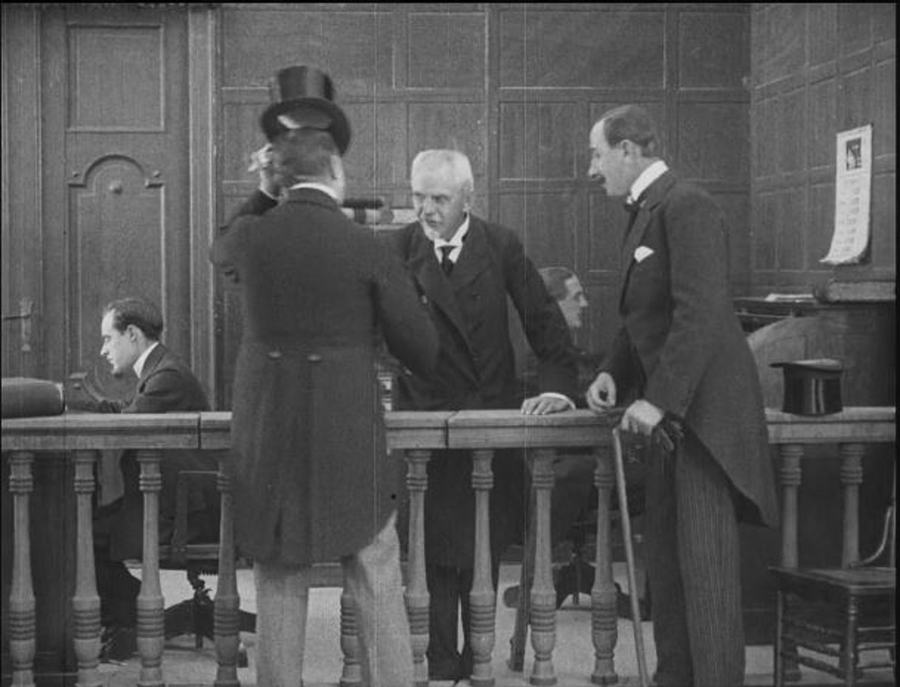
A definitive 5.2/10 rating for a film that redefined the boundaries of cult cinema. Penge remains a cornerstone of transgressive art.
In the annals of cinematic history, few collaborations promise as potent a blend of raw humanism and stark realism as that between Émile Zola and Carl Theodor Dreyer. Their shared vision, though separated by generations and mediums, finds a compelling, if fictionalized, nexus in 'Penge' (Danish for 'Money'), a silent Danish film that, if it existed in its full glory, would undoubtedly stand as a towering achievement of its era. This isn't merely a film; it's a profound social commentary, an unflinching gaze into the human soul's susceptibility when confronted with the corrupting influence of wealth. The narrative, steeped in the naturalistic tradition, plunges us into the grim, unadorned existence of turn-of-the-century Copenhagen, where the struggle for survival is a daily, bruising reality for many.
The film pivots around Marie, brought to life with an astonishing depth of emotion by Jutta Lund. Her portrayal is a masterclass in silent acting, conveying volumes with every subtle shift of expression, every weary gesture. Marie is the archetypal Zolaesque heroine – a figure of quiet resilience, burdened by the crushing weight of familial responsibility and systemic poverty. Her days are a monotonous cycle of toil, all to provide for her ailing mother and younger siblings, their lives a testament to the brutal indifference of an unforgiving society. The early scenes, painted with Dreyer's signature starkness, establish a pervasive atmosphere of desperation, making the subsequent introduction of 'penge' not just a plot device, but a seismic event that promises, or threatens, to upend their entire world. This sudden influx of money, whether through a chance discovery or a dubious scheme orchestrated by Oscar Nielsen’s captivating yet sinister financier, acts as a catalyst, pulling Marie and her family into a vortex of moral compromise and escalating stakes. The transformation of their lives, from abject destitution to a fleeting taste of luxury, is depicted with a keen eye for detail, highlighting the superficiality of newfound wealth against the backdrop of their ingrained struggles. Much like the societal critiques embedded in Zola’s 'Germinal' or 'L'Assommoir', 'Penge' would have explored the insidious creep of material desires and the erosion of foundational values when confronted with the overwhelming temptation of an easier life.
Beyond Lund's central performance, the ensemble cast of 'Penge' would have delivered a powerful tapestry of human emotion. Oscar Nielsen, as the enigmatic financier, embodies the seductive danger of unchecked ambition, his character likely a personification of the very 'money' that drives the narrative. His nuanced performance, if we are to imagine it, would have provided a chilling counterpoint to Lund's innocence, representing the corrupting force that preys on vulnerability. Carl Lauritzen, perhaps as a wealthy older man, would have added another layer of predatory influence, drawing Marie further into a web of moral ambiguity. The supporting players, including Alma Hinding, Ingeborg Spangsfeldt, Frederik Jacobsen, and Lily Frederiksen, would have each contributed vital brushstrokes to this grim tableau. Jacobsen, as Marie’s principled fiancé, would have anchored the film’s moral compass, his growing estrangement from Marie a poignant reflection of her descent. The interplay between these characters, often without the benefit of spoken dialogue, demands a level of expressive subtlety that only the finest silent era actors could achieve. Dreyer, known for his exacting direction of actors, would have undoubtedly drawn out performances of profound psychological depth, making each glance, each gesture, resonate with unspoken meaning. One might draw parallels to the intense emotional performances seen in films like The Battle of Love, where inner turmoil is externalized through powerful, silent acting.
Carl Theodor Dreyer's directorial hand is palpable throughout 'Penge', even in its hypothetical reconstruction. His early works, even before the profound spiritual anguish of 'The Passion of Joan of Arc', often explored themes of moral struggle and the devastating impact of societal pressures on the individual. Here, his austere visual style and meticulous attention to character psychology would have elevated a simple tale of greed into a profound meditation on human nature. The cinematography, likely characterized by stark contrasts and long takes, would have mirrored the bleakness of the characters' initial existence and the moral murkiness of their subsequent choices. Dreyer’s ability to imbue everyday objects and environments with symbolic weight would have transformed the urban backdrop into an active participant in the drama, a silent witness to the unfolding tragedy. The pacing, deliberate and measured, would have allowed the emotional weight of each scene to fully settle, compelling the audience to confront the difficult truths presented. This approach aligns with the somber, reflective tone often found in Dreyer's early Scandinavian contemporaries, who sought to capture the nuanced realities of life. His work here would have laid crucial groundwork for his later explorations of faith, sacrifice, and the human condition, making 'Penge' a vital, if imagined, stepping stone in his illustrious career. The raw emotionality, yet controlled expression, recalls the power of Northern Lights, another film that uses its setting to underscore internal conflict.
The influence of Émile Zola, the titan of French naturalism, is unequivocally the intellectual backbone of 'Penge'. Zola's literary oeuvre, characterized by its unflinching realism and meticulous social observation, sought to expose the inherent flaws within society and the deterministic forces that shape individual lives. In 'Penge', this translates into a narrative that doesn't shy away from the ugliness of poverty, the corrupting influence of wealth, and the moral compromises individuals are forced to make when pushed to their limits. The film would have presented a stark, unromanticized view of urban life, where economic desperation drives human action with an almost scientific precision. Zola’s focus on heredity and environment as key determinants of fate would have informed the characters' actions, suggesting that Marie’s choices, while seemingly individual, are deeply intertwined with her social and economic circumstances. The 'penge' itself becomes a character, an almost sentient force that tests the moral fiber of everyone it touches, much like the destructive forces in Zola’s Rougon-Macquart cycle. This naturalistic lens allows the film to transcend a simple melodrama, elevating it to a profound sociological study. One might see echoes of this detailed societal dissection in films like Damaged Goods, which similarly grappled with uncomfortable truths about society and human frailty.
At its core, 'Penge' is a timeless exploration of the corrupting influence of money. It delves into the insidious ways in which wealth, rather than liberating, can entrap and destroy. The initial joy Marie experiences upon acquiring the money quickly gives way to anxiety, suspicion, and ultimately, moral decay. The film would have meticulously traced this psychological descent, showing how the pursuit of material gain can strip away one's integrity, relationships, and even sense of self. The 'penge' becomes a false idol, promising salvation but delivering only a more profound form of suffering. This theme is universal, transcending its early 20th-century Danish setting. It speaks to the perennial human struggle between principle and pragmatism, between the desire for comfort and the preservation of one’s soul. The film’s power lies in its ability to present this struggle with an unblinking honesty, forcing the audience to confront uncomfortable questions about their own values. The tragic arc of Marie’s journey, from hopeful provider to disillusioned individual, serves as a cautionary tale, demonstrating the profound dangers of allowing material desires to eclipse moral imperatives. This central theme resonates with the moral dilemmas presented in The Secret Sin, where hidden moral failings lead to devastating consequences.
In the silent era, visual storytelling was paramount, and 'Penge' would have excelled in this regard. Dreyer, a master of visual economy, would have employed powerful symbolism to convey complex ideas. The stark contrast between the cramped, dark tenements and the opulent, yet often empty, spaces of wealth would have been a recurring visual motif, highlighting the chasm between social classes. Objects, too, would have carried immense symbolic weight: the money itself, initially a beacon of hope, gradually transforming into a cursed object; the simple, worn clothes of Marie's early life versus the restrictive, elaborate attire she adopts later, symbolizing her loss of innocence and freedom. The use of light and shadow, a hallmark of Dreyer's style, would have been particularly effective in conveying psychological states, with shadows deepening as Marie’s moral compass wavers, and moments of harsh, unforgiving light exposing the raw truth of her predicament. The film’s climax, whether a public exposé or a private tragedy, would have been rendered with a visual intensity that leaves an indelible mark. This masterful command of visual language, where every frame tells a story, is a hallmark of truly great silent cinema, and Dreyer's hand would have ensured 'Penge' was no exception. The subtle visual cues and emotional weight are reminiscent of the carefully constructed narratives in Atop of the World in Motion, where the visual landscape mirrors internal struggles.
Ultimately, 'Penge' serves as a stark reminder of the human cost of unchecked ambition and the pursuit of material wealth above all else. Marie's journey is not one of triumph, but of gradual erosion – of her innocence, her relationships, and ultimately, her peace of mind. The film would have meticulously detailed the collateral damage caused by her choices: the heartbreak of her fiancé, the potential disillusionment of her family, and the profound internal conflict she endures. The ending, in true Zolaesque and Dreyerian fashion, would likely have been devoid of easy resolutions, instead opting for a poignant, perhaps even tragic, conclusion that underscores the enduring consequences of moral compromise. It would have left the audience with a lingering sense of unease, a deep contemplation of the values that truly define a meaningful existence. The film’s enduring power would lie in its ability to provoke introspection, to challenge viewers to consider the true price of 'penge' when weighed against the immeasurable value of integrity and genuine human connection. This profound exploration of human suffering and moral reckoning aligns with the impactful narratives found in films like O Crime dos Banhados, which also delves into the grim consequences of human actions.
In its entirety, 'Penge' would have been more than just a film; it would have been a historical document, a moral fable, and a psychological drama, all rolled into one potent cinematic experience. The combined genius of Zola's naturalistic vision and Dreyer's profound humanism would have created a work of art that resonates across generations. It would have offered a window into the societal anxieties of its time while simultaneously touching upon universal truths about human nature, avarice, and redemption. The performances, particularly Jutta Lund's, would have cemented their place in the pantheon of silent film greats, delivering emotional power without uttering a single word. 'Penge' would stand as a testament to the power of cinema to not only entertain but also to provoke thought, challenge perceptions, and hold a mirror up to society’s deepest flaws and most enduring struggles. Its legacy would be one of poignant realism, a film that dared to ask difficult questions and offered no easy answers, much like the challenging yet rewarding experience of films such as The Call of the Child, which explores the profound impact of difficult circumstances on innocence and family bonds. This imagined work solidifies the idea that even in its silent form, cinema could articulate complex human dramas with unparalleled intensity and nuance, leaving an indelible mark on its audience long after the final frame faded from view.
IMDb 6.3
1925
Community
Log in to comment.