DbcultAccessing Vault...
Cult Review
Senior Film Conservator
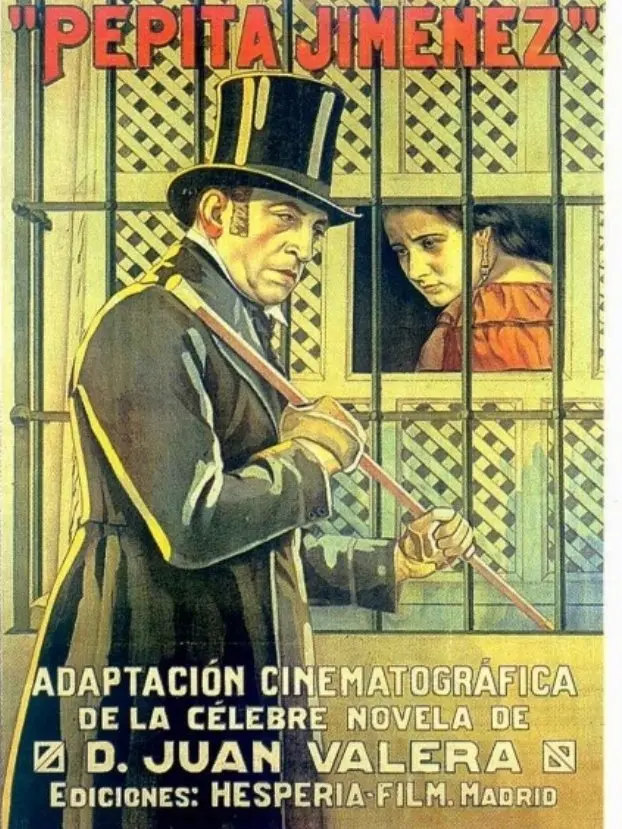
Is this film worth watching today? Short answer: Yes, but only if you have the patience for the deliberate, theatrical pacing of early Spanish silent cinema. This is not a film for those accustomed to the rapid-fire editing of modern dramas; it is a film for students of cinematic history and those who appreciate the psychological weight of literary adaptations.
Pepita Jiménez is specifically for viewers who enjoy exploring the tension between religious duty and human instinct. It is NOT for viewers who find the moral quandaries of the 19th century outdated or those who require high-octane action to stay engaged.
1) This film works because it treats the internal struggle of its protagonist with a level of psychological nuance that was rare for its era.
2) This film fails because its visual language occasionally leans too heavily on stage-bound compositions that stifle the natural beauty of its Andalusian setting.
3) You should watch it if you want to understand the roots of Spanish cinematic identity and how it wrestled with the country’s deep-seated Catholic heritage.
In a word: Absolutely. While modern audiences might find the melodrama a bit thick, the core conflict remains universal. We are watching a man realize that his identity was built on a foundation of sand. The 1927 version of Pepita Jiménez, directed by Agustín Carrasco, serves as a fascinating bridge between the rigid realism of Juan Valera’s novel and the emerging visual grammar of the late silent period.
Unlike other films of the time like Rob Roy, which focused on external heroics and sweeping landscapes, Pepita Jiménez is an interior film. It lives in the glances exchanged over a dinner table and the sweat on a young man’s brow as he tries to pray away a woman’s face. It is a slow burn that pays off in emotional resonance rather than spectacle.
Adolfo Bernáldez delivers a performance as Luis de Vargas that is surprisingly restrained. In many silent films of the 1920s, actors relied on exaggerated gestures to convey internal turmoil. Bernáldez, however, uses his eyes to tell the story of a man being dismantled. One specific scene, where Luis watches Pepita from a distance while fingering his rosary, perfectly encapsulates the film's central theme: the physical world is far more tangible than the spiritual one he has promised to inhabit.
The film doesn't shy away from the arrogance of the clergy. Luis begins the story with a sense of spiritual superiority, believing himself above the 'petty' concerns of the villagers. Watching that pride crumble is the film's greatest strength. It reminds me of the character arcs in The Darkening Trail, where the environment itself seems to conspire against a man's moral resolve. In Luis's case, the environment is the lush, sensory-rich world of Andalusia, which stands in stark contrast to the cold, ascetic life he planned for himself.
It would have been easy for the filmmakers to paint Pepita as a simple 'femme fatale' or a temptress. Instead, the film presents her as a woman trapped by her own circumstances. As played by the cast, she is a figure of quiet strength and intelligence. She isn't actively trying to 'corrupt' Luis; she is simply living her life, and her very existence serves as a challenge to his fragile worldview.
The chemistry between the leads is palpable, even through the grain of a nearly century-old print. There is a moment during a garden party where the two are forced to interact under the watchful eyes of the community. The tension is thick enough to cut with a knife. It’s a masterclass in blocking, showing how social spaces can become prisons. This level of social commentary is something we see in other films of the era like The Woman He Married, where the marriage contract is as much a business transaction as a romantic one.
Agustín Carrasco’s direction is at its best when it leans into the shadows. The cinematography uses high-contrast lighting to mirror Luis’s divided soul. The church interiors are often shrouded in darkness, lit only by flickering candles, while the scenes with Pepita are flooded with natural light. This visual dichotomy is simple, but it works. It’s flawed in its pacing—some intertitles linger far too long—but the visual intent is clear.
One surprising observation is how the film handles the father-son dynamic. Luis’s father is not a villain, but his desire for Pepita creates a bizarre, unspoken rivalry that adds a layer of Oedipal tension to the proceedings. This isn't just a man vs. God story; it's a man vs. his lineage story. It’s a brutal realization for Luis: to become a man, he must first betray his father and his faith.
Compared to American exports like The Spite Bride, Pepita Jiménez feels much more grounded in literature and philosophy. It lacks the polish of Hollywood, but it possesses a raw, regional authenticity that makes it feel vital. It doesn't care about a happy ending as much as it cares about a truthful one.
Pros:
• Powerful central performances that transcend the silent medium.
• Bold exploration of religious hypocrisy and human desire.
• Authentic period detail that captures 19th-century Andalusia.
• Strong thematic resonance that still feels relevant today.
Cons:
• Pacing can feel sluggish in the second act.
• The theatrical nature of some scenes feels dated.
• Limited technical flourishes compared to German Expressionism of the same era.
Pepita Jiménez is a fascinating artifact of Spanish cinema. It is a film that demands your full attention and rewards it with a complex, often uncomfortable look at the human heart. It works. But it’s flawed. The film’s refusal to provide easy answers makes it a standout of its time. If you can look past the limitations of 1927 technology, you will find a story that is as much about the present as it is about the past. It is a quiet, powerful indictment of the walls we build around ourselves and the people who inevitably knock them down.

IMDb —
1920
Community
Log in to comment.