DbcultAccessing Vault...
Cult Review
Senior Film Conservator
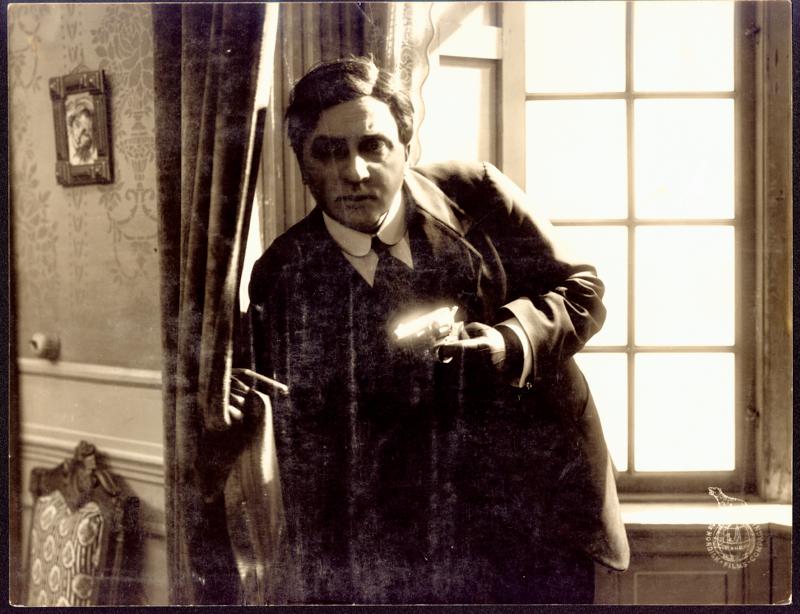
The year 1917 marked a zenith for the Nordisk Film Kompagni, a period where the Danish film industry exerted a gravitational pull on the global cinematic landscape. At the heart of this creative explosion was A.W. Sandberg, a director whose transition from the static traditions of stage photography to the kinetic possibilities of the moving image redefined the "Sensationsfilm." In Manden med de ni Fingre V, we witness the crystallization of the crime serial—a genre that would later evolve into the noir we cherish today. Unlike the simplistic morality tales of the era, this film thrives in the gray areas of the human psyche, anchored by the magnetic and somewhat unsettling presence of Aage Hertel.
Hertel’s portrayal of the nine-fingered antagonist is nothing short of revolutionary. While many of his contemporaries relied on the exaggerated gesticulations of the theater, Hertel employed a reserved, almost predatory economy of movement. His character is a ghost in the machine of the bourgeoisie, a figure who exploits the very structures designed to maintain order. This isn't just a heist film; it is a critique of visibility. The missing finger is not a disability but a signature—a deliberate mark of otherness that haunts the authorities like a recurring nightmare. In many ways, the film shares a thematic kinship with the deceptive identities found in The Masked Heart, where the external visage serves as both a shield and a weapon.
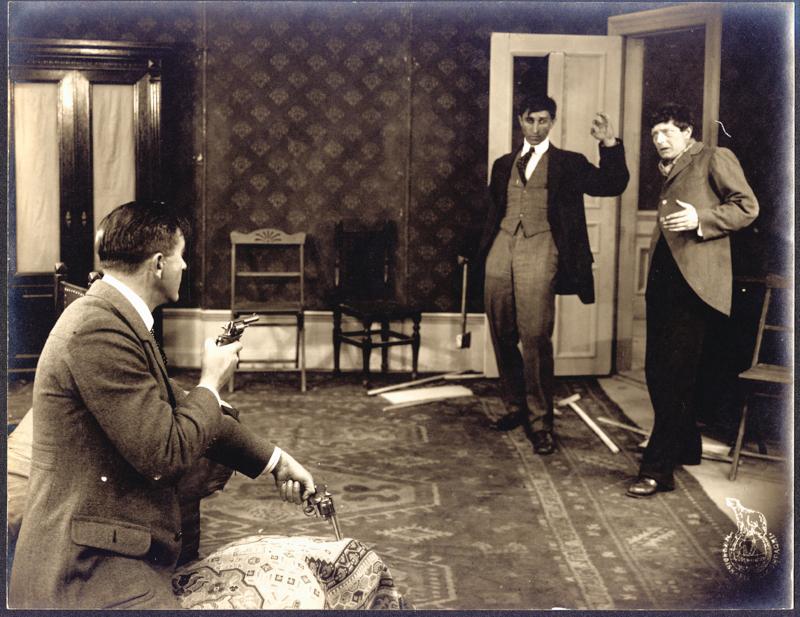
Sandberg’s direction in this fifth installment demonstrates a sophisticated understanding of spatial dynamics. The camera is no longer a mere spectator; it becomes an accomplice to the crime. Through the use of deep staging and nuanced lighting, Sandberg creates a sense of claustrophobia within the opulent drawing rooms of the elite. The contrast between the bright, over-exposed lives of the victims and the murky, shadow-drenched world of the criminal creates a visual tension that sustains the narrative even when the plot occasionally meanders. This mastery of the frame is a far cry from the more straightforward historical documentarian style seen in Ostpreussen und sein Hindenburg, proving that Danish cinema was pushing toward a more subjective, psychological form of storytelling.
The supporting cast, featuring Aage Kirschner and Henry Seemann, provides a necessary counterbalance to Hertel’s dominance. Seemann, in particular, brings a level of earnestness that highlights the futility of the law when faced with a genius of the underworld. The interplay between these characters creates a rhythmic ebb and flow that keeps the audience in a state of perpetual anticipation. We see a similar structural integrity in A Game of Wits, yet Sandberg’s work here feels more visceral, more grounded in the grime and grit of the early 20th-century metropolis.
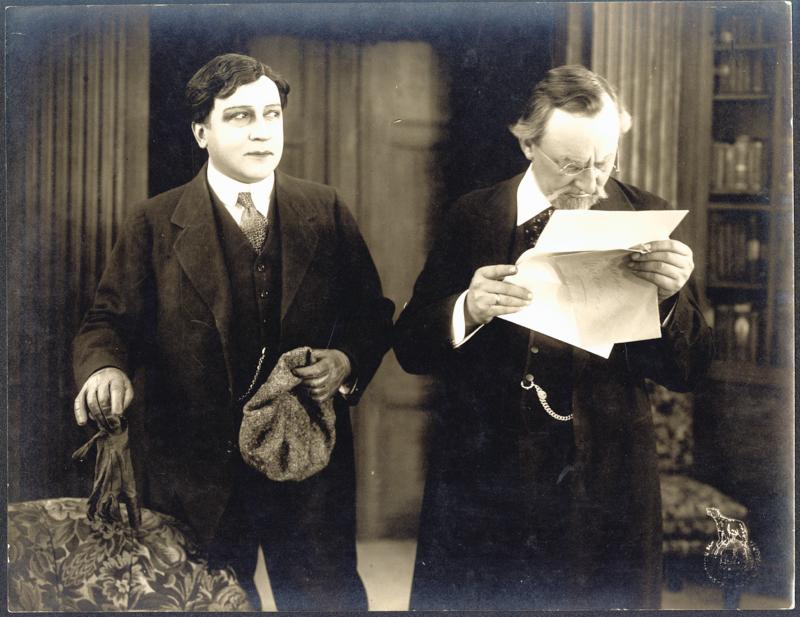
One cannot discuss Manden med de ni Fingre V without acknowledging its script, also penned by Sandberg. The dialogue intertitles are sparse, allowing the visual storytelling to carry the weight of the intrigue. This is a film that understands the power of the unspoken. Every glance, every lingering shot of a safe dial, every shadow cast against a brick wall serves a purpose. It is a cinematic puzzle box that invites the viewer to piece together the clues alongside the hapless investigators. This level of engagement was rare for the time, often only seen in high-concept fantasies like Pinocchio, though Sandberg applies this complexity to the far more grounded and dangerous world of international crime.
The film’s pacing is a testament to the editing techniques of the era. While some silent films suffer from a lethargic middle act, this installment maintains a brisk momentum. The sequences involving the chase are particularly noteworthy, utilizing the natural terrain and architectural features of the city to create a sense of verticality and danger. It’s a precursor to the modern action thriller, stripped of the CGI and pyrotechnics that often obscure the core human drama. When compared to the more static The Reform Candidate, Sandberg’s work feels positively modern, pulsating with an energy that is contagious.
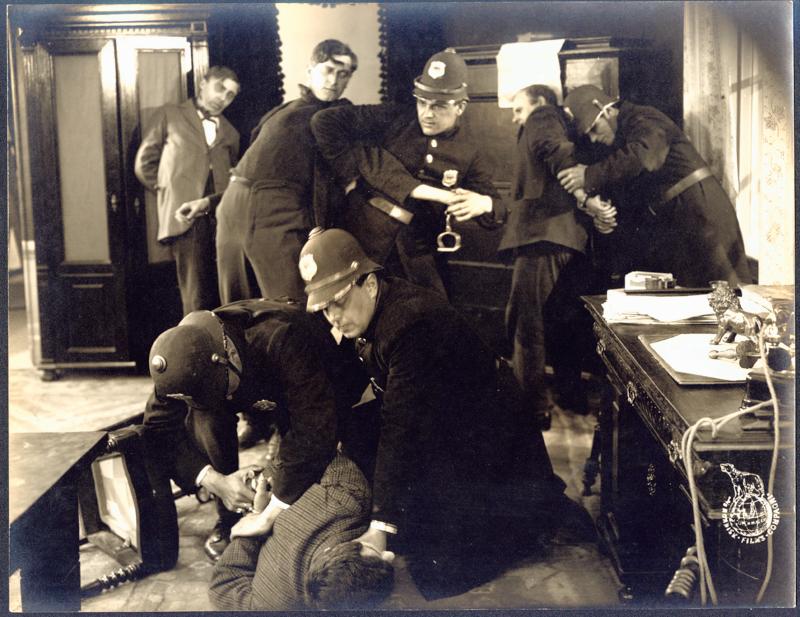
Beneath the surface of this thrilling caper lies a subtle commentary on the class structures of 1917. The Nine-Fingered Man is a disruptor of the status quo. He infiltrates the sanctuaries of the wealthy, exposing the fragility of their security and the superficiality of their social standing. In this sense, the film acts as a mirror to the anxieties of a world on the brink of profound change. The Great War was raging elsewhere in Europe, and though Denmark remained neutral, the tremors of social upheaval were felt in its art. The criminal here is a manifestation of that instability—a force of nature that cannot be contained by traditional means. This theme of societal disruption is echoed in Brother Against Brother, though Sandberg approaches it with a more cynical, sophisticated lens.
Furthermore, the film explores the concept of the "mask" in a way that is both literal and metaphorical. Characters are rarely who they seem to be. The Man with Nine Fingers is a master of disguise, a chameleon who can blend into any environment. This obsession with identity and the fluidity of the self is a recurring motif in Sandberg’s filmography, perhaps most notably contrasted with the more literal transformations in The Love Mask. In Manden med de ni Fingre V, the mask is not just a tool for crime; it is a survival mechanism in a world that demands conformity.
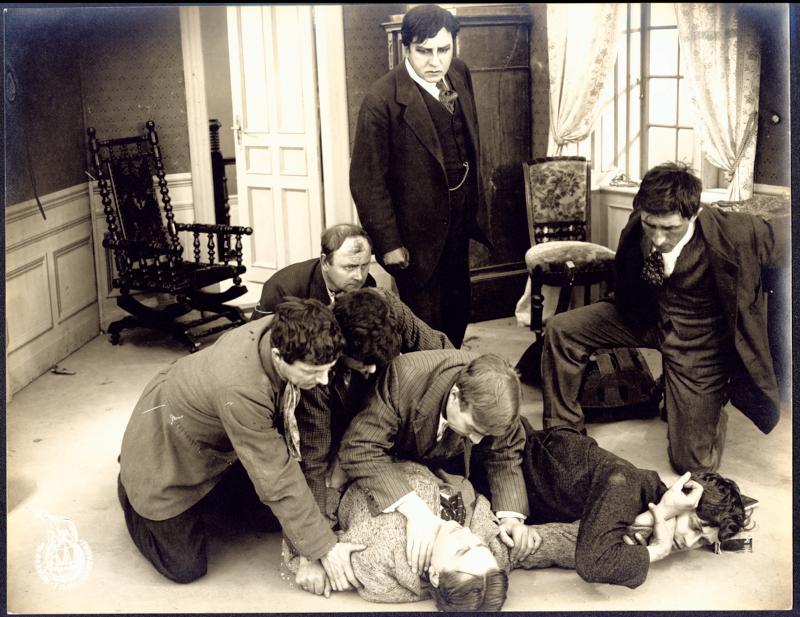
The cinematography of the film deserves a dedicated analysis. The use of low-angle shots to imbue the protagonist with a sense of menacing power and the creative use of mirrors to expand the visual field were ahead of their time. The lighting, often harsh and directional, creates a stark chiaroscuro effect that heightens the dramatic tension. This visual style would become a hallmark of the Danish school, influencing filmmakers across Europe and eventually reaching the shores of Hollywood. The technical precision here is comparable to the lavish productions of Der Millionenonkel, yet it retains a certain Scandinavian austerity that makes it feel more authentic and less theatrical.
As we reflect on the legacy of the Manden med de ni Fingre series, it is clear that its impact cannot be overstated. It paved the way for the sophisticated crime dramas of the 1920s and 30s, proving that the genre could be both commercially successful and artistically significant. The performances of Sophus Bernhard, Frederik Jacobsen, and Johannes Ring provide a rich tapestry of human emotion that grounds the film’s more fantastical elements. They represent the various facets of a society under siege—the fearful, the opportunistic, and the steadfastly moral. This ensemble approach is reminiscent of the character depth found in The Sentimental Lady, albeit in a far more dangerous context.
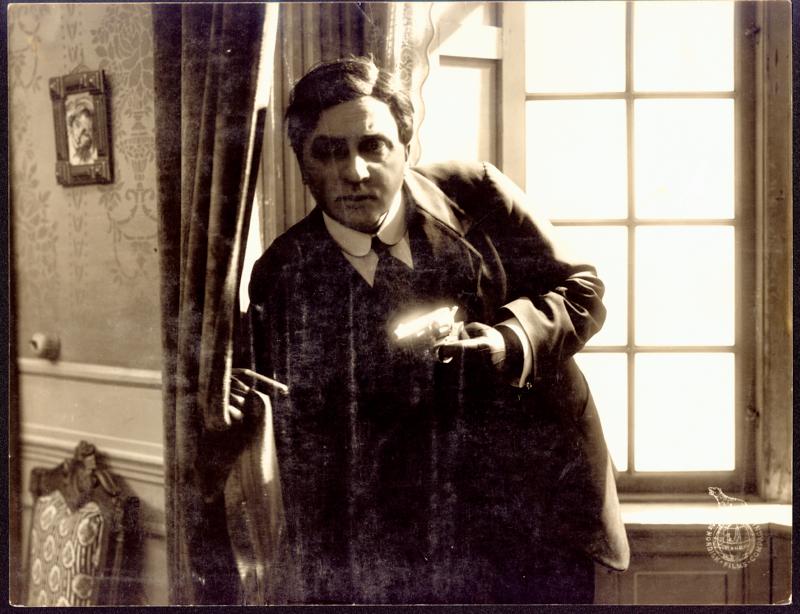
To watch Manden med de ni Fingre V today is to take a journey back to the foundations of cinematic suspense. It is a film that demands our attention, not just as a historical curiosity, but as a living, breathing piece of art. The craftsmanship on display—from Sandberg’s precise direction to Hertel’s haunting performance—remains as potent now as it was over a century ago. It stands as a testament to the power of the silent screen to communicate complex ideas and evoke deep emotions without the need for a single spoken word. While other films of the era, like Scotland Forever, focused on nationalistic grandeur, Sandberg chose to focus on the intimate, the illicit, and the individual.
In the grand pantheon of early cinema, this film occupies a unique space. It is a bridge between the old world and the new, between the stage and the screen, and between the hero and the villain. It is a work of profound lexical diversity in its visual language, a symphony of light and shadow that continues to resonate. Whether you are a scholar of silent film or a casual viewer looking for a thrill, Manden med de ni Fingre V offers a masterclass in storytelling that is not to be missed. It is as vital as Koroleva ekrana and as daring as Queen of the Forty Thieves, yet it possesses a singular, dark soul that is entirely its own.
Ultimately, Sandberg’s fifth outing with the nine-fingered phantom is a triumph of atmosphere over artifice. It reminds us that cinema, at its core, is the art of seeing what is hidden. As the final frame flickers out, we are left with the lingering image of Hertel’s hand—a missing digit that represents the missing pieces of our own understanding of the world. It is a haunting, beautiful, and utterly essential piece of film history that deserves to be celebrated alongside the greats like Fifty-Fifty or the patriotic fervor of For King and Country. A.W. Sandberg didn't just make a movie; he captured a shadow.
IMDb 6.5
1927
Community
Log in to comment.