DbcultAccessing Vault...
6.2/10
Senior Film Conservator
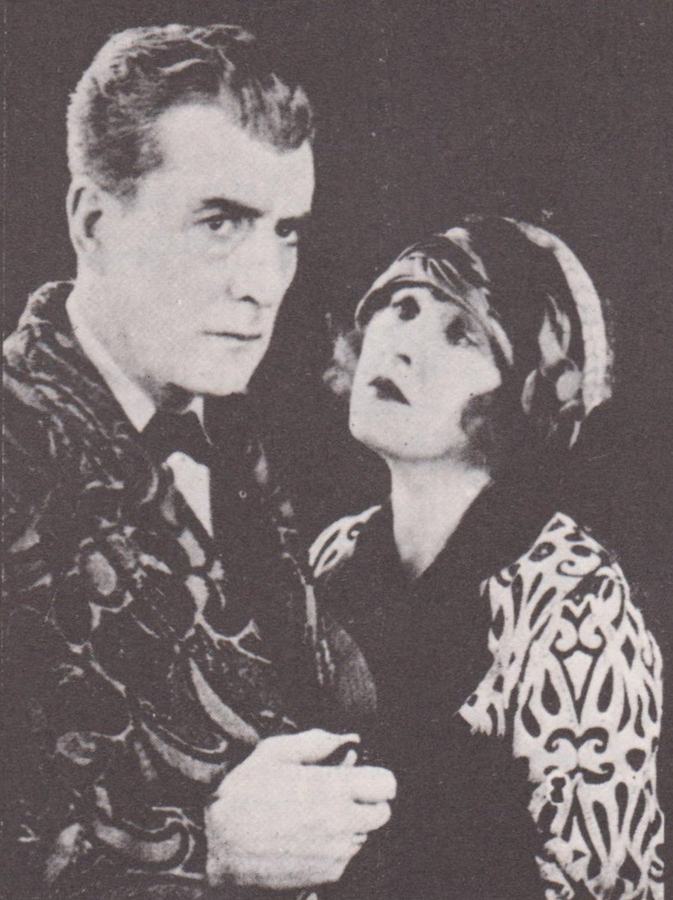
A definitive 6.2/10 rating for a film that redefined the boundaries of cult cinema. The Sign of Four remains a cornerstone of transgressive art.
The silent era of cinema, often dismissed by the modern layman as a pantomime of exaggerated gestures, occasionally yielded a gem of such atmospheric potency that it renders sound almost redundant. Maurice Elvey’s 1923 rendition of The Sign of Four is precisely such a specimen. It is a work that breathes the soot and fog of Arthur Conan Doyle’s London, capturing a specific, Edwardian existential dread that later, more polished adaptations often sanitize. At the center of this maelstrom is Eille Norwood, an actor whose physiognomy seemed almost genetically engineered to portray the Great Detective. While modern audiences might be more accustomed to the manic energy of contemporary iterations, Norwood offers a Holmes of quiet, terrifying intellect—a man who observes the world with the cold, unblinking eye of a predatory bird.
The film’s narrative architecture is built upon the shifting sands of imperial guilt. The Agra Treasure is not merely a plot device; it is a symbol of the corrosive nature of unearned wealth. Elvey masterfully juxtaposes the opulent, claustrophobic interiors of the Sholto residence with the stark, unforgiving landscapes of the convict’s origin. The cinematography, though limited by the technical constraints of the early 1920s, utilizes a primitive yet effective chiaroscuro that highlights the moral ambiguity of its characters. Unlike the more straightforward procedural elements found in The Third Degree, The Sign of Four leans heavily into the gothic, allowing the shadows to tell as much of the story as the intertitles.
One cannot discuss this film without acknowledging the visceral performance of Norman Page as Jonathan Small. His portrayal is a masterclass in silent-screen pathos; he is a villain, yes, but one birthed from the belly of betrayal. The physical demands of the role—navigating the set with a wooden leg—add a rhythmic, percussive element to the suspense. When Small’s presence is felt, the film shifts from a mystery into a proto-noir, predating the genre’s official birth by decades. It shares a certain thematic kinship with the dark, psychological undercurrents of Drama na okhote, where the environment itself feels complicit in the unfolding tragedy.
Eille Norwood’s Holmes is a revelation of restraint. In an era where many actors were still tethered to the histrionics of the stage—a style seen in more theatrical productions like Conn, the Shaughraun—Norwood understood the intimacy of the camera. His movements are economical, his gaze piercing. He does not need to shout to command the frame. This stoicism provides the perfect foil to Arthur Cullin’s Dr. Watson. While Watson is often relegated to the role of a bumbling sidekick in lesser adaptations, Cullin provides a grounded, empathetic anchor, making the stakes of Mary Morstan’s plight feel genuinely urgent. Isobel Elsom, as Mary, brings a luminous vulnerability to the screen, though she is far from a mere damsel. There is a steeliness in her eyes that suggests she is a woman who has endured the long silence of her father’s absence with a burgeoning fortitude.
The pacing of the film is a deliberate, slow-burn orchestration. Elvey takes his time establishing the mystery, allowing the viewer to soak in the period details—the hansom cabs, the gaslight, the velvet-heavy drawing rooms. This patience pays dividends during the final act. The boat chase on the Thames is a technical marvel for 1923. The editing here is surprisingly modern, creating a sense of kinetic energy that rivals the suspense found in Secret Strings. It is a sequence that demands to be seen on the big screen, where the scale of the river and the desperation of the fugitives can be fully appreciated.
When compared to other contemporary works, The Sign of Four stands out for its refusal to succumb to pure melodrama. While a film like A Twilight Baby might lean into the whimsical or the sentimental, Elvey remains committed to the grit. Even when the plot touches upon the exoticism of the Andaman Islands, it avoids the cartoonish tropes that plagued many colonial-era films. There is a sense of genuine danger, an atavistic fear that the past cannot be buried, no matter how deep the treasure is hidden. This level of narrative maturity is something we also see in the more somber moments of Old Brandis' Eyes, where the weight of history hangs heavy over the protagonists.
The production design deserves its own accolade. The recreation of the Agra fort and the labyrinthine docks of London creates a visual duality. On one hand, we have the crumbling majesty of the East, and on the other, the industrial grime of the West. This visual dichotomy reinforces the film’s central theme: that the wealth extracted from the colonies brings with it a rot that infects the heart of the British Empire. This is a far cry from the lighthearted antics of Playing Dead or the domestic simplicity of Mary Jane's Pa. Here, the stakes are cosmic, and the resolution provides no easy comfort.
There is a spectral quality to the 1923 The Sign of Four. Perhaps it is the flicker of the nitrate film, or the way the actors seem to emerge from a void of pure blackness, but the movie feels like a séance. When the characters discuss the dead, as they do in the chilling sequences that mirror the inquiries of Do the Dead Talk?, one gets the sense that the film itself is a medium. It captures a world that was already vanishing—a London of horse-drawn carriages and rigid class structures—and preserves it in a state of perpetual amber.
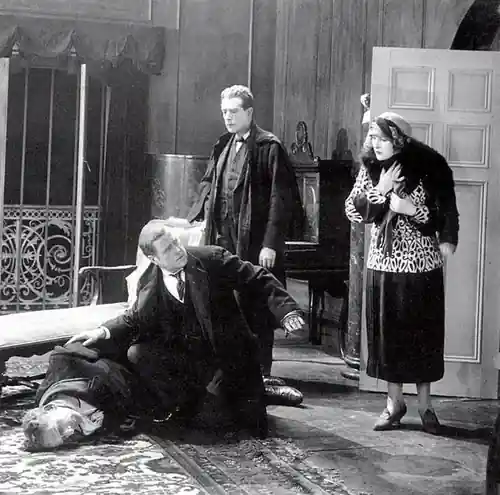
The screenplay, penned by Elvey and Doyle himself, is remarkably faithful to the source material while understanding the needs of a visual medium. It strips away the more verbose deductions of the novel in favor of visual storytelling. We see Holmes’s mind at work not through a monologue, but through the focus of the lens on a muddy footprint or a stray hair. This is pure cinema. It avoids the pitfalls of being a "filmed play," a trap that many early adaptations fell into. Instead, it utilizes the camera to create a subjective experience, drawing the viewer into Holmes’s hyper-observant reality. Even the more eccentric elements, like the presence of the "Hoodooed" characters (recalling the misfortune in Hoodooed), are handled with a sincerity that prevents them from becoming kitsch.
Ultimately, The Sign of Four is a testament to the power of Eille Norwood’s legacy. While Jeremy Brett and Benedict Cumberbatch have since laid claim to the deerstalker, Norwood’s interpretation remains the most authentic link to the Victorian era. He played the character in dozens of films, but this particular feature-length outing allows him the space to explore the character’s darker edges—his isolation, his boredom, and his relentless pursuit of the truth at any cost. It is a performance that transcends the limitations of its time, offering a psychological depth that is rarely matched in the silent canon.
In the broader context of 1920s cinema, Elvey’s work here is a bridge between the simplistic morality tales of the past and the complex, visual narratives of the future. It possesses the grit of Tempered Steel and the mystery of The Artist's Model, yet it stands alone as a definitive piece of Sherlockian lore. For the modern viewer, it requires a recalibration of the senses—a willingness to sit with the silence and let the images speak. But for those who make the effort, the rewards are as vast as the Agra Treasure itself, though infinitely less cursed.
As the final frames fade into the blackness of the London night, one is left with the haunting image of Jonathan Small—a man broken by greed and restored by the purity of his vengeance. It is a reminder that in the world of Sherlock Holmes, justice is rarely poetic; it is a cold, calculated equation, solved with the clinical precision of a man who has seen too much of the human heart and found it wanting. This is not just a movie; it is a dark, beautiful relic of a time when the world was changing, and the shadows were getting longer.
A final note for the cinephile: Do not mistake the film's age for a lack of sophistication. From the framing of the Andaman flashbacks—which carry the weight of a film like The Captivating Captive—to the nuanced portrayal of the Sholto twins, this is a work of high art. It is a mandatory viewing for anyone who wishes to understand the evolution of the detective genre on screen.
IMDb 6.8
1931
Community
Log in to comment.