DbcultAccessing Vault...
Cult Review
Senior Film Conservator
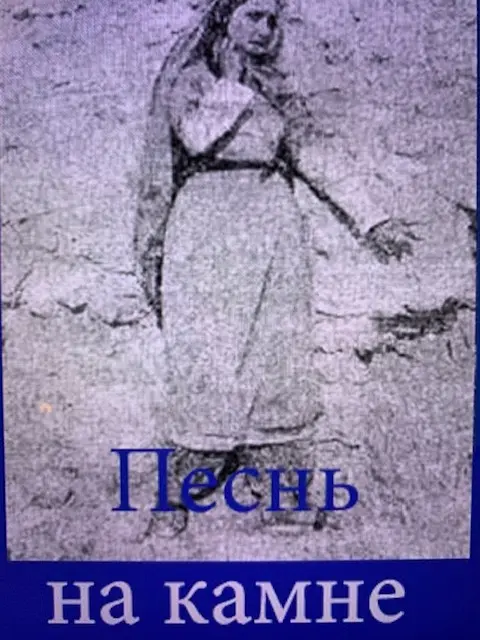
Is 'Pesn na kamne' worth watching today? Short answer: yes, but with significant caveats. This silent-era drama, a profound meditation on art and endurance, demands a specific kind of viewer – one willing to surrender to its deliberate rhythm and stark beauty. It is a film for those who appreciate the raw power of visual storytelling and the nuanced performances capable of transcending dialogue.
This film is unequivocally for cinephiles, students of silent cinema, and anyone with a deep appreciation for allegorical narratives about the creative struggle. It is NOT for viewers seeking fast-paced entertainment, clear-cut resolutions, or modern narrative conventions. If you require constant stimulation or struggle with films that prioritize atmosphere and internal conflict over external action, 'Pesn na kamne' will likely test your patience.
Khrisanf Khersonsky's 'Pesn na kamne' (Song on a Stone) emerges from the silent era as a stark, poetic exploration of artistic obsession and the human spirit's resilience in the face of overwhelming odds. Released at a time when cinema was still finding its voice, this film distinguishes itself through its audacious simplicity and profound thematic depth. It's a testament to the power of visual narrative, proving that the absence of spoken words can amplify, rather than diminish, emotional impact.
At its core, the film is a character study, centered on Ivan, a sculptor whose life's work is to carve a monumental 'song' into a colossal stone. This isn't just about art for art's sake; it's about a man's desperate need to leave an indelible mark, to imbue an inanimate object with the very soul of his heritage. The stone itself becomes a character, an unyielding adversary and an ultimate canvas. The film's brilliance lies in its ability to personify both the artist's struggle and the silent, stoic resistance of nature.
Leo Mur, as Ivan, delivers a performance that is nothing short of captivating, especially considering the constraints of silent cinema. He doesn't merely act; he embodies the very spirit of endurance. His face, etched with the toil and quiet desperation of his Sisyphean task, tells a story more eloquent than any dialogue could. Every swing of the hammer, every chisel stroke, is imbued with a palpable sense of purpose and pain.
Consider the scene where Ivan, after days of fruitless labor, collapses against the stone, his shoulders heaving, not with tears, but with a profound, wordless exhaustion. Mur's subtle tremor in his hands, the slump of his posture, and the distant, almost vacant stare in his eyes communicate a depth of despair that is utterly heartbreaking. This isn't melodrama; it's raw, unvarnished human struggle. He conveys the weight of his ambition and the crushing reality of his isolation without uttering a single sound, a true testament to his craft.
His interactions with the few villagers are equally telling. A fleeting glance of disdain from a passing farmer, a sympathetic nod from an elder – Mur reacts with a quiet dignity, revealing Ivan's internal world without needing exposition. It's a masterclass in physical acting, showcasing how much can be communicated through posture, gesture, and the expressive power of the human face. In an era often criticized for exaggerated theatrics, Mur's restraint is a breath of fresh air, cementing his place as a performer of considerable depth.
Khrisanf Khersonsky's direction is defined by its unflinching commitment to the film's central metaphor. He understands that the landscape is as crucial to the story as Ivan himself. The wide, sweeping shots of the desolate, rocky terrain aren't just establishing shots; they are a constant visual reminder of the immensity of Ivan's challenge and the indifference of the natural world. The framing often dwarfs Ivan against the colossal stone, visually emphasizing his vulnerability and the sheer scale of his ambition.
The cinematography, while perhaps technically primitive by today's standards, possesses an elemental beauty. The use of natural light, the stark contrasts between light and shadow on the stone, and the dramatic compositions evoke a powerful sense of place and atmosphere. One particularly striking sequence involves a montage of time passing – the changing seasons depicted through subtle shifts in light and weather, all observed from the vantage point of the unmoving stone. This technique not only advances the narrative of Ivan's prolonged labor but also reinforces the film's cyclical, almost mythical quality.
Khersonsky's decision to maintain a slow, observational pace is a bold one. It forces the audience to truly witness Ivan's struggle, to feel the weight of each laborious day. While this can be challenging, it's also incredibly rewarding, allowing moments of profound quietude to resonate deeply. The camera often lingers, inviting contemplation rather than dictating emotion. This patient approach sets it apart from many of its contemporaries, which often relied on more frantic editing to maintain audience engagement. In this regard, it shares a philosophical kinship with later, more meditative works, rather than the rapid-fire storytelling of something like The Highest Trump.
The pacing of 'Pesn na kamne' is undeniably its most divisive element. It is slow. Deliberately, excruciatingly slow at times. This isn't a flaw; it's a fundamental aspect of its artistic vision. The film mirrors the arduous, time-consuming nature of Ivan's work. Each scene unfolds with a measured gravity, allowing the audience to truly feel the passage of time and the incremental progress (or lack thereof) of the sculptor.
The tone is one of quiet solemnity, tinged with a persistent undercurrent of melancholy hope. There are no grand pronouncements, no dramatic shifts in fortune, only the relentless pursuit of a singular vision. This sustained tone, while perhaps alienating to some, creates an immersive experience for those willing to lean into it. It's akin to observing a natural process, a geological shift, rather than a conventional human drama. The film understands that some struggles are internal, and their resolution is often found not in triumph, but in the act of enduring itself.
Compare this to the often frenetic energy of films like A Hickory Hick, or the urban bustle of Montmartre. 'Pesn na kamne' operates on an entirely different wavelength, demanding a shift in viewing habits. It’s a film that asks for patience, and in return, offers a profound, almost spiritual experience. The lack of overt musical scoring (beyond what might have been provided by a live accompanist) further emphasizes this starkness, leaving the viewer to fill the sonic void with the imagined sounds of chisel on stone, wind, and the quiet beating of a determined heart.
Absolutely, 'Pesn na kamne' is worth watching, but with a clear understanding of what you're getting into. It’s not a film for a casual Friday night viewing. This is a film for reflection, for study, for appreciation of cinema's foundational power. Its value lies not in entertainment, but in its artistic integrity and its ability to provoke thought and emotion through purely visual means. It’s a significant piece of cinematic history that showcases the ambition and expressive potential of the silent era.
“'Pesn na kamne' is a challenging watch, but one that rewards the patient viewer with a rare glimpse into the soul of an artist and the timeless struggle between human will and the indifferent forces of nature.”
If you are a student of film, an aspiring artist, or simply someone who appreciates stories about deep personal dedication, this film offers a rich, albeit demanding, experience. It asks you to slow down, to observe, to feel the passage of time alongside Ivan. And for those willing to accept that invitation, it delivers a powerful, unforgettable message about the enduring power of human creation.
'Pesn na kamne' is a challenging, yet ultimately rewarding, cinematic experience. It works. But it’s flawed. It stands as a powerful testament to the expressive power of silent film and the enduring allure of human perseverance against the backdrop of an indifferent world. Leo Mur's performance is a silent tour de force, anchoring a narrative that is less about what happens and more about what it means to strive. Khrisanf Khersonsky crafts a film that is both a historical artifact and a timeless piece of art, demanding patience and offering profound reflection in return.
This film is not for everyone. It is a niche experience, a slow burn that requires active engagement and a willingness to meet it on its own terms. But for those who venture into its stark, beautiful world, 'Pesn na kamne' offers a deeply affecting and memorable journey into the heart of artistic creation and the unyielding spirit of man. It's a film that stays with you, its silent 'song' echoing long after the final frame.
IMDb 6.3
1937
Community
Log in to comment.