DbcultAccessing Vault...
Cult Review
Senior Film Conservator
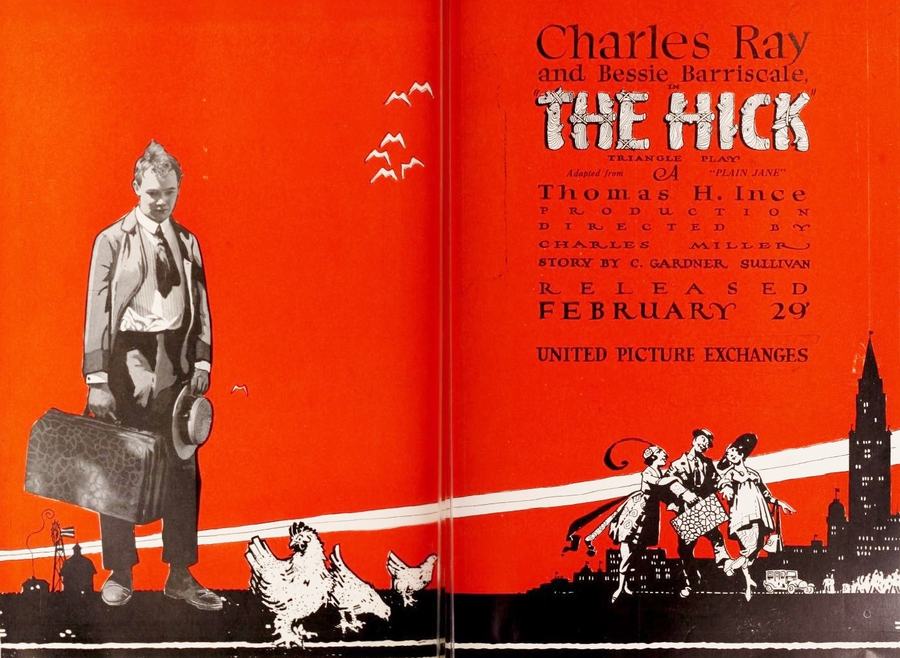
The 1916 cinematic landscape was often characterized by a rigid adherence to moralistic tropes, yet within the framework of Plain Jane, directed under the meticulous supervision of Thomas H. Ince, we find a nuanced exploration of social stratification and the transformative power of the gaze. Written by the prolific C. Gardner Sullivan, the film operates as both a poignant melodrama and a scathing critique of the superficiality inherent in the American collegiate experience of the early 20th century.
At the center of this narrative is Bessie Barriscale, an actress whose capacity for pathos was virtually unmatched in the silent era. As Jane, the 'slavey' of a boarding house, her performance is a masterclass in physical restraint. She occupies the edges of the frame, a blurred figure in the background of John Adams’ (played with a charming yet frustrating obliviousness by Charles Ray) life. Unlike the overt theatricality found in The Two Orphans, Barriscale’s suffering is quiet, internalized, and profoundly domestic.
The boarding house serves as a microcosm of the broader class struggle. John Adams, though himself a laborer working his way through school, aspires to the heights of the aristocracy, represented by the distant and decorative Ethelda Rathbone. The irony is palpable: John is a proletarian in a scholar’s cap, yet he fails to recognize his spiritual equal in Jane. This dynamic echoes the themes of financial and moral worth explored in The Firm of Girdlestone, where the pursuit of status often blinds the protagonist to the virtues of the heart.
The sequence involving the dress suit is perhaps the most gut-wrenching manifestation of Jane’s devotion. In a society where the 'habit makes the monk,' John’s lack of formal attire is an insurmountable barrier to his social aspirations. Jane’s decision to rent the suit using her 'scanty savings' is not merely an act of kindness; it is an act of self-erasure. She facilitates his pursuit of another woman, effectively subsidizing her own heartbreak. This sacrificial motif is a staple of Sullivan’s writing, often seen in works like Charity Castle, where the innocence of the protagonist acts as a catalyst for social change.
The destruction of the suit by John’s classmates is a jarring intrusion of 'boys will be boys' toxicity. The physical ripping of the fabric serves as a metaphor for the fragility of John’s social pretensions. He cannot simply 'wear' the upper class; the moment he attempts to do so, the reality of his station is violently reasserted. However, it is Jane who bears the brunt of this failure. The street scene, where she is publicly humiliated by the dealer, is a harrowing depiction of the vulnerability of the poor. It highlights a recurring cinematic concern of the era: the precariousness of female honor in the face of economic debt, a theme also touched upon in The Girl and the Crisis.
The introduction of Frederick Verstner (played with gravitas by W. Burgermaster) shifts the film from a kitchen-sink drama into the realm of the transformative. Verstner is the 'Deus ex Machina' in the form of a town photographer. His intervention in the street is not merely a financial rescue; it is the beginning of an aesthetic reclamation. When Jane visits his studio, we witness the power of the cinematic gaze. By loosening her hair and draping her in 'something filmy,' Verstner strips away the 'slavey' and reveals the 'siren'—or more accurately, the human being beneath the soot.
This scene is crucial because it suggests that beauty is often a matter of presentation and perception rather than an inherent biological fact. Jane was always beautiful; she was simply obscured by the labor required of her. The photograph that wins the New York prize is a subversion of the 'college girl' ideal. While the school is 'crowded with girls' vying for the title, it is the invisible girl who captures the crown. This narrative beat shares a certain DNA with The Sixteenth Wife, where the perception of a woman is radically altered by her placement within a specific cultural or artistic frame.
The final act of Plain Jane deals with the 'great awakening' of John Adams. Having been adopted and educated by Verstner, Jane returns to the social fold as a woman of means and recognized beauty. It is only then that John 'sees' her. While the film presents this as a romantic triumph, a modern critic must view it with a degree of cynicism. John’s love is predicated on Jane’s elevation. He did not love the girl who sacrificed her savings for him; he loves the girl who has been validated by a national newspaper and a wealthy benefactor. This critique of the male ego is a subtle but persistent thread in Sullivan’s scripts, appearing in various guises in films like Money and Red, White and Blue Blood.
The educational aspect of Jane’s transformation—her 'polishing' by Verstner—suggests that while her beauty was innate, her social acceptance required the veneer of class. This reflects the early 20th-century obsession with 'improvement' and the belief that the American dream was accessible through a combination of luck and refinement. It is a more optimistic take on the immigrant or lower-class experience than one might find in One More American, but it remains grounded in the reality of social mobility being a gifted, rather than earned, state.
Technically, Plain Jane excels in its use of lighting to differentiate between the environments. The boarding house is shot with a flat, utilitarian light that emphasizes the drabness of Jane’s existence. In contrast, Verstner’s studio and the later scenes of Jane’s 'popular' life utilize a more soft-focus, ethereal approach, characteristic of the burgeoning 'star system' aesthetics. The direction avoids the frantic pacing of contemporary comedies, opting instead for a deliberate, emotional rhythm that allows the audience to sit with Jane’s isolation.
The performance of Fanny Midgley as the boarding house mistress provides a necessary friction, grounding the film in the harsh realities of the service industry. Her presence ensures that the film doesn't drift too far into fairy-tale territory before its final act. The interplay between the cast members creates a lived-in atmosphere that was a hallmark of the Ince studio’s 'factory' system, which prioritized narrative clarity and emotional resonance.
In the pantheon of silent drama, Plain Jane stands as a precursor to the modern 'makeover' movie, but it possesses a depth that its descendants often lack. It is a story about the violence of poverty and the arbitrary nature of social validation. Jane’s victory is bittersweet; she wins the man she loves, but only after she has been forced to become someone else—or at least, a curated version of herself. This exploration of identity and the 'mask' of beauty can be seen in later, more psychological works such as Birth, though Plain Jane remains firmly rooted in the sociological rather than the metaphysical.
Ultimately, the film is a testament to Bessie Barriscale’s enduring screen presence. She navigates the transition from the 'little slavey' to the 'most popular girl in the place' with a grace that suggests the change is merely external. Her eyes, even in the moments of her greatest triumph, retain a shadow of the girl who once stood in the street, humiliated over a ruined coat. It is this core of authenticity that prevents the film from becoming a mere exercise in sentimentality. Plain Jane is a vital piece of silent cinema that demands our attention, not just as a historical artifact, but as a poignant commentary on the cost of being seen.
As we reflect on the 'awakening' of John Adams, we are left to wonder: in our own modern age of digital curation and social media prizes, how many 'Janes' are we currently failing to see? The film’s relevance persists, a flickering reminder that the most beautiful truths are often hidden in the most mundane places, waiting for a lens—or a heart—brave enough to focus on them.
IMDb 5.7
1932
Community
Log in to comment.