DbcultAccessing Vault...
Cult Review
Senior Film Conservator
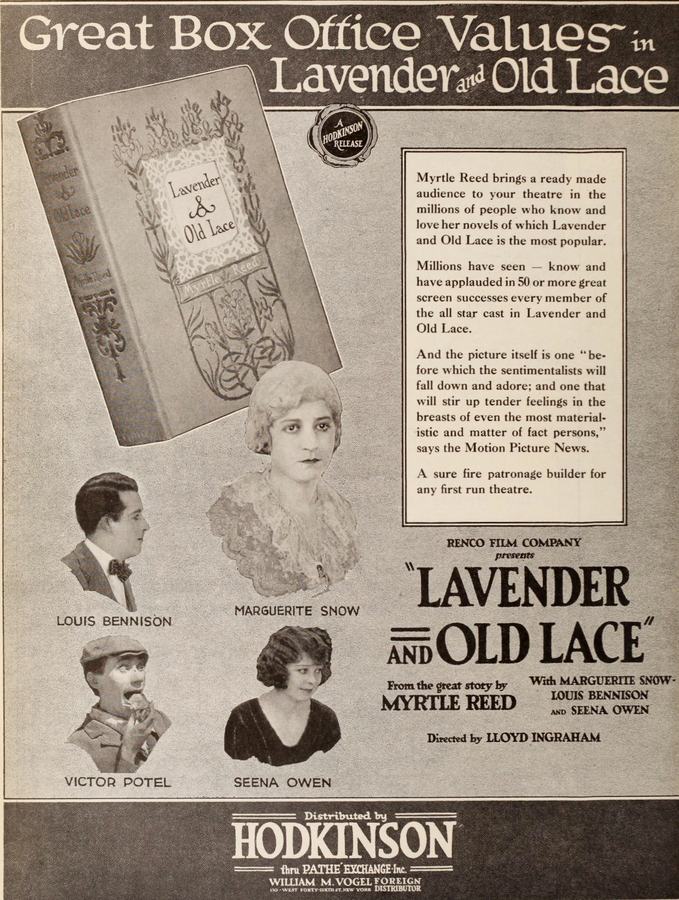
In the quaint New England village, where the air is sweet with the scent of lavender and the sound of the sea whispers secrets to the shore, a poignant tale of love, loss, and longing unfolds. Mary Ainslie, a woman who has waited 30 years for her fiancé's return, finds herself face to face with his son, Carl, who bears an uncanny resemblance to his father. As Mary's memories of the past come flooding back, she becomes enamored with the idea of rekindling the romance that never was, through the blossoming love between Carl and her young companion, Ruth.
The film, Lavender and Old Lace, is a masterful exploration of the human heart, delving into the complexities of love, identity, and the passage of time. Through the characters of Mary, Carl, and Ruth, the film raises questions about the nature of love, the choices we make, and the consequences that follow. As the story navigates the twists and turns of the human experience, it invites the viewer to reflect on their own life, their own loves, and their own losses.
The cinematography, with its sea blue hues and soft focus, captures the dreamy quality of the village, where the past and present seem to blend together in a haze of nostalgia. The performances, too, are noteworthy, with Marguerite Snow bringing a depth and nuance to the role of Mary, and Louis Bennison capturing the charm and vulnerability of Carl. The chemistry between the leads is palpable, and their romance is tender and sweet, like the lavender that blooms in the village gardens.
In comparison to other films of the era, such as A Soul Enslaved and Tinsel, Lavender and Old Lace stands out for its thoughtful pacing and its exploration of the human condition. While films like David and Jonathan and The Professor may delve into the complexities of relationships, Lavender and Old Lace offers a unique perspective on the nature of love and longing. The film's themes of love, loss, and identity are also reminiscent of Raskolnikov and The False Faces, but its tone and approach are distinctly its own.
As the story unfolds, the film raises important questions about the role of fate and circumstance in shaping our lives. The character of Mary, in particular, is a powerful exploration of the human spirit, and the ways in which we can become trapped by our own desires and expectations. Her relationship with Carl and Ruth serves as a catalyst for her own growth and self-discovery, and the film's portrayal of her journey is both poignant and profound. In this sense, Lavender and Old Lace can be seen as a companion piece to films like Shima no onna and Rose of the World, which also explore the complexities of the human experience.
The film's use of lavender as a symbol of love and longing is also noteworthy, and serves as a powerful reminder of the enduring power of human emotion. As the story comes full circle, and Mary's journey reaches its conclusion, the viewer is left with a sense of hope and renewal, and a deeper understanding of the complexities of the human heart. In the end, Lavender and Old Lace is a film that will linger in the mind long after the credits have rolled, a testament to the enduring power of love and the human spirit. The film's exploration of the human condition is also reminiscent of The Man Who Beat Dan Dolan and Sundown Slim, which also explore the complexities of human relationships and the power of love and redemption.
In addition to its thoughtful exploration of the human condition, Lavender and Old Lace is also notable for its historical significance, and its place within the broader context of cinematic history. The film's release coincided with a period of great change and upheaval in the film industry, and its success can be seen as a testament to the enduring power of cinema to capture the human experience. In this sense, Lavender and Old Lace can be seen as a companion piece to films like A tizennegyedik and Queen of the Forty Thieves, which also explore the complexities of human relationships and the power of love and redemption.
The film's cinematography, too, is noteworthy, and serves as a powerful reminder of the importance of visual storytelling in cinema. The use of sea blue hues and soft focus creates a dreamy, ethereal quality, and serves to underscore the film's themes of love and longing. The performances, too, are superb, and bring a depth and nuance to the story that is rare in films of this era. In particular, the chemistry between the leads is palpable, and their romance is tender and sweet, like the lavender that blooms in the village gardens.
In conclusion, Lavender and Old Lace is a film that is not to be missed, a powerful exploration of the human heart that will linger in the mind long after the credits have rolled. With its thoughtful pacing, poignant performances, and stunning cinematography, this film is a must-see for anyone who loves cinema, and a powerful reminder of the enduring power of love and the human spirit. The film's themes of love, loss, and identity are also reminiscent of The Beggar of Cawnpore and A Fallen Idol, which also explore the complexities of human relationships and the power of love and redemption. Similarly, the film's use of symbolism, particularly the lavender, is also noteworthy, and serves as a powerful reminder of the importance of visual storytelling in cinema.
Furthermore, the film's exploration of the human condition is also reminiscent of The Hazards of Helen, which also explores the complexities of human relationships and the power of love and redemption. The film's use of sea blue hues and soft focus creates a dreamy, ethereal quality, and serves to underscore the film's themes of love and longing. The performances, too, are superb, and bring a depth and nuance to the story that is rare in films of this era. In particular, the chemistry between the leads is palpable, and their romance is tender and sweet, like the lavender that blooms in the village gardens.
IMDb 5
1934
Community
Log in to comment.