DbcultAccessing Vault...
Cult Review
Senior Film Conservator
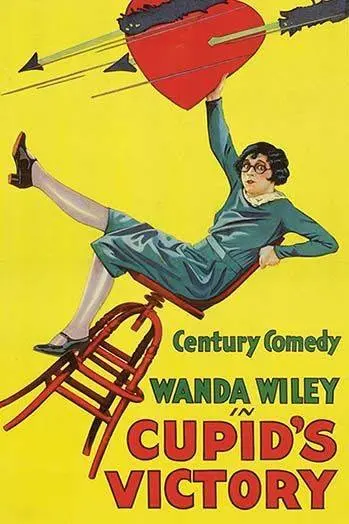
Should you spend twenty minutes of your life on a century-old short about a woman wrecking an office and nearly dying for love? Short answer: yes, but only if you have a high tolerance for the anarchic, nonsensical logic of the silent era. This isn't a polished narrative; it is a rapid-fire delivery system for chaos.
Cupid's Victory is specifically for those who appreciate the 'Century Comedy' style of the 1920s—fast, loud (even when silent), and utterly committed to the bit. It is decidedly NOT for anyone looking for a coherent character arc or a subtle exploration of workplace dynamics. It is a film where a frog is a legitimate plot device for structural demolition.
This film is worth watching because it showcases Wanda Wiley, a performer who deserves more recognition alongside the heavy hitters like Keaton or Lloyd. While she doesn't have Keaton's stoicism or Lloyd's 'everyman' charm, she possesses a unique, frantic energy that feels modern in its sheer absurdity. The film serves as a fascinating time capsule of the post-Valentino 'Sheik' craze and the early 20th-century obsession with 'vamps' and 'follies.'
1) This film works because Wanda Wiley’s physical commitment to the destruction of her environment is genuinely impressive.
2) This film fails because the transition from workplace comedy to romantic rivalry feels like two different movies stitched together with Scotch tape.
3) You should watch it if you want to see the DNA of modern slapstick and the strange gender roles of 1924 cinema.
The film opens with the 'Plain-Jane' trope, a staple of the era seen in films like The Ghost of Rosy Taylor. However, Wanda isn't a victim of her circumstances; she is the architect of her own disaster. When her boss attempts to kiss her, she doesn't just reject him; she obliterates his office. It’s a violent, punchy response that sets the tone for the rest of the short.
The sequence involving the frog is perhaps the most 'Century Comedy' moment in the film. The escalation from a simple capture to the total wreckage of the outer office is handled with mechanical precision. Charles Lamont, who would go on to have a long career directing comedy, understands that the joke isn't the frog—it's the disproportionate response of the humans. Every desk overturned and every paper scattered feels like a deliberate middle finger to the burgeoning corporate culture of the 1920s.
One cannot help but compare this to the more refined social comedies of the time, such as Lady Windermere's Fan. Where that film uses wit and subtext, Cupid's Victory uses a sledgehammer. It’s a brutal, simple, and effective approach to humor that bypasses the brain and goes straight for the gut.
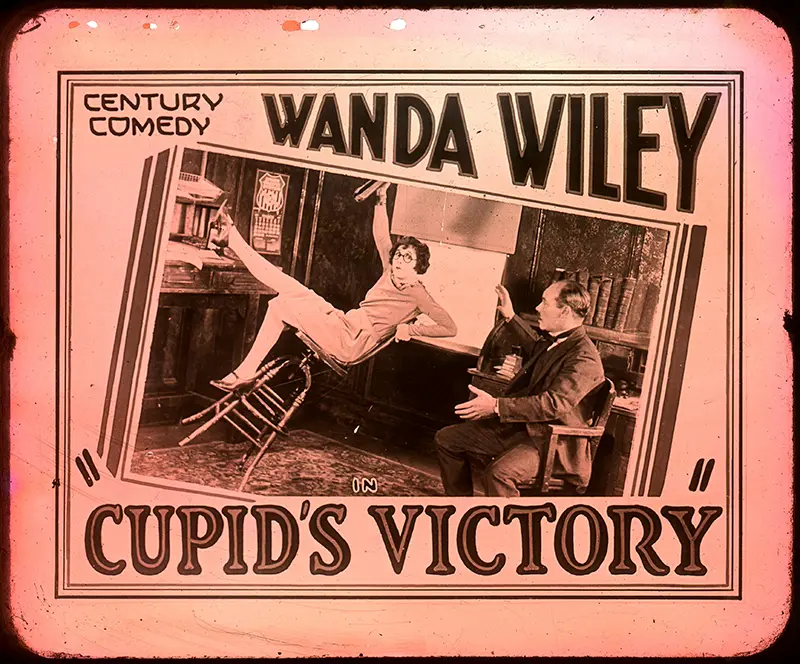
The second act shifts gears entirely. Wanda meets a 'sheik'—a clear nod to the Rudolph Valentino phenomenon that was sweeping the globe. The romance is instantaneous and absurd. When she tries to make him jealous by inviting a 'lot of fellows' over, the film takes a turn into the truly bizarre. The hero retaliates by disguising himself as a 'vamp' to lure her suitors to a window and pitch them out.
This sequence is a masterclass in the era's obsession with gender performance. The hero’s disguise is played for laughs, but it also highlights the 'vamp' archetype seen in more serious fare like Her Silent Sacrifice. The addition of the Century Follies Girls—a troupe of dancers who seem to exist in this film only to provide visual filler—adds a layer of surrealism. Why are they there? It doesn't matter. They represent the spectacle that audiences craved.
The logic is as thin as a 1920s flapper's scarf. The jealousy plot doesn't resolve through communication or realization, but through a series of increasingly dangerous stunts. This is where the film's 'Victory' actually lies—not in the romance, but in the survival of its lead actress.
In a move that would be considered incredibly dark today, Wanda’s despair leads her to jump off a building. The silent era often treated suicide as a punchline, a trope also explored in various ways in Puppy Love. Here, the 'tragedy' is subverted by a flagpole. The physics of the scene are impossible, but the visual of Wanda stuck on a pole that eventually breaks and plants her safely in the ground is a classic piece of silent film geometry.
The climax involving blindfolded driving and a car crash is the film's most technically ambitious moment. The 'Romeo and Juliet stuff' on the balcony after the wreck is a hilarious juxtaposition. They aren't star-crossed lovers; they are two people who have survived a high-speed collision and decided that, in the wreckage, they might as well be together. It’s cynical, fast-paced, and utterly delightful.
Cupid's Victory is a chaotic, loud, and occasionally brilliant piece of silent comedy. It works. But it’s flawed. It lacks the heart of a Chaplin film or the structural integrity of a Keaton short, but it makes up for it with sheer, unadulterated energy. Wanda Wiley is the real draw here. In an era where female comedians were often relegated to 'the girl' or 'the mother,' Wiley is the hurricane at the center of the film.
If you’ve explored the darker side of silent cinema like The Libertine or the epic scale of Sången om den eldröda blomman, this short is the perfect palate cleanser. It’s a reminder that cinema was once allowed to be completely, unashamedly stupid. And in that stupidity, it finds a kind of frantic, beautiful truth about the absurdity of modern life and romance.
IMDb —
1925
Community
Log in to comment.