DbcultAccessing Vault...
6.7/10
Senior Film Conservator
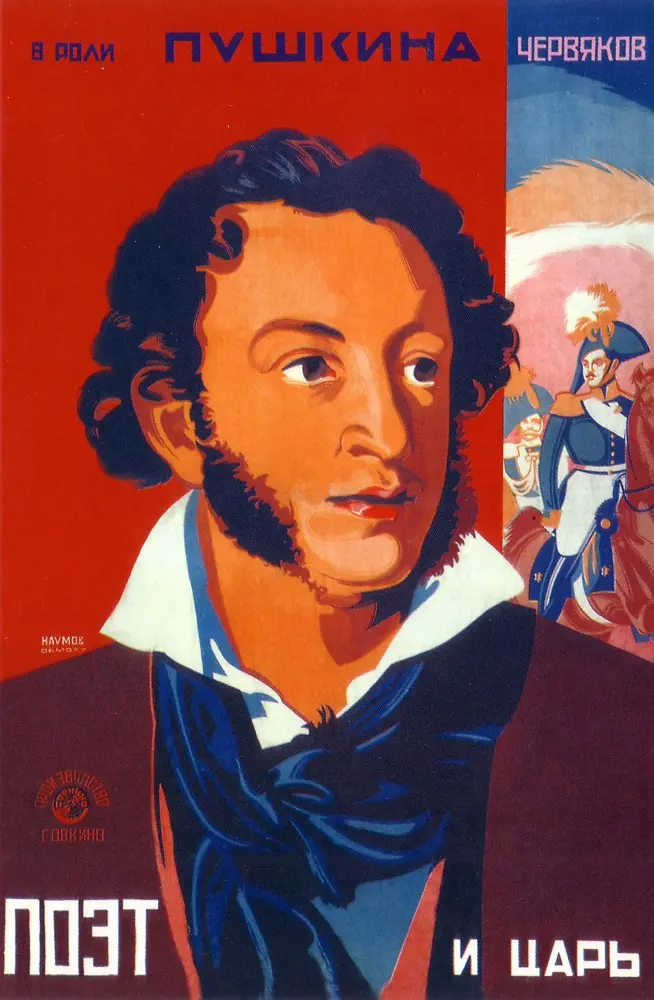
A definitive 6.7/10 rating for a film that redefined the boundaries of cult cinema. Poet i tsar remains a cornerstone of transgressive art.
Is Poet i tsar worth your time in the modern era? Short answer: Yes, but only if you are willing to trade the kinetic energy of modern cinema for the haunting, deliberate compositions of the silent era. This is a film for historians, literature lovers, and those who find beauty in the flickering shadows of early Soviet filmmaking. It is decidedly not for viewers who require rapid-fire pacing or a balanced, historically objective view of the Russian monarchy.
This film works because it captures the crushing claustrophobia of the Russian court through inventive set design and a lead performance that feels startlingly contemporary. This film fails because its political agenda occasionally flattens complex historical figures into one-dimensional archetypes of class struggle. You should watch it if you want to understand how the Soviet Union reclaimed Pushkin as a revolutionary hero through the lens of early cinema.
To watch Poet i tsar is to step into a time capsule that is twice removed from our reality. You are watching a 1927 interpretation of the 1830s. Does it hold up? In terms of visual storytelling, absolutely. The directors, Vladimir Gardin and Yevgeni Chervyakov, understood that the tragedy of Pushkin wasn't just in his death, but in the slow erosion of his spirit by a thousand bureaucratic cuts.
If you enjoy the stylistic experimentation found in other films of the period, such as Number 17, you will appreciate the way Gardin uses light and shadow to isolate Pushkin within the frame. The film isn't just a biography; it is a visual poem about the isolation of the intellectual. It’s worth watching for the duel scene alone, which is handled with a restraint that modern directors would do well to study. It works. But it’s flawed.
The cinematography in Poet i tsar is its strongest asset. There is a specific scene in the Tsar’s palace where the camera lingers on the high, vaulted ceilings and the rigid posture of the guards. This isn't just set dressing; it’s a character in itself. The architecture represents the Tsar’s power—immovable, cold, and indifferent to the human heart. Compare this to the relatively loose, almost chaotic energy of the scenes in Pushkin’s study, and you see a clear visual dichotomy between the state and the individual.
The use of close-ups on Yevgeni Chervyakov, who plays Pushkin, is particularly effective. His face carries a weary intelligence that cuts through the heavy makeup typical of the era. Unlike the broad theatricality found in some silent adventures like The Tavern Knight, Chervyakov’s performance is internal. He doesn't need to flail his arms to show despair; it’s all in the tightening of his jaw as he reads a censored manuscript.
One cannot ignore the political context of 1927. The Soviet film industry was in the process of canonizing Pushkin as a precursor to the revolution. In this film, the Tsar is not just a ruler; he is a predator. Every interaction between Nicholas I and Pushkin is filmed with a sense of impending doom. The Tsar is often positioned in the shadows, watching, while Pushkin is bathed in a light that suggests both purity and vulnerability.
This leads to some of the film's more debatable creative choices. The Tsar’s interest in Pushkin’s wife, Natalya, is framed with a heavy-handedness that borders on melodrama. While historical records suggest the Tsar was indeed fond of her, the film turns this into a central pillar of Pushkin’s martyrdom. It’s effective drama, but it’s also blunt-force trauma filmmaking. It lacks the subtle character shades found in more character-driven silent dramas like The Secret Orchard.
The climax of the film, the duel with Georges d'Anthès, is a sequence that deserves to be studied in film schools. There is no music to guide your emotions—only the rhythmic cutting between the two men as they pace out the distance. The directors use the natural landscape of the snow-covered clearing to create a sense of absolute emptiness. The poet, who lived a life of words, is silenced in a place where words have no power.
This scene stands in stark contrast to the more action-oriented duels of the time, such as those found in The Gay Lord Quex. Here, the violence is not exciting; it is pathetic. It is a waste of a mind. The camera stays wide, making the figures look like small, dark inkblots on a white page. It is a brutal, simple, and perfect visual metaphor for the end of a literary era.
Irina Volodko’s portrayal of Natalya Goncharova is often criticized as being too passive, but this misses the point of the film’s structure. In this narrative, she is a prize being fought over by two different worlds. Volodko brings a fragile grace to the role that makes the tragedy feel personal rather than just political. When she appears in the ballroom scenes, the film shifts from a political thriller to a tragedy of manners.
The pacing, however, is where the film shows its age. There are long stretches of intertitles and courtly processions that feel redundant. For a modern viewer used to the narrative efficiency of something like Bad Company, these sequences might feel like a chore. Yet, they serve to build the atmosphere of a world trapped in its own etiquette.
Pros:
The film features exceptional lead acting from Yevgeni Chervyakov. The production design is lavish for its time, successfully recreating the opulence of the 19th-century court. The thematic exploration of the artist versus the state remains relevant today.
Cons:
The middle act drags significantly during the court ball sequences. The ideological bias is prominent, which may alienate those looking for a more balanced historical account. Some of the secondary characters are poorly developed compared to the central duo.
Poet i tsar is a fascinating, if occasionally frustrating, piece of cinematic history. It succeeds as a visual experience even when it falters as a balanced biography. It is a film that demands your full attention, rewarding you with moments of profound visual beauty and a deep sense of melancholy. While it doesn't have the universal appeal of a film like A Regular Fellow, its importance to the development of the Russian biopic cannot be overstated. It is a grim, beautiful, and essential look at the cost of being a genius in an age of giants.
"A haunting reminder that the pen is only mightier than the sword until the sword decides to strike."
IMDb —
1926
Community
Log in to comment.