DbcultAccessing Vault...
3.8/10
Senior Film Conservator
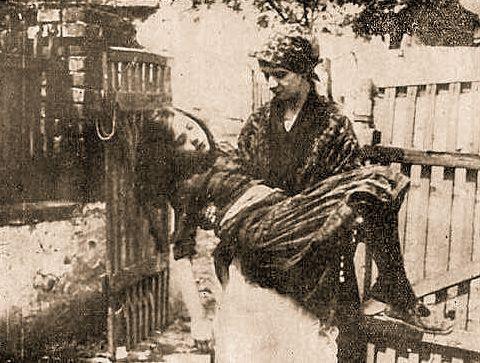
A definitive 3.8/10 rating for a film that redefined the boundaries of cult cinema. A bánat asszonya remains a cornerstone of transgressive art.
Stepping into the spectral embrace of A bánat asszonya, one is immediately transported to a cinematic landscape where emotions are writ large, etched onto the very fabric of the screen through the nuanced artistry of silent performance. This Hungarian gem, a profound exploration of human suffering and resilience, emerges not merely as a film from a bygone era, but as a timeless testament to the power of visual storytelling. It’s a work that demands not just observation, but an empathetic immersion, pulling the viewer into a narrative vortex of sacrifice, betrayal, and an almost sacred endurance.
The film, with its stark chiaroscuro and deliberate pacing, masterfully crafts a world where the internal turmoil of its protagonist, Eszter, played with breathtaking vulnerability by Lujza Tihanyi, becomes an almost palpable presence. Tihanyi’s performance is a masterclass in silent expression, her every gesture, every flicker of her eyes, conveying volumes of unspoken anguish and unwavering strength. She doesn't just portray sorrow; she embodies it, making her character a universal archetype of the suffering woman, a figure whose plight transcends specific historical or cultural confines. This isn't merely acting; it's a communion with the rawest elements of human experience.
The narrative, a deeply affecting chronicle of Eszter’s life, begins with the ominous shadow of poverty looming over her family. This economic desperation forces her into an agonizing choice: a marriage of convenience, or rather, a marriage of necessity, to a gruff, considerably older landowner. This decision, a desperate gambit to secure her family’s survival and spare her younger sister, Mari (Ilona Kiss), from a similar fate, sets the tone for a life defined by self-sacrifice. Eszter's early scenes are imbued with a quiet defiance, a youthful spirit unwillingly bent to the harsh realities of her world. Kiss, as Mari, provides a poignant contrast, embodying the innocence and vulnerability that Eszter strives so desperately to protect.
Her marital existence is, predictably, a desolate landscape. The camera lingers on her isolation, on the vast, empty spaces within her new home, reflecting the emotional chasm between her and her husband. It is in these moments of profound loneliness that the film truly shines, allowing Tihanyi's nuanced performance to speak volumes without a single intertitle. The solace Eszter finds is fleeting, primarily in the quiet, empathetic presence of Anna (Sári Vásárhelyi), a village woman whose compassion offers a fragile anchor in Eszter's turbulent life. Vásárhelyi’s portrayal of Anna is a delicate balance of warmth and quiet strength, her character serving as a vital counterpoint to the prevailing bleakness.
However, the narrative takes a darker turn with the introduction of Zsuzsa (Jolán Szirmai), whose character embodies the destructive force of envy and malice. Szirmai delivers a chilling performance, her subtle gestures and expressions conveying a simmering resentment that eventually erupts into outright sabotage. Zsuzsa's insidious gossip and calculated deceptions slowly poison the community's perception of Eszter, turning her into an outcast. This aspect of the plot resonates with timeless themes of social cruelty and the vulnerability of the innocent against the machinations of the malevolent. It’s a stark reminder that sometimes, the greatest threats come not from grand external forces, but from the petty, corrosive jealousies within a community.
The climax of Eszter's suffering arrives when Mari falls gravely ill. Eszter's desperate attempts to secure aid are systematically undermined by Zsuzsa's lies, culminating in a public humiliation that strips Eszter of her last vestiges of dignity. The film then embarks on a powerful sequence depicting Eszter's wanderings, a visual poem of destitution and quiet despair. These scenes are particularly impactful, showcasing the director's ability to use landscape and solitary figures to evoke profound emotional states. It calls to mind the stark, often melancholic beauty found in other silent era dramas where the protagonist faces insurmountable odds, much like the enduring spirit seen in The Girl from His Town, though with a distinct Hungarian sensibility.
The directorial hand behind A bánat asszonya demonstrates a keen understanding of silent film aesthetics. The cinematography, while perhaps lacking the grand scale of epic productions like The Photo-Drama of Creation, is nonetheless exquisitely crafted to serve the emotional core of the story. Close-ups are used judiciously, emphasizing the raw emotion on Tihanyi's face, drawing the audience into her internal world. The wider shots often frame Eszter as a small, isolated figure against vast, indifferent landscapes, visually reinforcing her solitude and the overwhelming forces arrayed against her. This deliberate use of framing and composition elevates the film beyond mere narrative, transforming it into a meditative experience on human endurance.
The pacing is another noteworthy aspect. It is unhurried, allowing scenes to breathe and emotions to slowly unfurl, a characteristic often found in European silent cinema that prioritizes psychological depth over frenetic action. This measured rhythm allows the audience to fully absorb the weight of Eszter's plight, building a profound sense of empathy. Unlike the rapid-fire action of an American Western like Hell's Hinges, where narrative propulsion is key, A bánat asszonya thrives on sustained emotional resonance.
The use of light and shadow is particularly evocative. Shadows often engulf Eszter, symbolizing her despair and the forces that seek to consume her, while moments of fleeting hope are occasionally bathed in a soft, ethereal glow. This visual poetry is reminiscent of the German Expressionist movement that would later emerge, suggesting a nascent exploration of symbolic lighting to convey psychological states. The film’s aesthetic choices are not merely decorative; they are integral to its thematic resonance, transforming the screen into a canvas for sorrow and resilience.
While Lujza Tihanyi undeniably anchors the film with her tour-de-force performance, the supporting cast contributes significantly to the film's rich emotional texture. Ilona Kiss, as the ailing Mari, evokes a delicate fragility that makes Eszter's sacrifices all the more poignant. Her performance, though perhaps with fewer screen minutes, leaves a lasting impression, embodying the innocence that is so often crushed by life's harsh realities. Her suffering is a direct catalyst for much of Eszter's journey, making her character indispensable.
Sári Vásárhelyi’s Anna is a beacon of human kindness, a quiet strength that offers Eszter momentary respite. In a film steeped in sorrow, Anna's character provides a crucial counterpoint, reminding the audience that even in the darkest of times, compassion can endure. Her subtle reactions and empathetic gestures speak volumes, highlighting the profound impact of genuine human connection in the face of adversity. This kind of nuanced supporting role is often overlooked but is vital for the emotional ecosystem of the film, much like the subtle yet powerful performances in Les heures - Épisode 4: Le soir, la nuit, which similarly explores the quiet depths of human interaction.
Conversely, Jolán Szirmai as Zsuzsa delivers a performance that is both unsettling and utterly convincing. Her portrayal of a woman consumed by jealousy and malice is chilling, making her a formidable antagonist without resorting to overt melodrama. Szirmai's ability to convey malevolence through subtle expressions and body language is a testament to the power of silent acting. She embodies the corrosive effects of envy, a force that often operates in the shadows, destroying lives from within a community. Her character is a stark reminder of the social pressures and personal vendettas that could cripple individuals in that era, a theme also explored with great intensity in films like Should a Woman Tell?, though through a different lens of societal judgment.
At its heart, A bánat asszonya is a profound meditation on the nature of suffering and the resilience of the human spirit. It explores themes of sacrifice, social injustice, the corrosive power of envy, and the quiet dignity found in enduring hardship. Eszter's journey, while deeply tragic, is not one of utter defeat. The film culminates not in a grand, triumphant reversal of fortune, but in a more nuanced acknowledgment of her unwavering spirit. She may carry the mantle of "the woman of sorrow," but her sorrow is imbued with an almost sacred dignity, a testament to her unyielding humanity in the face of relentless adversity.
The film's strength lies in its ability to evoke deep emotional responses without relying on overt sentimentality. The director trusts the audience to interpret the profound emotions conveyed through the actors' expressions and the visual storytelling. This understated approach gives the film a timeless quality, allowing its themes to resonate across generations. It’s a powerful example of how silent cinema, often dismissed as primitive, could achieve an unparalleled depth of emotional expression, rivaling even the most sophisticated spoken dramas. This emotional authenticity can be seen in other character-driven silent works like Suzanne, which similarly delves into the inner world of a woman facing societal pressures.
In a broader cinematic context, A bánat asszonya stands as a vital piece of Hungarian film history, showcasing the country’s early contributions to the art form. Its exploration of universal themes through a distinctly local lens provides a fascinating glimpse into the cultural and social anxieties of its time. It’s a film that deserves to be rediscovered and celebrated, not just as a historical artifact, but as a compelling work of art that continues to speak to the enduring struggles and strengths of the human condition. Its legacy lies not just in its existence, but in its capacity to stir the soul and provoke contemplation long after the final frame.
The eventual uncovering of Zsuzsa's deceit and the recognition of Eszter's plight, though not leading to a conventionally happy ending, offers a sense of justice and affirmation. It highlights the quiet power of truth to eventually emerge, even from under layers of falsehood. This resolution, subtle yet impactful, reaffirms the film's commitment to portraying life's complexities rather than simplistic narratives. It reminds us that sometimes, the greatest triumph is simply to have one's truth acknowledged, to have one's suffering seen and understood. This resonates with the profound, often melancholic, beauty found in narratives like Dockan eller Glödande kärlek, where love and sacrifice are intertwined with an almost existential weight.
The film, in its quiet intensity, makes a compelling case for the preservation and study of early cinema. These works, often fragile and easily lost to time, offer invaluable insights into the evolution of storytelling, acting, and visual language. A bánat asszonya is more than just a film; it is a historical document, a piece of cultural heritage that speaks volumes about the human experience in a turbulent era. Its power lies in its ability to transcend its immediate context and touch upon universal truths that remain relevant even today. It reminds us that sorrow, while a heavy burden, can also forge an unbreakable spirit, a theme echoed in the stoicism of characters in films such as The Heights of Hazard, though through different narrative avenues.
In conclusion, A bánat asszonya is a cinematic experience that lingers long after the credits (or lack thereof) have faded. It is a poignant, beautifully crafted drama that showcases the remarkable talent of its lead actress, Lujza Tihanyi, and the evocative power of silent storytelling. For those willing to immerse themselves in its melancholic beauty, it offers a profound journey into the depths of human emotion, a testament to the enduring strength found in the face of relentless sorrow. It’s a film that doesn't just entertain; it compels, it moves, and it ultimately, quietly, inspires. Its place in the pantheon of early European cinema is well-deserved, a beacon of artistic integrity and emotional honesty that continues to resonate with contemporary audiences who appreciate the nuanced artistry of a bygone era. The film, in its quiet power, stands as a testament to the fact that profound stories, when told with conviction and artistry, require no spoken word to communicate their universal truths. It is a work that deserves a wider audience, a true 'woman of sorrow' whose tale is woven with threads of timeless human experience.
IMDb 6.5
1934
Community
Log in to comment.