There are films you watch and films that watch you—The Melting Pot belongs to the latter caste. Shot in the waning months of 1914, released while Europe’s trenches were still fresh, this monochrome fever dream feels like it was carved rather than filmed—each frame a woodcut of exile.
A violin among the ruins
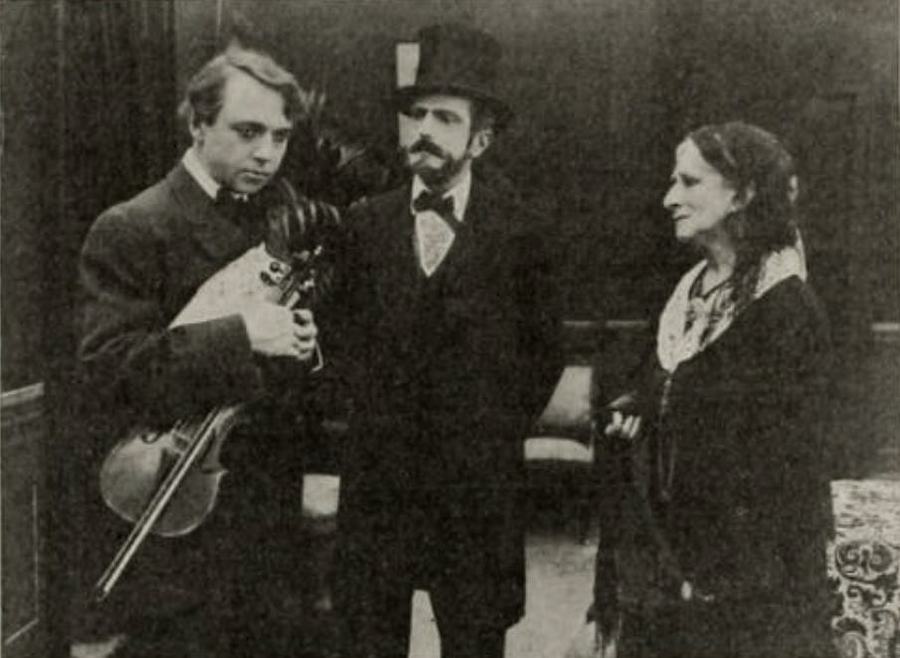
Director Oliver D. Bailey opens with a static long shot that refuses to flinch: a village square in Kishineff after the Easter massacre, corpses arranged like broken instruments. David—played by Reginald Denny with eyes so wide they seem to swallow the lens—picks through the debris until he finds his mother’s shawl impaled on a bayonet. He wraps the shredded fabric around the violin as though music itself could be bandaged. In this single gesture the movie announces its thesis: trauma and art are conjoined twins.
Vera’s defection: from silk to sackcloth
Mary Jane Stainton’s Vera arrives in a parasoled carriage, the camera tilted up to make her entrance mythic. Yet Bailey repeatedly undercuts the aristocratic glow by letting soot accumulate on her hem—visual foreshadowing of the disownment to come. When she ultimately swaps places with the unnamed Jewish woman (Valentine Grant in a heart-searing cameo), the cut is abrupt: Vera’s ermine collar dissolves into a burlap shawl, the edit itself enacting the death of lineage. It’s proto-Soviet montage blooming on American soil.
New York as centrifuge
Production designer Henry Bergman (later Chaplin’s indispensable foil) built the Lower East Side on a Fort Lee backlot using actual pushcarts borrowed from Orchard Street merchants. The resulting labyrinth is both documentary and expressionist: laundry strung like prayer flags, neon Yiddish signage flickering like synagogues on fire. When David first sets foot on this soil, Bailey superimposes a ghostly image of the Russian steppe over the frame—two continents occupying the same celluloid, the visual equivalent of cultural whiplash.
Quincy Davenport: the benevolent vampire
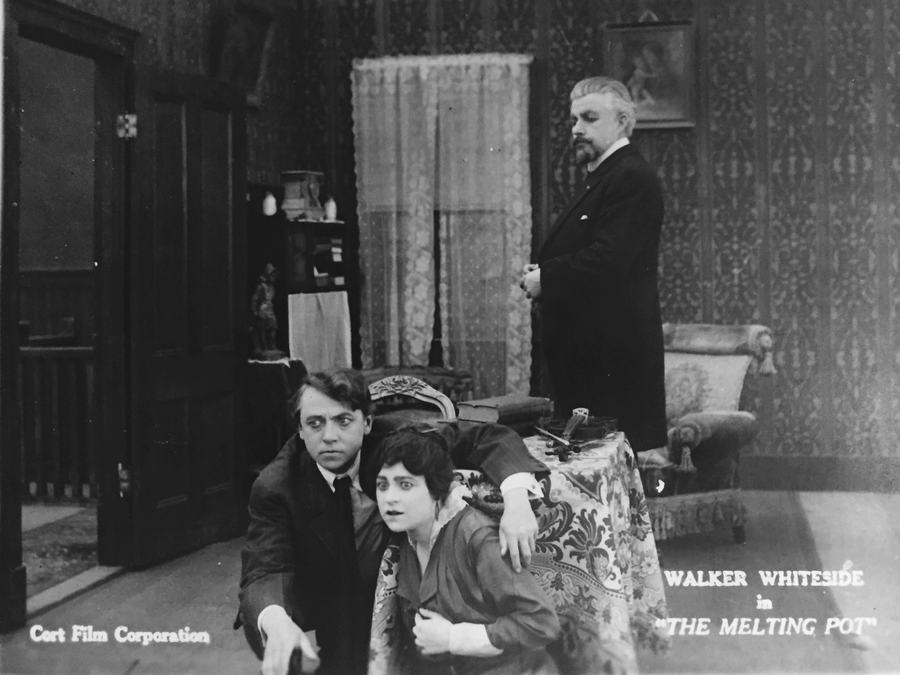
Walker Whiteside plays the Boston philanthropist as a man forever clutching a silver cigarette case that never opens—an empty promise in metallic form. His obsession with "discovering" David reeks of proto-colonial fetish, a theme Bailey hammers home by staging the audition inside a faux-oriental parlor replete with paper dragons. David’s refusal is the film’s moral spine: genius will not be tokenized, even by those wielding checkbooks thick as Talmuds.
The symphony as fourth character
Composer-conductor Henry Leone (essentially playing himself) reportedly spent six weeks rehearsing a 60-piece pickup orchestra culled from vaudeville pits and riverboat bands. The resulting score—surviving only in a handwritten piano reduction—threads Semitic modes through ragtime syncopation, anticipating Gershwin by a decade. Bailey films the crescendo with a swirling dolly that ascends the balcony like the Holy Spirit, finally crashing onto the conductor’s bald pate gleaming with sweat. The camera becomes a note of music.
Recognition scene: blood becomes melody
The confrontation between David and Baron Revandel is staged as a chiaroscuro duel: two faces half-lit by a single kerosene lamp, shadows writhing like dybbuks on the wall. David’s violin string snaps at the precise moment he could plunge the bow into the Baron’s heart—a cosmic deus ex machina delivered by gut and horsehair. In that instant the film argues that art is not merely redemptive; it is the only thing preventing civilization from cannibalizing itself.
Gendered exile, reconfigured
Unlike Sapho where the heroine’s sexuality becomes her passport, Vera wields empathy as contraband. Her agency is never sexualized; even when Davenport eyes her like a collector, the camera stays on her clenched fists, not her décolletage. In 1915 this is revolutionary: a woman whose moral awakening—not romantic submission—drives the plot engine.
Race, class, and the limits of alloy
Modern viewers will flinch at the film’s finale, which proposes that intermarriage and a major chord can cauterize centuries of antisemitism. Yet Bailey complicates the utopia: during the triumphal ovation, a quick insert shows an Irish tenement boy pickpocketing a top-hatted banker—suggesting that while races may fuse, class predation survives. The melting pot, the film admits, still leaves dross.
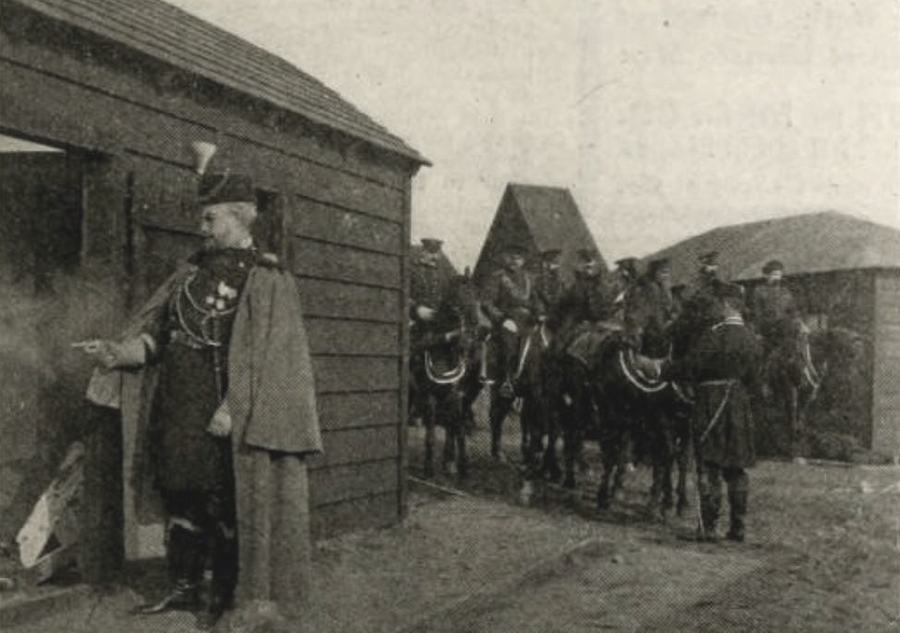
Visual grammar cribbed from chaos
Cinematographer Doc Crane (who shot Griffith’s The Birth of a Baby the same year) employs handheld pans amid crowd scenes—startlingly modern. Grainy footage of actual Ellis Island immigrants is spliced into fictional scenes, producing a proto-cinéma-vérité frisson. The celluloid itself seems to breathe, perspire, bleed.
Performances: between mime and opera
Denny, best remembered for light comedies a decade later, here channels a silent scream for 90 minutes; his fingers clutch air as though sound were tangible. Stainton counters with a minimalist restraint—every glance calibrated like a metronome—creating a tense duet of styles. When they finally kiss, Bailey withholds the customary iris-in, letting the moment hang raw and documentary.
Reception: banned in Petrograd, celebrated in Peoria
Upon release the film was condemned by both the Russian Holy Synod—who labeled it "sacrilegious propaganda"—and certain American Jewish papers that feared it would inflame nativist backlash. Meanwhile the NAACP’s newsletter praised its "crucible ideal," comparing it favorably to The Eternal City. Box-office numbers were modest but steady, buoyed by word-of-mouth in immigrant neighborhoods where projectionists reportedly stopped the reel to allow audiences to cheer specific scenes.
Legacy: the embers still glow
Fragments surfaced in 1978 in a Camden, New Jersey, synagogue attic—two reels, water-stuck, smelling of mildew. UCLA restorers baked the nitrate to separate frames, discovering previously lost shots of the symphony’s finale in which the orchestra dissolves into a superimposed American flag. The image—flag made of musicians—has since become a meme in academic presentations on nationalism and cinema.
Comparative palette
Where Europäisches Sklavenleben wallows in Gothic despair and The Woman Who Dared individualizes revolt, The Melting Pot opts for orchestral collectivism. Its closest cousin is Zangwill’s own stage play, yet Bailey’s film is darker—America here is not terminus but interrogation lamp.
Sound of silence, echo of now
Watch it today and you’ll hear phantom klezmer in the sprocket holes, taste borscht in the scratches. Charlottesville, Pittsburgh, Poway—the newsreels form a bloody counterpoint to Bailey’s vision, reminding that the pot still boils over. Yet the final silhouette of David and Vera merging into New York’s indigo dusk offers a stubborn dare: to keep adding ingredients until the stew tastes less of iron and more of honey.
Final chord
Great art does not resolve history; it metabolizes it into tremor and song. The Melting Pot—scarred, shrill, occasionally naïve—stands as one of early cinema’s most audacious attempts to turn genocide into counterpoint, exile into overture. Ninety-seven minutes of nitrate survived a century of pogroms, pogrom-deniers, and picture palaces reduced to parking lots. That alone is a minor miracle. That the film can still make your pulse syncopate with hope—that is major.
— Reviewed by J. S. Kraków, film archivist & contrarian, originally published on Celluloid Psalm.