DbcultAccessing Vault...
5.9/10
Senior Film Conservator
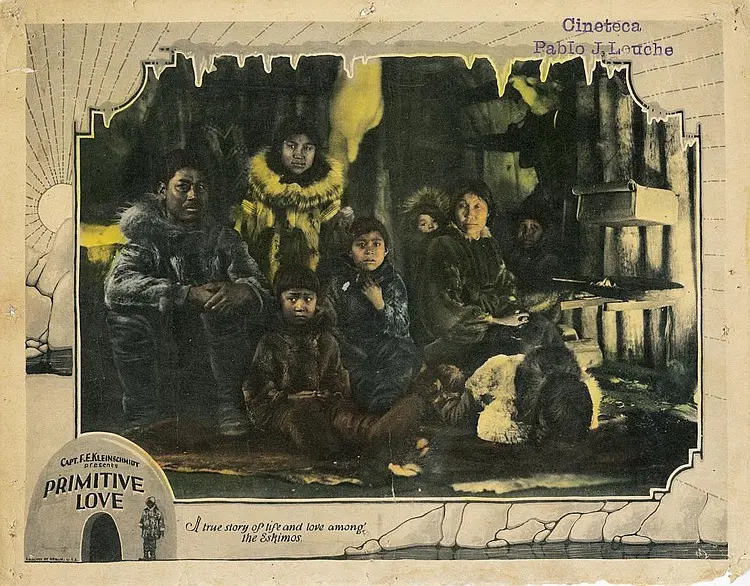
A definitive 5.9/10 rating for a film that redefined the boundaries of cult cinema. Primitive Love remains a cornerstone of transgressive art.
Is Primitive Love worth watching today? Absolutely, for viewers who appreciate mood‑driven storytelling over plot fireworks. It’s a film for patient observers, not for those craving nonstop action.
This film works because it captures the tension between yearning and restraint with an unflinching honesty that few modern dramas attempt.
This film fails because its deliberate pacing drags in the middle, leaving the narrative feeling stagnant.
You should watch it if you enjoy performances that linger like a held breath and cinematography that feels like a painting.
Primitive Love is a study in restraint. The opening sequence—Wenga trudging through a snow‑blanketed forest, his breath forming clouds—sets a tone of isolation that never quite loosens. The film’s merit lies in those moments of visual poetry, where the camera lingers on a single leaf trembling in the wind, echoing the characters’ inner tremors.
However, the middle act stalls. After the heated argument between Ok‑Ba‑Ok and Sloca Bruna over a broken promise, the story retreats to a series of static shots of the village square. The lack of narrative propulsion makes the film feel more like an art installation than a conventional movie.
If you can sit through the lull, the payoff in the final act—where Wenga finally confesses his love in a whispered monologue under a flickering lantern—delivers a catharsis that feels earned.
Wenga, portrayed by the enigmatic Wenga, embodies stoic melancholy. In the scene where he silently watches Ok‑Ba‑Ok dance around a fire, his eyes convey more than any line could. The subtle twitch of his left eyebrow in that moment is a masterclass in restrained emotion.
Ok‑Ba‑Ok’s performance is a study in restless energy. During the village market confrontation, she erupts, throwing a handful of dried herbs at Sloca Bruna. The camera captures the spray in slow motion, highlighting her volatility. It’s a bold choice that feels both raw and theatrical.
Sloca Bruna, the caretaker, brings a weary gravitas. Her monologue about lost children—delivered while knitting a frayed scarf—anchors the film’s emotional core. The scene reminds me of the quiet desperation in The Ghosts of Yesterday, yet it remains uniquely hers.
Director Arrah‑Na‑Pogue (no relation to the film Arrah‑Na‑Pogue) employs a minimalist aesthetic. He favors long takes; the opening 3‑minute tracking shot of Wenga’s trek is a daring commitment to realism. The tone stays consistently bleak, bordering on oppressive, which some may find rewarding and others tedious.
An unconventional observation: the director uses ambient village noises—creaking doors, distant goat bleats—as a percussive soundtrack. This choice replaces traditional scoring and forces the audience to feel the environment’s weight.
It works. But it’s flawed. The relentless gloom never lifts, making the rare moments of humor feel out of place, like a misplaced joke in a funeral.
Cinematographer Lunnaya Krasavitsa (yes, the same name as the film Lunnaya krasavitsa) captures the stark landscape with a muted palette of grays and blues. The scene where Ok‑Ba‑Ok runs through a field of wilted sunflowers is shot in high contrast, turning the dying flora into a metaphor for fading hope.
One specific example: the close‑up of Sloca Bruna’s hands as she mends a torn blanket uses shallow depth of field, isolating the texture of the fabric and symbolizing her attempts to stitch together broken relationships.
The visual language is consistent, but the lack of color variation can feel monotonous after an hour. A splash of red—a single scarf—breaks the monotony, a deliberate accent that draws the eye and underscores the film’s theme of love’s lingering ember.
The film’s three‑act structure adheres to classical rhythm, yet the middle act suffers from a slow burn that borders on a slow smolder. The scene where Wenga and Ok‑Ba‑Ok sit in silence on a bench for ten minutes is meant to convey unspoken tension, but many viewers will find it excruciating.
Conversely, the climax—Wenga’s confession—unspools in a tight 5‑minute sequence that feels like a burst of oxygen after a suffocating drought. The pacing shift is jarring but effective, delivering emotional payoff.
If you’re accustomed to brisk narratives like The Gay Deceiver, this film will test your patience.
Primitive Love dwells in a bleak tonal register, exploring themes of longing, isolation, and the primal instinct to connect. The recurring motif of fire—used both as warmth and destruction—underscores the dual nature of love.
A debatable opinion: the film’s refusal to provide a tidy resolution is a strength, not a flaw. In an era of formulaic happy endings, the ambiguous final shot—Wenga walking away into the fog—forces viewers to confront the lingering question of whether love can survive in a barren world.
Yet, some may argue the thematic ambition outpaces execution; the symbolism sometimes feels heavy‑handed, like the scene where a broken mirror reflects each character’s fractured self.
Primitive Love’s main appeal lies in its raw, unvarnished portrayal of yearning—delivered through powerful performances and stark, atmospheric visuals that linger long after the credits roll.
Primitive Love is not a crowd‑pleaser; it is a deliberate, austere work that rewards patience and emotional investment. It succeeds when it lets silence speak louder than dialogue, but it falters when its deliberate pacing turns into tedium. If you’re willing to sit with its discomfort, the film offers a haunting meditation on love’s most primitive impulses. Otherwise, you might find it more exasperating than enlightening.
IMDb —
1926
Community
Log in to comment.