DbcultAccessing Vault...
Cult Review
Senior Film Conservator
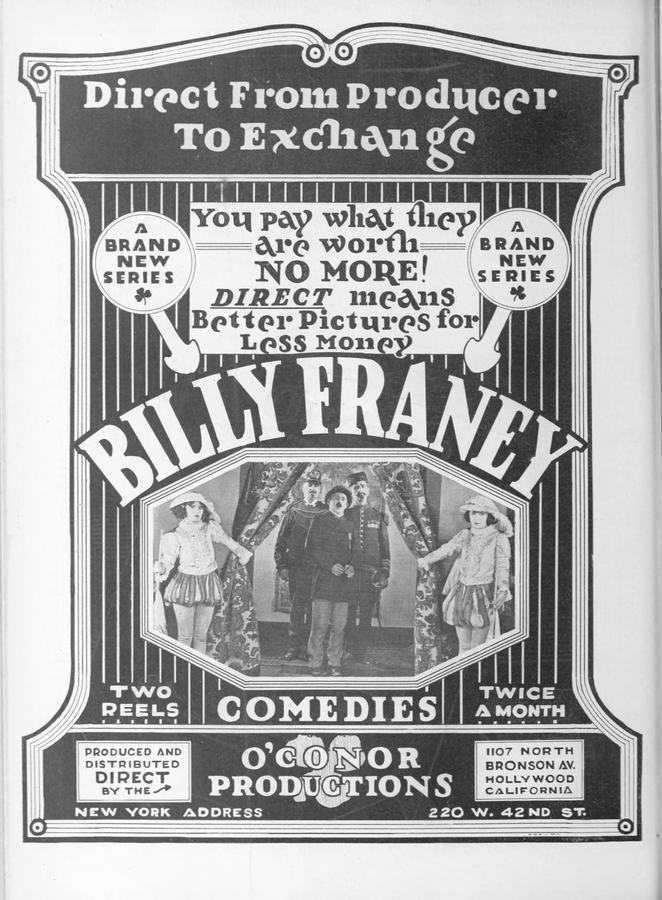
The year 1922 serves as a fascinating nexus in the chronology of the moving image. It was a period where the primitive foundations of the nickelodeon were being rapidly overshadowed by the burgeoning sophistication of the studio system. Amidst the grand epics and the heavy-handed moralities of the time, the short-form comedy remained a vital, if often overlooked, laboratory for purely visual storytelling. This Way Out, featuring the inimitable Billy Franey and the reliable Bob O'Connor, stands as a testament to this era's frantic creativity. While it may lack the haunting psychological depth of Die Stimme des Toten or the floral sentimentality of Sweet Alyssum, it possesses a raw, visceral energy that is entirely its own.
To understand This Way Out, one must first reconcile with the screen persona of Billy Franey. Unlike the stoic grace of Keaton or the aspirational pluck of Lloyd, Franey operated within a register of high-strung eccentricity. His movements are jagged, almost insect-like in their sudden shifts of direction. In this short, his physicality is the primary engine of the narrative. Every gesture is amplified, every double-take a minor seismic event. It is a style of performance that bridges the gap between the broad strokes of Vaudeville and the nuanced demands of the camera lens.
The film’s title itself serves as a dual-edged sword—a literal directive and a metaphorical commentary on the character's desperate search for an exit from his own escalating misfortunes. This thematic preoccupation with 'escape' was not unique to comedy; we see a more somber exploration of being trapped by circumstance in The Guilt of Silence. However, where the latter finds tragedy in the unspoken, Franey finds a cacophony of laughs in the over-expressed.
One of the most striking aspects of This Way Out is its utilization of space. The sets, though perhaps modest by today’s standards, are treated as active participants in the humor. Doors, windows, and furniture are not merely background elements; they are hurdles in a domestic steeplechase. This mechanical approach to comedy—where the environment itself seems to conspire against the protagonist—is a hallmark of early 20s shorts. It contrasts sharply with the social realism found in Just Around the Corner, which sought to ground its characters in a recognizable, albeit dramatized, reality.
In This Way Out, reality is a malleable concept. The physics of the world are dictated by the needs of the gag. Bob O'Connor’s presence is vital here; he acts as the 'straight man' whose relative normalcy highlights the absurdity of Franey’s predicament. This dynamic is a precursor to the great comedy duos that would dominate the talkie era, showing an early mastery of timing and reaction that feels surprisingly modern.
When examining the broader cinematic output of the period, the levity of this short becomes even more pronounced. Consider the judicial gravity of Prøvens Dag or the sweeping historical narratives often found in international productions like Mexico. In comparison, This Way Out feels like a breath of fresh, albeit chaotic, air. It does not seek to educate or moralize; it seeks to elicit a visceral response through the sheer audacity of its movement.
Interestingly, the film eschews the romantic entanglements that often bogged down contemporary comedies like Bringing Up Betty or the identity-swap tropes of Lend Me Your Name. Instead, it remains focused on the singular experience of the individual against the machine of the world. Even the domestic strife found in Let's Get a Divorce is replaced here by a more abstract, almost existential struggle with the physical realm.
The cinematography of This Way Out is functional yet effective. The camera placement is often static, allowing the performers to inhabit the frame fully—a technique that emphasizes the proscenium-like nature of early film comedy. However, there is a certain brilliance in the editing, a rhythmic cutting that mirrors the heartbeat of the chase. This editing style was a far cry from the more deliberate, almost theatrical pacing of Souls in Bondage or the whimsical, star-studded vignettes of the All-Star Production of Patriotic Episodes for the Second Liberty Loan.
What Franey and his director understood was that in silence, the eyes and the limbs must do the work of the voice. There is a sequence in the film where Franey’s expression shifts from bewildered terror to a sort of manic enlightenment that rivals the character work in Pep or the rugged stoicism of The Sheriff's Son. It is a masterclass in facial contortion, using the high-contrast lighting of the era to turn the human face into a map of comedic desperation.
Watching This Way Out today requires a certain degree of historical imagination. One must strip away the expectations of modern high-definition clarity and embrace the grain, the flicker, and the occasionally missing frames. These elements are not flaws; they are the patina of time. The film represents a world that was just beginning to realize the power of the image to transcend language and borders. While films like Always Audacious or Stardust may have had higher budgets or more prestigious literary origins, the humble slapstick short was the true engine of the industry's growth.
In the grand scheme of 1922, This Way Out is a vital artifact. It reminds us that at the heart of the cinematic experience is the joy of movement. It captures a moment in time when a man, a camera, and a well-placed door were all that was needed to create magic. Billy Franey may not be a household name in the 21st century, but his contributions to the grammar of comedy are woven into the very fabric of the medium. To watch him navigate the labyrinth of this short is to witness the birth of a visual language that still speaks to us today, across the vast, silent chasm of a century.
The enduring appeal of the film lies in its universality. Frustration is a global language. The feeling of being caught in a loop of one's own making, of seeing the 'exit' sign but being unable to reach it, is as relevant now as it was then. In its own frantic, absurd way, This Way Out is a mirror held up to the human condition—a mirror that, in true slapstick fashion, is likely to fall and shatter, leaving us all laughing at the pieces.
IMDb —
1929
Community
Log in to comment.