DbcultAccessing Vault...
6/10
Senior Film Conservator
A definitive 6/10 rating for a film that redefined the boundaries of cult cinema. Promithefs desmotis remains a cornerstone of transgressive art.
Is Promithefs desmotis worth watching today? Short answer: yes, but only if you approach it as a historical artifact rather than a piece of cinematic entertainment. It is a film for the patient, the scholarly, and the lovers of theatrical history, while it will likely alienate anyone seeking a traditional narrative or modern production values.
This film exists in a strange liminal space. It is not quite a movie and not quite a play; it is a ghost of a performance that changed the course of Greek cultural identity. Watching it feels like peering through a keyhole into a world that was trying to rebuild itself from the ruins of antiquity. It is raw. It is ancient. It is vital.
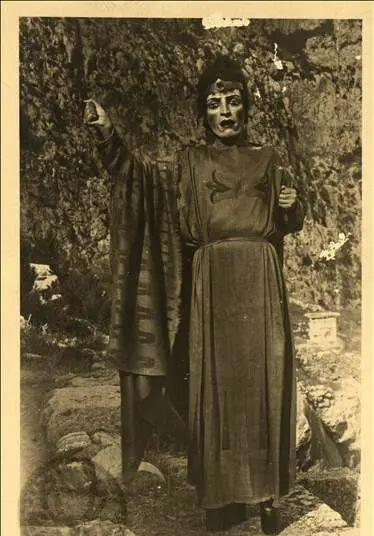
Promithefs desmotis is essential viewing for those interested in the roots of modern performance art. It is not 'good' in the way we judge a film like The Narrow Street, which relies on narrative cohesion and character arcs. Instead, it is a visual record of a monumental event. If you want to understand how ancient drama was re-interpreted for the modern stage, you cannot skip this. If you want a fun Friday night, look elsewhere.
1) This film works because it captures the visceral connection between the ancient landscape and the human body in a way that modern CGI-heavy epics never could.
2) This film fails because its silence strips away the most important element of Aeschylus: the thunderous power of the spoken Greek word.
3) You should watch it if you want to see the exact moment that the 'Delphic Idea' was born on celluloid.
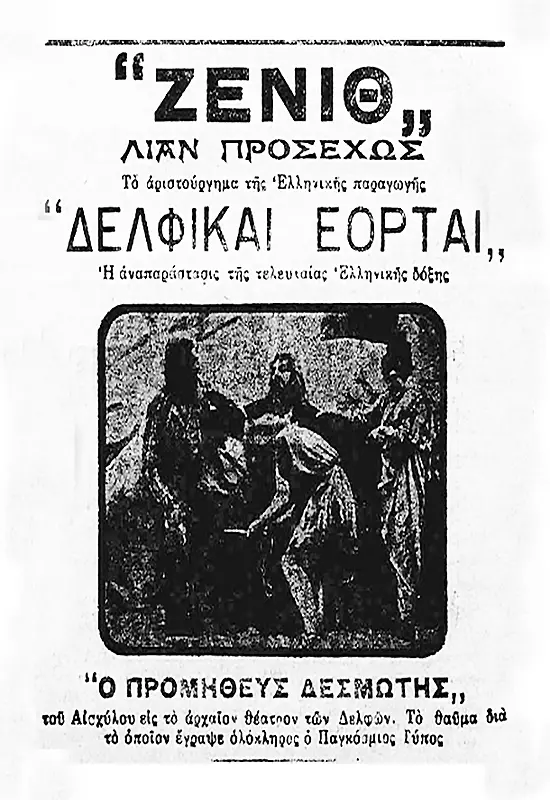
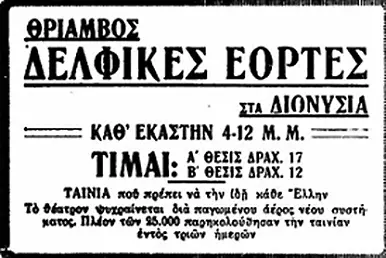
To understand Promithefs desmotis, one must understand Angelos Sikelianos. He wasn't just a writer; he was a visionary who believed that Delphi could once again become the center of the world. Along with his wife, Eva Palmer, he spent a fortune to bring this performance to life. The film captures the 1927 festival, which was a massive gamble. Unlike the commercial polish of The Love Swindle, this was a project of pure, unadulterated passion.
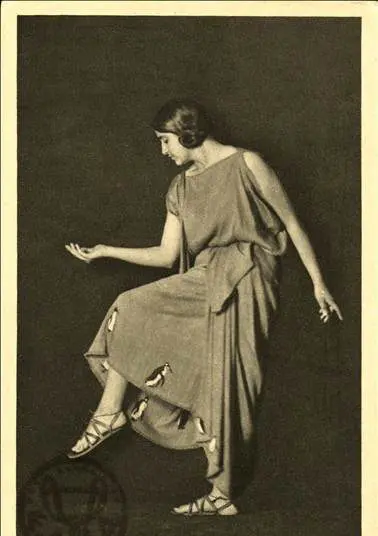
The film documents the costumes, which were hand-woven by Eva Palmer herself on a traditional loom. This detail is crucial. When you see the chorus of Oceanids moving across the screen, you aren't seeing department-store fabric. You are seeing a deliberate attempt to replicate the textures of the 5th century BC. The way the light hits the heavy wool creates a sculptural quality that is lost in modern digital photography. It is a heavy aesthetic. It is a deliberate choice.
The cinematography in Promithefs desmotis is primitive, yet accidentally profound. The camera is often static, forced to sit in the heat of the Delphic sun and watch the actors. This creates a sense of 'stasis' that perfectly mirrors the plight of Prometheus himself, who is chained to a rock for eternity. While a film like Skid Proof might use movement to create excitement, this documentary uses stillness to create a sense of cosmic weight.
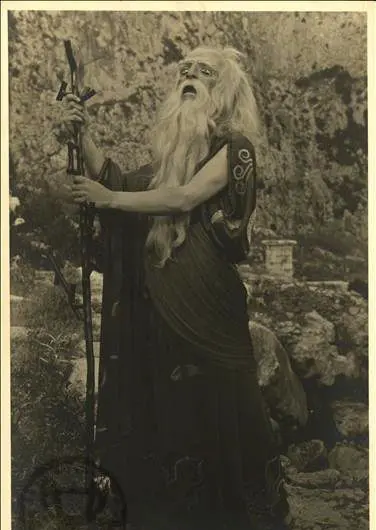
Thanos Bourlos, playing Prometheus, is a revelation of physical acting. Without the benefit of voice, he must convey the agony of a god through the tilt of his head and the tension in his shoulders. There is a specific shot where he stands against the backdrop of the Phaedriades rocks; the man and the mountain become one. It is a moment of architectural beauty that defies the technical limitations of the 1927 film stock. It makes modern acting feel small by comparison.
There is a glaring irony at the heart of this film: Aeschylus is a poet of language, yet this film is silent. This is where many viewers will struggle. In other silent films of the era, such as The Wolf Man, the lack of sound is compensated for by exaggerated pantomime. In Promithefs desmotis, the actors are trying to be statues. The result is a film that feels less like a movie and more like a moving frieze on an ancient temple.
However, I would argue that the silence is a blessing. It forces the viewer to focus on the geometry of the performance. Watch the way the chorus, led by the legendary Dora Stratou, moves in a circular pattern. Their movements are not random; they are mathematical. They represent the order of the cosmos being disrupted by Prometheus' theft of fire. The lack of sound allows the viewer to project their own internal rhythm onto the screen, creating a haunting, meditative experience that sound might have ruined.
When placed alongside other 1927 releases like The Dawn of Love, Promithefs desmotis looks like it belongs to a different century. While most cinema was moving toward domestic melodrama and urban sophistication, Sikelianos was moving backward toward the primal. It shares more in common with the ethnographic curiosity of Some Cave Man than with the polished scandals of Another Scandal.
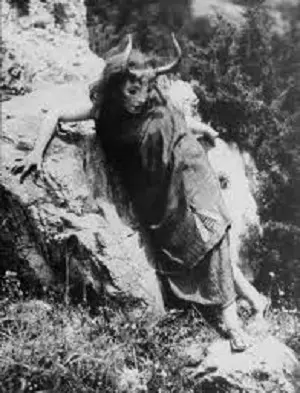
The film is also a rare record of the Delphic Festivals themselves. These weren't just plays; they were athletic competitions, craft exhibitions, and philosophical gatherings. The film briefly captures the atmosphere of the crowds—a mix of Greek peasants, European intellectuals, and curious tourists. This social collage is as interesting as the play itself. It shows a Greece that was trying to find its footing after decades of war and displacement.
Pros:
The film is an irreplaceable historical document. It features the only footage of the first Delphic Festival. The use of the actual ancient theatre of Delphi provides a scale and authenticity that no studio set could replicate. The physical performances, particularly by Thanos Bourlos and Dora Stratou, are masterclasses in early 20th-century stylized movement.
Cons:
The technical quality is poor, even by 1920s standards. The lack of sound makes the complex dialogue of Aeschylus impossible to follow without prior knowledge of the play. It is very short, leaving the viewer wanting a more comprehensive look at the festival's other events.
Promithefs desmotis is a difficult, dusty, and demanding piece of cinema. It is not a masterpiece of storytelling, but it is a masterpiece of preservation. It captures a moment when art was used as a tool for national and global healing. It is a film that reminds us that the past is never truly dead; it is just waiting for someone to point a camera at it.
If you are a fan of silent cinema like Mots croisés or the experimental nature of The Enchanted City, you will find something to love here. It is a bridge between the ancient world and the modern one. It is flawed. It is beautiful. It is essential. Don't watch it for the plot; watch it for the fire that Sikelianos tried to steal from the gods and put on the screen.
IMDb —
1920
Community
Log in to comment.