DbcultAccessing Vault...
5.8/10
Senior Film Conservator
A definitive 5.8/10 rating for a film that redefined the boundaries of cult cinema. Protiv voli ottsov remains a cornerstone of transgressive art.
Is Protiv voli ottsov a film worth your time in the modern era? Short answer: yes, but primarily as a fascinating specimen of political narrative surgery rather than a cohesive emotional journey. This film is essential for those who study the intersection of early Soviet cinema and Jewish cultural history, but it is certainly not for the casual viewer looking for a fluid, uncompromised story.
The film exists today as a ghost of its original intent. To understand it, one must look past the forced optimism of its final reels and see the scars left by the censors. It is a work that captures the lightning of the 1905 revolution while simultaneously being grounded by the heavy boots of 1920s state ideology.
1) This film works because it captures the raw, kinetic energy of the 1905 mass movements with a level of grit that feels uncomfortably real, particularly during the pogrom sequences.
2) This film fails because the state-mandated happy ending creates a tonal whiplash that undermines the tragic gravity of Sholom Aleichem’s original source material.
3) You should watch it if you are a cinephile interested in the history of censorship or the evolution of Jewish identity in early 20th-century Russian art.
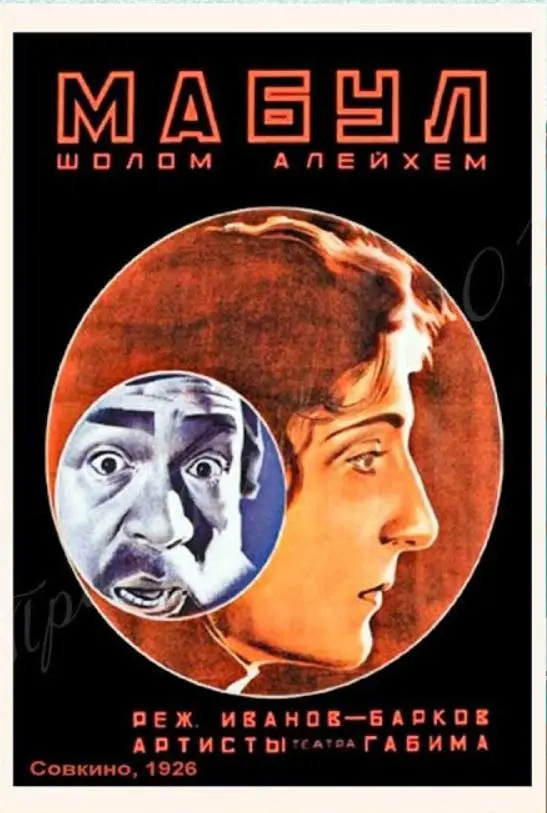
The history of Protiv voli ottsov is perhaps more dramatic than the film itself. When it was first completed under the title Mabul, the Soviet government saw something they didn't like—perhaps too much focus on the specific suffering of the Jewish community and not enough on the universal triumph of the proletariat. The resulting five-part version we have today is a fascinating exercise in 'positive' revisionism. The characters were renamed, the stakes were lowered, and a sense of triumph was injected where Aleichem had originally written despair.
Despite this, the direction remains remarkably potent. The way the camera lingers on the faces of the 'fathers'—men like Arye Varshaver’s character—conveys a sense of crumbling domesticity that mirrors the crumbling of the Tsarist empire. Unlike the lighter fare of the era, such as Ladies Prefer Brunettes, there is no escapism here. Every frame is heavy with the weight of history.
David Itkin delivers a performance that manages to bridge the gap between the theatrical traditions of the Yiddish theater and the emerging realism of Soviet montage. His movements are deliberate, often pained, reflecting a man caught between the 'will of the fathers' and the unstoppable tide of the future. In the scenes where he joins the revolutionary struggle, there is a visible shedding of his old identity that feels more authentic than the script likely intended.
Compare this to the more straightforward action seen in Western films like The Stampede. In those films, movement is about physical progression; in Protiv voli ottsov, movement is an ideological statement. When the characters run, they aren't just running away from danger—they are running toward a new world order. It is a desperate, frantic choreography.
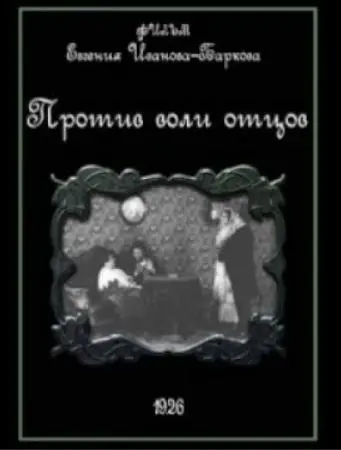
The final reel of the film is where the technical prowess of the 1920s Soviet school truly shines. The depiction of the Jewish pogrom in St. Petersburg is a nightmare captured on celluloid. The lighting is harsh, the editing is jagged, and the sense of claustrophobia is overwhelming. It lacks the polish of a film like Call of the Wild, but it replaces that polish with a terrifying, documentary-like immediacy.
The mass scenes are particularly impressive. While Hollywood was mastering the art of the close-up in films like Number 13, Soviet directors were mastering the art of the 'mass protagonist.' The individual is often lost in the crowd, a deliberate choice that reinforces the collectivist message of the era. However, the specific Jewish context adds a layer of vulnerability that makes these scenes stand out from the more generalized revolutionary films of the time.
The original version, titled Mabul, was banned because it focused too heavily on the tragic and religious aspects of the Jewish experience during the 1905 revolution. Soviet censors demanded a version that emphasized class struggle over ethnic identity and insisted on a 'happy ending' that signaled the inevitable victory of the Bolsheviks. This led to the surviving five-part version, which significantly altered the character names and narrative tone to fit state propaganda requirements.
If you are looking for a cohesive story, probably not. The censorship has left the film feeling like a jigsaw puzzle with several key pieces missing. The transition to the happy ending is particularly jarring. One moment we are witnessing the brutal destruction of a community, and the next, we are expected to cheer for a sanitized revolutionary victory. It is a lie. A beautiful, cinematic lie, but a lie nonetheless.
However, if you view it as a historical document, it is indispensable. It shows the exact moment when the Soviet state began to colonize the Jewish narrative, forcing it into a specific Marxist-Leninist mold. For those who have seen more conventional silent films like Too Much Dutch or The Yankee Girl, the sheer political intensity of this film will be a shock to the system.
Pros:
- Exceptional use of mass extras to create a sense of historical scale.
- A rare look at Jewish revolutionary participation before it was fully subsumed by state myth-making.
- Strong, emotive performances that transcend the silent medium.
Cons:
- Choppy pacing due to the surviving version being a censored edit.
- The ideological messaging is often heavy-handed and lacks nuance.
- The 'happy ending' feels unearned and narratively dishonest.
It is impossible to discuss this film without mentioning Sholom Aleichem. His story 'Blood Stream' is a masterpiece of tension and cultural observation. The film attempts to translate this into a visual language, but the state's intervention means that much of Aleichem’s wit and irony is lost. What remains is the 'blood'—the violence and the struggle—but the 'stream' has been redirected.
In many ways, the film is a tragedy about a tragedy. It is a tragedy of the 1905 revolution, and it is the tragedy of a work of art that was not allowed to exist in its true form. Yet, even in this fractured state, there are moments of pure cinematic power. The way the camera captures the fear in a child's eyes during the riot scenes is something that no censor could fully erase.
"Protiv voli ottsov is a cinematic Frankenstein—stitched together from the parts of a banned masterpiece and the requirements of a totalitarian state."
Protiv voli ottsov is a difficult, often frustrating watch, but it is an essential one. It serves as a stark reminder of the power of the image and the desperation of those who seek to control it. While it lacks the fluid charm of The Tired Business Man or the simple thrills of The Galloping Kid, it offers something far more substantial: a window into a world that was being systematically erased even as it was being filmed. It is flawed. It is compromised. But it is alive with the ghost of a revolution that never quite arrived. If you can handle the tonal dissonance, it is a journey worth taking.
IMDb —
1932
Community
Log in to comment.