DbcultAccessing Vault...
Cult Review
Senior Film Conservator
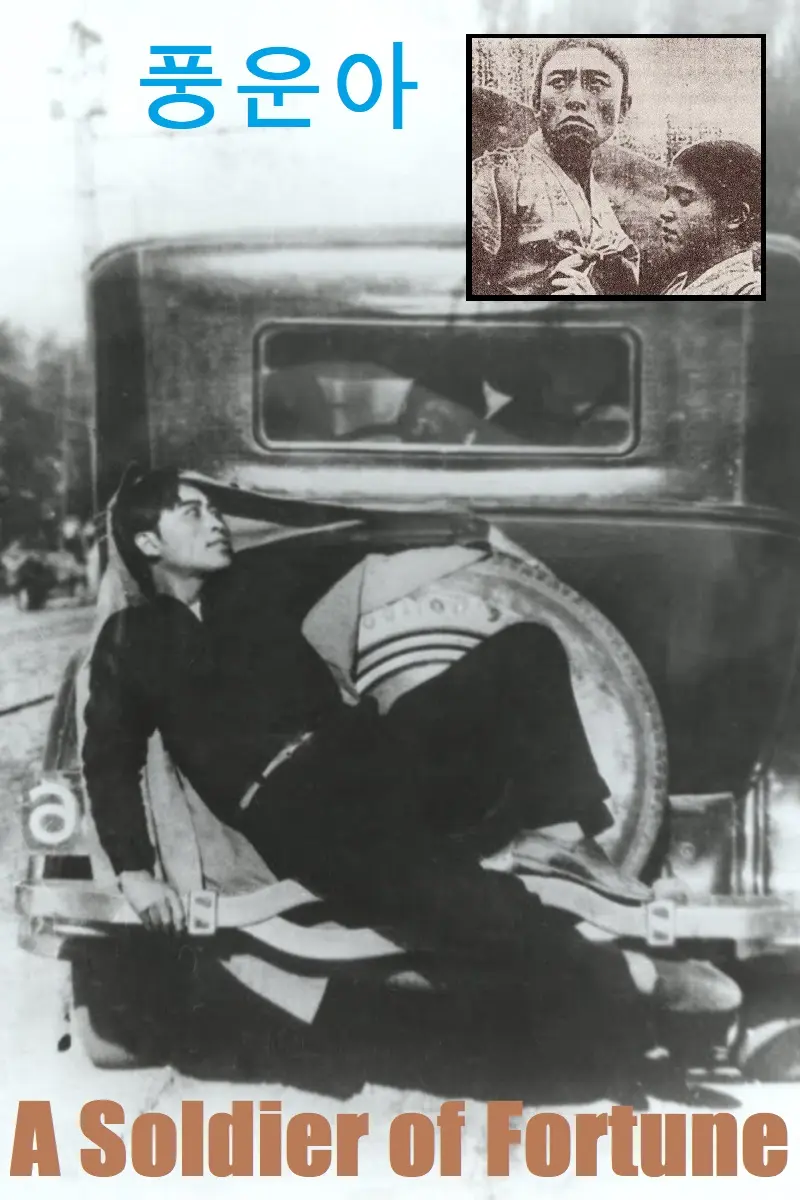
Is Punguna a relic worth dusting off for the modern viewer? Short answer: Yes, but only if you approach it as a vital piece of cinematic archaeology rather than a standard evening entertainment.
This film is for the historian, the student of East Asian resistance, and those who find beauty in the flickering imperfections of silent-era storytelling. It is emphatically not for anyone who requires high-definition clarity or the fast-paced editing of contemporary blockbusters.
1) This film works because of Woon-gyu Na’s magnetic screen presence, which bridges the gap between traditional theatricality and a more grounded, proto-realist acting style that was revolutionary for 1926.
2) This film fails because its episodic structure can feel disjointed to those accustomed to tight, three-act narratives, often wandering as aimlessly as its protagonist.
3) You should watch it if you want to understand the birth of the 'New Trend' film movement in Korea, where social consciousness began to override simple melodrama.
Punguna is a film defined by its lead. Woon-gyu Na doesn't just play the protagonist; he inhabits a archetype that would come to define Korean cinema for a generation: the wandering outsider. Unlike the clear-cut heroes found in Western imports like The Tiger Man, Na’s character is morally complex and physically weary. He is a man who has seen too much, yet possesses a fire that refuses to be extinguished by the colonial reality of the time.
The pacing is deliberate. It doesn't rush to its conclusions. Instead, it lingers on the rural landscapes, capturing the textures of 1920s Korea with a documentary-like reverence. The way the camera moves—or often, doesn't move—creates a sense of heavy stillness. You feel the heat of the fields and the coldness of the social interactions. It’s a sensory experience that transcends the lack of synchronized sound.
Directing-wise, Woon-gyu Na shows a sophistication that puts him on par with his international contemporaries. While films like Apartment 29 were exploring urban domesticity, Na was taking the camera into the dirt. He uses natural lighting to great effect, allowing shadows to swallow characters during moments of despair. There is a specific scene where the protagonist stands against a darkening sky that feels remarkably modern in its composition.
The cinematography, handled with the limited technology available in Seoul at the time, is surprisingly expressive. The film utilizes close-ups not just for clarity, but for emotional punctuation. When we see the face of In-gyu Ju, the nuances of his performance are laid bare. It’s not the exaggerated pantomime often associated with silent cinema. It’s subtle. It’s human. It’s occasionally brutal.
Punguna is worth watching because it serves as a defiant roar from a culture under pressure. While many films of the era, such as The Puppet Crown, were content with escapist fantasy, Punguna insists on looking at the struggle of the common man. It is a film that demands your attention and rewards it with a deep sense of place and time.
If you are looking for a historical document that still carries emotional weight, this is it. The film’s exploration of displacement and identity is as relevant today as it was nearly a century ago. It is a foundational text. It is a difficult watch. But it is an essential one.
We must discuss the 'shinkeiko-eiga' or 'New Trend' influence. Punguna isn't just a story; it’s a political statement. The protagonist’s return to his village isn't a happy homecoming. It is a confrontation with the reality of debt, land loss, and the erosion of dignity. In this sense, it shares a DNA with the gritty realism of A Woman's Fight, though it trades domestic drama for a broader social canvas.
The tone is consistently melancholic, yet punctuated by bursts of kinetic energy. The action sequences, though primitive by today's standards, are choreographed with a raw intensity. There is no grace here, only the desperate flailing of men trying to reclaim their lives. It works. But it’s flawed. The transitions between these high-energy moments and the slower, philosophical passages can be jarring.
Punguna is not a film you watch for fun; it’s a film you watch to remember. It represents the moment Korean cinema found its voice—a voice that was loud, angry, and deeply poetic. While it lacks the technical polish of Western contemporaries like Shore Acres, it compensates with a raw, unvarnished soul that those films often lacked.
Woon-gyu Na was a visionary who understood that film could be more than just moving pictures; it could be a mirror. Punguna is that mirror, cracked and aged, but still reflecting a powerful image of human resilience. It is a difficult, beautiful, and ultimately rewarding experience for those willing to look closely. It is a landmark. It is flawed. It is essential.
IMDb —
1922
Community
Log in to comment.