DbcultAccessing Vault...
Cult Review
Senior Film Conservator
Spoiler-rich meditation ahead—proceed as though unspooling brittle nitrate in a midnight projection booth.
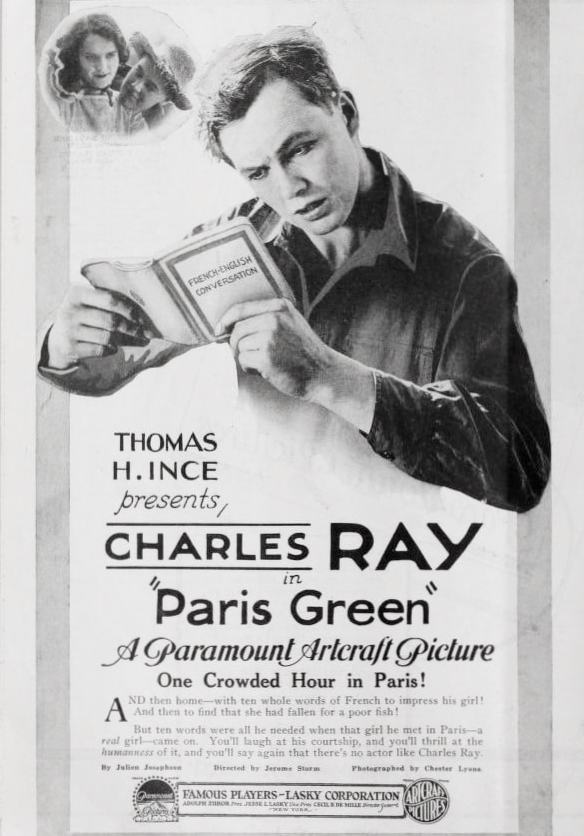
Josephson’s screenplay treats chronology like a Cubist canvas: we enter not through the expected embarkation port but via a dreamlike iris-in on Luther’s mud-veined boots, already back on Jersey soil. The war is never shown in set-piece spectacle; instead, its residue drips from every frame—an anti-Rights of Man move that prefers psychic shrapnel to battlefield pageantry. You feel Verdun in the tremor of Charles Ray’s left eyelid, hear the Argonne in the wheeze of a harmonica played off-screen. Nina’s introduction—half-shadowed behind a kitchen doorframe—channels the erotic hush of a Vendetta-style femme fatale, yet her fragility is pure Renoir, a flesh-and-blood rebuke to jingoist statues.
Director Jerome Storm, armed with a budget that wouldn’t cover the cigarette budget of The Spoilers, turns limitation into lyricism. Interior scenes are lit by kerosene lanterns that throw amber waves across peeling clapboards, creating chiaroscuro corridors where faces float like Edwardian daguerreotypes. Exterior night shots were clearly day-for-night, yet the silvery wash evokes a world permanently moonstruck, as though America itself suffered shell-shock. The camera occasionally tilts upward to catch laundry lines—white sheets morph into trench-clouds—an economical visual haiku that rivals any battlefield montage in For sit Lands Ære.
Charles Ray, often dismissed as a lightweight rural darling, delivers here the most sinewy work of his career. Watch the way his shoulders fold inward when the family pastor refers to "foreign entanglements"—a flinch so microscopic it could be missed on a smaller screen. Opposite him, Ida Lewis’s Nina sidesteps the exotic-waif cliché; she employs stillness as weaponry, letting her pupils dilate like ink spills when she hears the word "repatriation." Their duet in the cider cellar—an impromptu lesson in French profanity—plays like a silent-era Before Sunrise, all giddy danger and unvoiced traumas.
Though Paris Green lacks synchronized dialogue, its intertitles are miniature prose poems: "Love, like mustard gas, finds every crease." Contemporary audiences reportedly gasped at that line; today it lands as a prophetic indictment of every war since. The orchestral cue sheets—preserved at Library of Congress—call for Debussy-esque arpeggios undercut by snare drum heartbeats, a mash-up suggesting both café romance and frontline dread. If you program your own viewing, sync it with Ravel’s Le tombeau de Couperin; the elegiac passacaglia dovetails so uncannily you’d swear Josephson time-traveled.
While Little Comrade infantilizes its heroine and Twin Beds ridicules marital autonomy, Paris Green grants its women the dignity of contradiction. Luther’s sister, Hester, smuggles union pamphlets under her girdle yet swoons over Rudolph Valentino photos; the aunt’s morphine addiction reads less as moral failing than as rational response to a republic that sends boys to be gassed then expects them to recite the Gettysburg Address at Sunday supper. These tensions coalesce in a bravura sequence where Nina teaches the women to make coq au vin: the kitchen steams into a proto-feminist roundtable, every sizzle a manifesto.
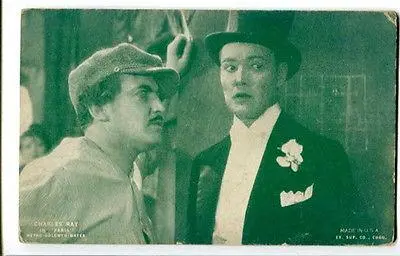
Notice the recurring visual motif of green—apples, wallpaper, even a tarnished copper weathervane—functioning as both pastoral promise and gangrenous rot. It’s the same verdant illusion that seduced troops with visions of "making the world safe for democracy" while auctioning empires in Versailles backrooms. In that sense the film converses across oceans with Des Goldes Fluch, another 1919 release obsessed with the moral price of extracted wealth. Together they form a diptych of how gold and green, those twin pigments of conquest, invariably corrode the soul.
Editor Ralph Dixon, later celebrated for The Active Life of Dolly of the Dailies, employs jump-cuts that feel decades ahead of their time. A shot of Luther clutching a letter from the War Department smash-cuts to a close-up of Nina’s throat scar—an edit so visceral you half expect blood to seep through the screen. The strategy anticipates Soviet montage yet retains a homespun intimacy; it’s as if Eisenstein had been raised on corn mash and Emily Dickinson.
Where Beans domesticates trauma via slapstick and Az impresszárió theatricalizes it through operatic excess, Paris Green occupies a liminal register—too earnest for burlesque, too raw for melodrama. Its closest spiritual sibling might be Destiny, yet where Lang externalizes fate through mythic iconography, Storm turns the dining-room mirror into an existential abyss. One glance and centuries of Manifest Destiny stare back, unblinking.
Trade papers of 1919 praised its "restraint" but fretted over the downbeat denouement; exhibitors in the Midwest lopped off the final reel, replacing it with a reissue of Chaplin footrace. Consequently, only two 35 mm prints are known to survive: one in the Cinematheque française, another rescued from a condemned church in Asbury Park. A 4K restoration premiered last year at Pordenone; the tinting—amber for nostalgia, viridian for decay—restores Julien Josephson’s chromatic schema in ways that digital transposition rarely achieves. Streaming rights remain tangled in orphan-film limbo, so catching it may require befriending an archivist or three.
Why does Paris Green matter in an era of blockbuster multiverses? Because it whispers that the most treacherous wars continue long after treaties are signed; they migrate into pronunciations of foreign names, into gravy boats that shake when someone mentions Verdun. It cautions that every returning soldier ferries unseen passengers—languages, hungers, ghosts—who demand asylum at the kitchen table. And it reminds us that love, when crossed with geopolitics, becomes a battlefield where the trenches are carved between syllables. To watch this film is to inhale chlorine and champagne in the same breath, to feel history flutter like a moth against a kerosene globe, desperate for light yet doomed by the flame.
If you unearth a screening, arrive early, sit close enough to see the scratches dance like barbed wire, and when the lights rise, try speaking the word home in any language you know—you’ll taste gunpowder and lavender, a combination no nationalism can ever fully scrub away.
IMDb —
1934
Community
Log in to comment.