DbcultAccessing Vault...
5/10
Senior Film Conservator
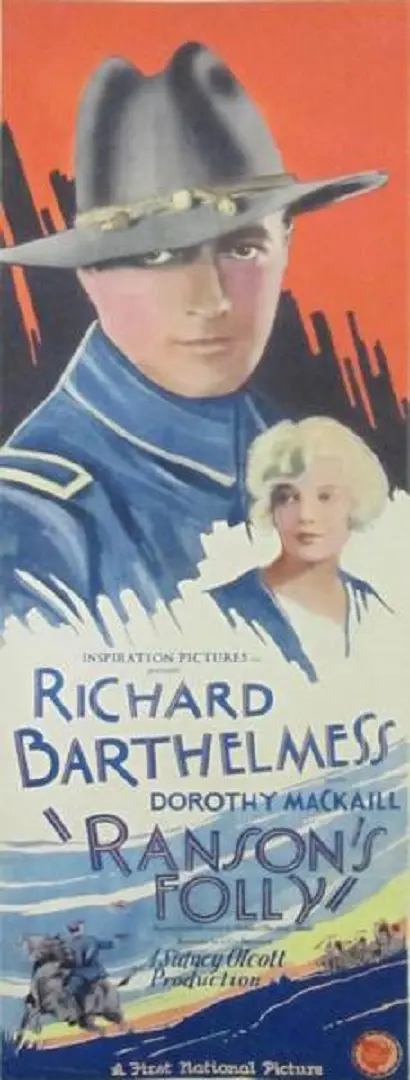
A definitive 5/10 rating for a film that redefined the boundaries of cult cinema. Ranson's Folly remains a cornerstone of transgressive art.
Is Ranson's Folly (1926) worth your time today? Short answer: Only if you are a dedicated student of silent era melodrama or a completionist for the Richard Barthelmess filmography.
This film is specifically for those who enjoy the transition period of the American Western, where the ruggedness of the frontier began to merge with the polished theatricality of the 1920s. It is absolutely not for viewers who require the gritty realism of modern revisions or even the high-octane pacing of a John Ford classic.
1) This film works because the central conceit—robbing a stagecoach with scissors—is a uniquely absurd piece of character writing that subverts Western tropes.
2) This film fails because the third-act courtroom drama drags the momentum into a standstill from which the film never quite recovers.
3) You should watch it if you want to see Dorothy Mackaill and Barthelmess recapture some of the chemistry seen in Shore Leave.
Richard Barthelmess plays Lieutenant Ranson not as a hero, but as a bored aristocrat in a uniform. It is a bold choice. Most Westerns of the mid-twenties relied on a clear-cut moral compass, but Ranson is fueled by a dangerous level of vanity. When he boasts that he can perform a heist with scissors, he isn't trying to prove his bravery; he is trying to prove his superiority over the 'uncivilized' bandits of the West.
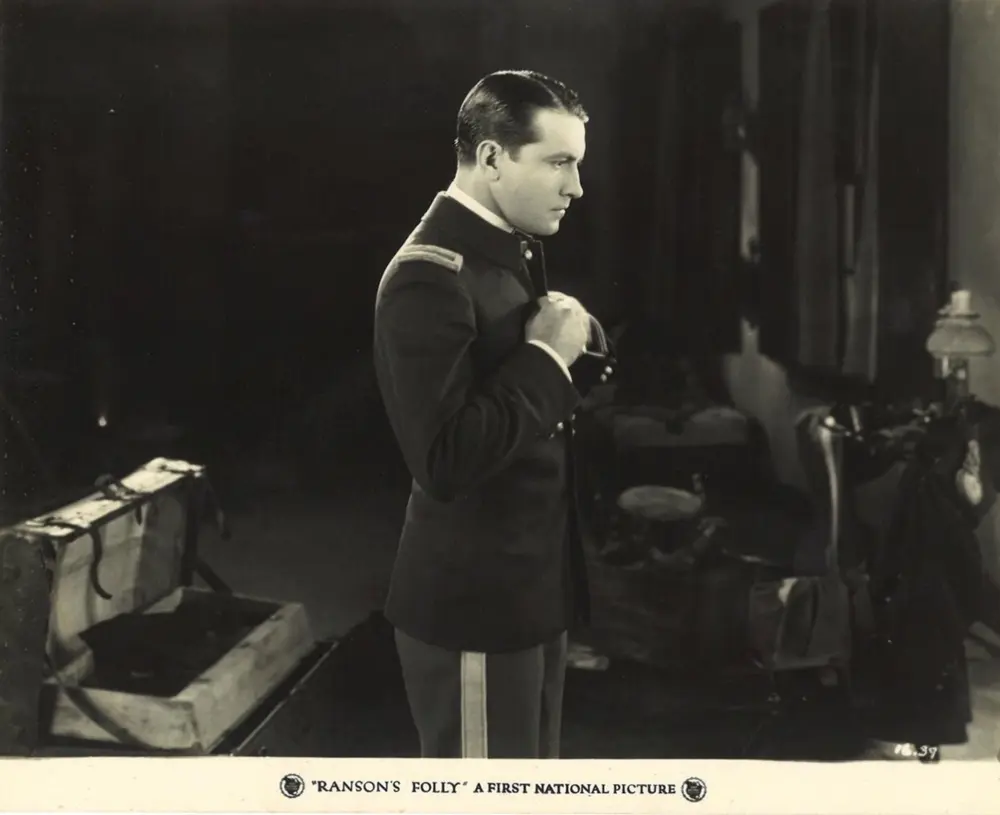
The scene where the prank actually occurs is the film's highlight. The framing of the stagecoach emerging from the dust, contrasted with Ranson’s cavalier attitude, creates a genuine sense of tension. It is a moment of pure silent cinema storytelling. We see the glint of the scissors—a domestic tool repurposed for a criminal farce. It works. But it’s flawed because the film treats this reckless endangerment as a mere 'folly' rather than the psychological break it appears to be.
Unlike his more grounded performance in A Virtuous Vamp, Barthelmess here leans into a theatricality that borders on the haughty. He is a man who believes his status protects him from the consequences of his actions. This makes the middle portion of the film, where he is arrested, feel less like a tragedy and more like a much-needed reality check for a spoiled officer.
Once the 'Red Rider' enters the fray as a real threat, the movie loses its satirical edge and falls back on standard Victorian-era plot devices. The script, adapted from Richard Harding Davis, relies heavily on the 'noble sacrifice' trope. Cahill, played with a weary gravitas by Anders Randolf, decides to take the fall for Ranson. The logic is thin: he wants to ensure his daughter Mary (Dorothy Mackaill) can marry her beloved without the stain of a criminal record hanging over him.
This is where the film feels its age. The pacing slows down significantly during the trial scenes. While the cinematography captures some interesting shadows in the outpost interiors, the visual language becomes stagnant. We are treated to a series of medium shots of men in uniforms looking concerned. Compared to the dynamic movement found in films like Daring Youth, Ranson's Folly feels trapped by its stage-play origins.
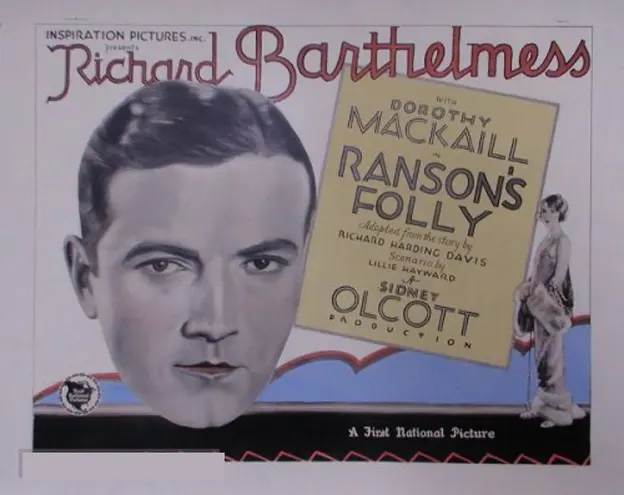
"The film attempts to balance a lighthearted prank with a capital murder trial, but the two tones fight each other until the very end."
Direct Answer: If you are looking for a classic Western with gunfights and clear heroism, no. However, if you are interested in how 1920s cinema explored the psychology of ego and the consequences of 'prank culture' before the term existed, then yes. It provides a fascinating look at the social hierarchy of the U.S. Cavalry.
The film lacks the emotional resonance of Circus Days, but it makes up for it with its strange, almost surreal premise. It is a curiosity. It is a relic of a time when a pair of scissors could be the centerpiece of a Western drama.
The chemistry between the leads is palpable. Dorothy Mackaill brings a grounded energy to Mary that balances Ranson’s flightiness. The outdoor location shooting provides a sense of scale that studio-bound films of the era like Marriage for Convenience lack. Furthermore, the inclusion of Chief John Big Tree and Chief Eagle Wing adds a layer of period authenticity, even if their roles are tragically underutilized by the script.
The secondary characters are largely forgettable. While the plot hinges on the mystery of the Red Rider, the 'reveal' feels secondary to the romance. The pacing is uneven; the film spends too much time on the setup of the bet and not enough time exploring the actual threat of the bandit. It feels like a short story stretched to feature length.
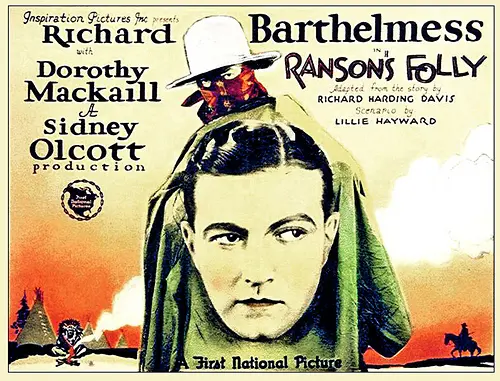
Technically, the film is competent but rarely experimental. We don't see the expressionistic shadows of Schlagende Wetter. Instead, we get clean, bright, high-key lighting that emphasizes the heat of the desert. The camera remains mostly static, serving as a witness to the actors' movements rather than a participant in the action. This works well for the courtroom, but it leaves the stagecoach sequences feeling a bit detached.
One surprising observation: the film is remarkably critical of the military social structure. Ranson is allowed to be a fool because of his rank. His peers are complicit in his 'folly' because they are bored. There is a subtle undercurrent of institutional rot that feels more modern than the rest of the film. It isn't quite the social commentary of After the War, but it’s there if you look for it.
Ranson's Folly is a bizarre artifact. It is a Western that doesn't really want to be a Western. It wants to be a drawing-room comedy that happens to take place in a fort. Richard Barthelmess is charismatic, but his character is fundamentally unlikable for the first two acts, which is a gamble that doesn't entirely pay off. The 'scissors' hook is the only thing that keeps the first half from being a standard military procedural.
If you are comparing it to other 1926 releases, it lacks the comedic precision of Nothing But Nerve. It is a middle-of-the-road production that survives on the strength of its leading man's chin and a very strange choice of weaponry. It’s a curiosity. It’s a folly. But it’s not a waste of time for those who love the grain of old film.
IMDb 5.3
1935
Community
Log in to comment.