DbcultAccessing Vault...
Cult Review
Senior Film Conservator
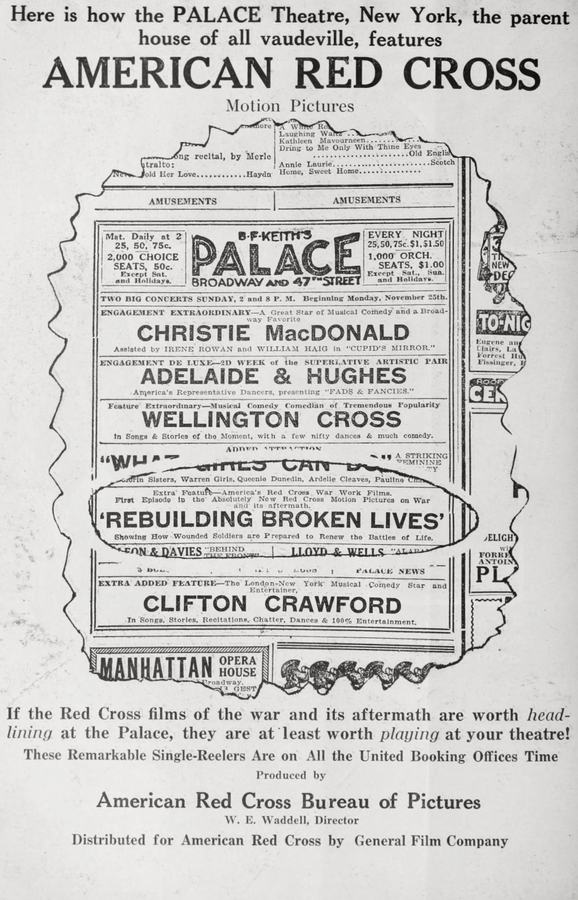
The cinematic landscape of the early 20th century is often characterized by its flirtation with the fantastic or its descent into the melodramatic, yet few artifacts possess the raw, unadorned power of Rebuilding Broken Lives. This documentary does not merely record history; it interrogates the very essence of human resilience through the lens of a world reeling from the cataclysm of the Great War. While contemporaneous works like The Hun Within sought to stir patriotic fervor through fictionalized antagonism, this film occupies a space of quiet, almost surgical observation. It is a testament to the Red Cross’s commitment to corporeal restoration, showcasing the intricate process of providing artificial limbs to the soldiers of France and her Allies.
In the aftermath of a conflict that turned the human body into a casualty of mechanized slaughter, the response required a different kind of industry—one of mercy. Rebuilding Broken Lives captures this pivot with a startling clarity. The film’s pacing is deliberate, mirroring the patient, meticulous labor of the technicians crafting these early prosthetics. We see the interplay of wood, leather, and steel, materials that were once used to build machines of war now repurposed to rebuild the men who fought them. Unlike the theatrical artifice found in Marionetten, where the human form is manipulated for entertainment, the manipulation here is a profound act of rehabilitation.
The documentary functions as a symphony of sinew and steel. The camera lingers on the workshops where artisans—many of whom likely felt the tremors of the front lines themselves—sculpt the likeness of legs and arms. There is a haunting beauty in the rows of unattached feet, a sight that might seem macabre if not for the overarching narrative of hope. This is not the dark fantasy of Black Orchids; this is the luminous reality of scientific progress applied to human suffering. The lexical diversity of the visual language here is immense, communicating the complexity of the task without the need for excessive intertitles.
What elevates Rebuilding Broken Lives above the status of a mere training film or propaganda piece is its unwavering focus on the individual. The soldiers depicted are not faceless victims; they are protagonists in their own stories of recovery. We watch as a man, once confined to immobility, takes his first tentative steps on a wooden leg. The grain of the film stock adds a texture of authenticity that modern digital recreations cannot replicate. It feels tactile, urgent, and deeply personal. This focus on the individual’s journey toward wholeness offers a sharp contrast to the societal judgments explored in Judge Not; or the Woman of Mona Diggings, where the character’s worth is debated by an external moral compass. Here, worth is intrinsic, and the goal is simply the restoration of a man's ability to walk, to work, and to exist with dignity.
The film’s structure avoids the linear simplicity of many early shorts. Instead, it weaves a tapestry of the various stages of reconstruction. From the initial measurements to the final practice walks in a garden setting, the viewer is invited to participate in the slow, arduous march toward normalcy. It is an exercise in empathy that predates the sophisticated psychological dramas of later eras, such as the introspective dialogue of The End of the Tour. While that film explores the intellectual burden of genius, this documentary explores the physical burden of survival.
Visually, the film utilizes the natural light of the workshops and hospitals to create a chiaroscuro effect that highlights the textures of the prosthetics. The contrast between the dark, heavy coats of the veterans and the pale, unpainted wood of the new limbs creates a visual metaphor for the light of hope entering a world darkened by conflict. The cinematography is remarkably steady for the period, allowing the viewer to absorb the details of the mechanics—the joints, the straps, the pulleys—that represent the cutting edge of 1910s technology. It is a far cry from the whimsical escapades seen in Dodging a Million or the high-stakes intrigue of The Great Diamond Robbery. Here, the stakes are not monetary or romantic; they are ontological.
The film also serves as an important historical document regarding the evolution of the Red Cross. Often seen in films of this era as a background entity providing bandages or water, here the organization is the central engine of progress. Its role is depicted as both administrative and compassionate, a duality that is difficult to capture on film without veering into hagiography. Yet, Rebuilding Broken Lives manages to remain grounded, focusing on the results rather than the bureaucracy. It shares a certain thematic kinship with Enlighten Thy Daughter in its desire to educate the public, though its subject matter is far more visceral and immediate.
There is a specific power in the silence of this documentary. Without a narrator to dictate our emotional response, we are forced to confront the imagery directly. The sound of the workshop is replaced by a phantom clatter in the viewer's mind. The silence emphasizes the isolation of the wounded, but also the communal nature of their recovery. When we see a group of men practicing their gait together, the lack of sound highlights their shared focus and the rhythmic nature of their movement. This communal aspect is a stark departure from the solitary pursuits found in The Lone Wolf or the individualistic struggles in Her Reckoning. In this film, the rebuilding of a single life is a collective triumph for the entire community.
The film’s ending is not a flourish of cinematic bravado but a quiet affirmation of continued effort. It acknowledges that the work is ongoing, that the 'broken lives' are many, and the 'rebuilding' is a lifelong process. This realism is what gives the film its enduring relevance. It does not offer the easy resolutions of a film like In Pursuit of Polly; instead, it offers the hard-won satisfaction of a step taken, a hand shaken, and a life reclaimed from the brink of obsolescence. Even compared to the historical epics like Herod, the stakes here feel more immediate because they are so intimately tied to the human condition.
Looking back through the lens of a century, Rebuilding Broken Lives stands as a towering achievement of early non-fiction cinema. It bridges the gap between the 'cinema of attractions' and the modern social documentary. It avoids the pitfalls of being a mere curiosity, like Hedda Vernon's Bühnensketch, by grounding its visual interest in a profound human necessity. It is a film that demands to be seen, not just by historians or cinephiles, but by anyone interested in the capacity of the human spirit to transcend physical trauma. It is as much a study of engineering as it is a study of the soul.
The documentary's influence can be seen in every subsequent film that attempts to grapple with the aftermath of war. It stripped away the glory and the gore, leaving only the grit and the determination. It is a narrative of reconstruction that is as relevant today as it was in the shadow of the armistice. In a world that often feels fractured, the image of a broken life being meticulously, lovingly put back together is a powerful reminder of our shared responsibility to one another. Whether compared to the sprawling narratives of The Planter or the intricate character studies of William Voß. Der Millionendieb, this simple documentary remains a singular, incandescent beacon of humanity.
In the final analysis, Rebuilding Broken Lives is more than a film; it is a mechanical liturgy, a prayer of wood and iron that speaks to the resilience of the flesh and the enduring grace of the human hand that seeks to heal.
IMDb 6.8
1925
Community
Log in to comment.